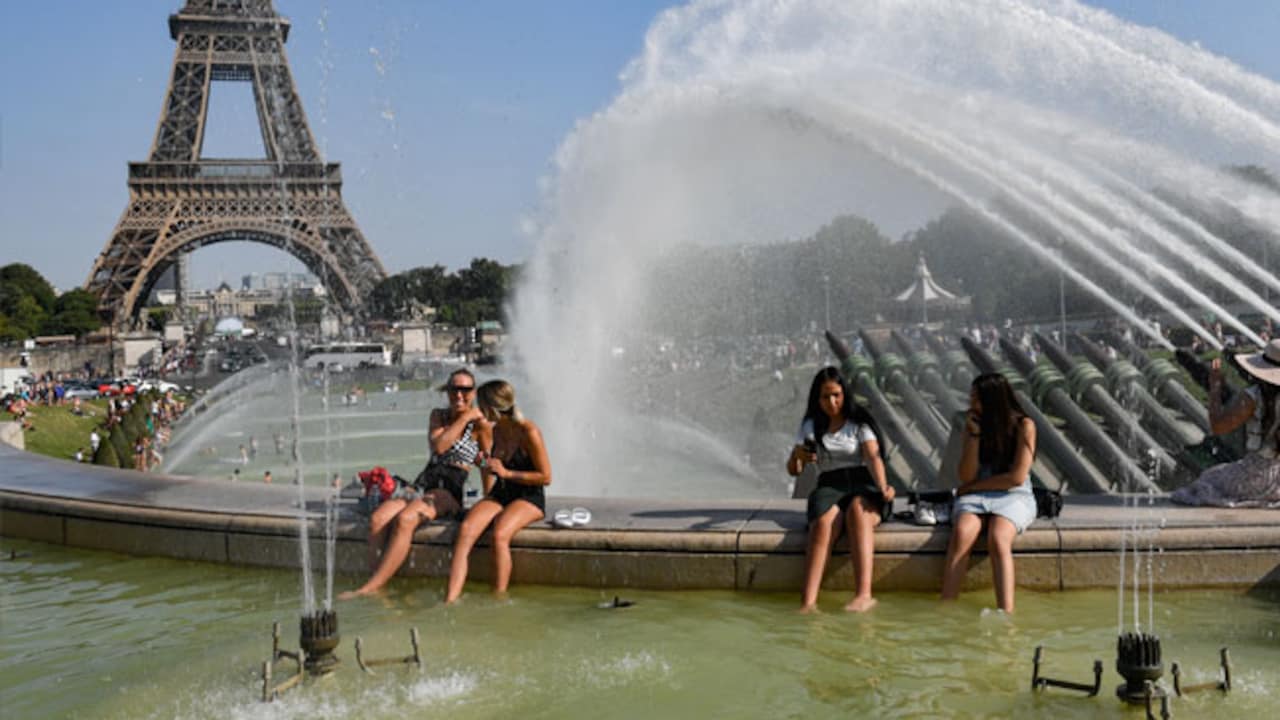
Europe is not breaking under a temporary weather anomaly. It is fracturing along the fault lines of a profound structural delusion. As emergency rooms from Paris to London hit saturation points and major cultural events face cancellations, public commentary remains fixated on the symptoms: melting asphalt, strained ambulance crews, and water shortages. The real crisis is far more permanent. Europe is attempting to run a twentieth-century civilization on an island of climate assumptions that no longer exists.
The immediate fallout is severe. French emergency rooms have seen heat-related admissions quadruple. In the United Kingdom, multiple National Health Service hospitals have declared critical incidents, and the London Ambulance Service recently recorded its highest single-day volume of life-threatening calls in history. These are not signs of a system experiencing an unexpected surge. They are signs of an outdated infrastructure suffering cascading mechanical and thermodynamic failure.
For decades, northern and western European architecture operated on a single core principle: trap the heat. Residential blocks, hospitals, and transit networks were meticulously designed to preserve warmth during long, damp winters. Now, those same design choices have turned millions of buildings into passive solar ovens.
The Thermodynamic Trap
To understand why the continent is failing to cope, one must look at the physical limits of its energy and industrial systems. The public narrative treats cooling as a consumer luxury, something solved by purchasing a portable fan or a retail air conditioning unit. The reality is an industrial bottleneck.
Consider the power grid. When outdoor temperatures climb past 35 degrees Celsius, the efficiency of traditional thermal and nuclear power generation plummets. Nuclear reactors rely heavily on nearby river systems to cool their cores. When those rivers warm up, plants must legally and operationally throttle their output to prevent ecological disasters in the waterways.
[Ambient Heat Spikes]
       │
       ├─► River Temperatures Rise ──► Nuclear Generation Throttles Down
       │
       ├─► Cooling Demand Surges  ──► Evening Grid Saturation
       │
       └─► Air Density Drops      ──► Gas Turbine Efficiency Decreases
This creates a terrifying scissor effect. At the exact moment air conditioning demand spikes, generation capacity drops. In the United Kingdom, major gas-fired power plants were recently forced to reduce output simply because the ambient air was too warm for the facility mechanisms to cool themselves efficiently. Solar power, often touted as the ultimate summer savior, suffers from thermal degradation; photovoltaic panels lose efficiency as temperatures soar past twenty-five degrees Celsius.
The physical infrastructure of transit is experiencing a similar breakdown. Steel rail lines are engineered with a specific "stress-free temperature." In northern Europe, this is usually set around twenty-seven degrees Celsius. When actual rail temperatures hit fifty degrees under direct sunlight, the steel expands until it bows, causing catastrophic track buckling.
The Hospital Infrastructure Myth
The narrative that hospitals are full merely because people are overheating misses the internal mechanics of modern medical facilities. The crisis inside the wards is mechanical, not just clinical.
Modern diagnostic tools require strict climate controls. Magnetic resonance imaging scanners and advanced laboratory equipment generate immense internal heat and will automatically shut down if ambient room temperatures exceed manufacturer limits. When a hospital's legacy chiller plant fails under continuous load, it does not just make the patients uncomfortable; it deactivates the diagnostic capacity of the entire institution.
                           ┌──► Chillers Overload & Fail
                           │
[Continuous Extreme Heat] ─┼──► Ambient Ward Temps Exceed 30°C
                           │
                           └──► Sensitive Diagnostic Gear Shuts Down
Furthermore, the clinical burden is deeply misunderstood. The primary threat is not classical heatstroke among healthy individuals. The threat is the systemic acceleration of pre-existing cardiovascular and renal chronic illnesses. When the human body attempts to cool itself, it pumps massive amounts of blood to the skin, drastically increasing cardiac output. For an elderly patient with a compromised heart, this sustained physical strain is the functional equivalent of running a marathon while lying in bed.
The sudden ban on evening alcohol sales and public gatherings by Paris authorities highlights a desperate triage strategy. By shutting down nightlife and public drinking, municipalities are not trying to police morality; they are trying to eliminate the weekend spike in alcohol-related trauma cases that would completely break an already saturated emergency room network.
The Microeconomic Friction
The economic damage of this heatwave stretches far beyond the high-profile cancellation of music festivals and outdoor events. Those cancellations are financial blows to the entertainment sector, but the quiet drain on basic productivity is far more corrosive.
European labor laws and cultural norms are fundamentally unequipped for sustained extreme heat. Unlike jurisdictions in the American Southwest or the Middle East, where deep-summer shifts to nighttime construction and closed-loop indoor commerce are standard, European business operations rely on ambient habitability.
Small and medium-sized enterprises form the backbone of the continental economy. Many of these businesses digitized rapidly over the last decade, moving inventories, accounting, and client operations to local server setups. Yet, very few invested in industrial-grade uninterruptible power supplies or dedicated cooling redundancy. A localized transformer failure caused by heat stress does not just turn off the lights; it corrupts databases, halts regional logistics, and stops point-of-sale transactions across entire high streets.
The agricultural cost is equally severe. Soil moisture levels across western Europe are hitting historic lows. This is causing rapid crop desiccation, forcing farmers into premature harvests of reduced yields, which will inevitably ripple through food supply chains by autumn.
The Policy Deadlock
The European Union has spent years drafting ambitious frameworks like the AI Act and the Chips Act, looking toward a highly digitized, high-tech future. Yet, this focus has created a massive blind spot regarding the physical foundations of society.
There is a glaring contradiction in current policy. Governments are pushing heavily for the electrification of everything—from vehicles to home heating—while relying on an aging electrical grid that can barely sustain the cooling loads of a modern June. The assumption that Europe can transition to a green, digital economy without massive, immediate capital expenditure on grid reinforcement and cooling infrastructure is unraveling.
A simple regulatory fix does not exist. Retrofitting millions of historic, protected brick and stone buildings across European capitals with modern HVAC systems is a financial and architectural nightmare. Installing external cooling units often violates strict historic preservation laws, while internal retrofits reduce already cramped living spaces and require trillions of euros in capital that governments currently do not have.
The current strategy of treating these heatwaves as acute crises requiring emergency management must end. They are chronic operational realities. Until European nations shift their capital expenditure priorities from subsidizing digital facades to reinforcing the physical, thermodynamic resilience of their grids, hospitals, and transit lines, the continent will continue to buckle every time the thermometer crosses thirty-five degrees.


