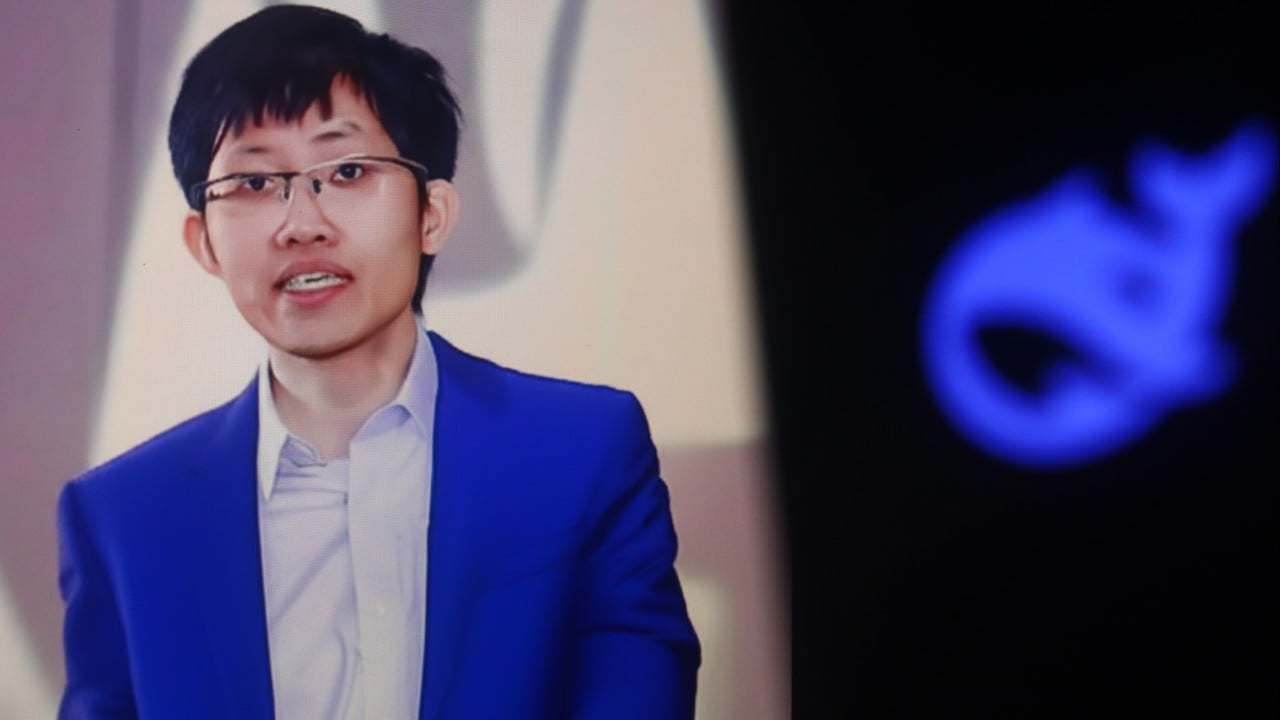
The massive 50 billion yuan funding round completed by Chinese artificial intelligence lab DeepSeek is not a traditional tech injection. It is a structural coup. By raising 7.4 billion dollars at a valuation exceeding 50 billion dollars, DeepSeek founder Liang Wenfeng did something entirely unprecedented in global technology markets. He forced corporate titans and venture capitalists to surrender their rights, lock up their cash for five years, and sit silently in the back row. This unique financial engineering ensures that Liang retains absolute control over China's most disruptive artificial intelligence enterprise, upending the Silicon Valley playbook.
While the Western world watches Microsoft, Google, and OpenAI burn billions in an aggressive arms race for raw computing power, a completely different game is unfolding in Hangzhou. DeepSeek has spent the last two years proving that efficiency, not endless capital consumption, dictates the future of software intelligence. Its recent funding structure codifies this philosophy into a legal fortress. You might also find this connected article insightful: Why the Modi and Mistral AI Meeting Matters for Global Tech Sovereignty.
The Financial Anomaly of the Billionaire Founder
Standard venture capital dictates a simple transaction. A brilliant engineer trades equity and voting power for institutional money. The investors take board seats, demand quarterly growth updates, and push the company toward an initial public offering or a lucrative acquisition.
DeepSeek shattered that default script. As reported in recent reports by Gizmodo, the results are widespread.
Out of the 50 billion yuan raised in this historic round, Liang Wenfeng provided 20 billion yuan out of his own pocket. The founder became the largest single investor in his own fundraising round. This reversal turns the traditional relationship between startup and financier completely upside down. By contributing nearly forty percent of the total capital raised, Liang effectively neutralized the leverage that external institutions usually wield.
Corporate behemoths like Tencent, Alibaba, JD.com, and battery giant CATL did not buy equity directly in DeepSeek. Instead, their cash flowed into a limited partnership managed entirely by Liang. They bought financial dividend tickets. They did not buy a steering wheel. Aside from the state-backed National Artificial Intelligence Industry Investment Fund, which contributed a modest one billion yuan, no outside investor received board representation or core voting rights.
This calculation was structural, not emotional. Liang built his fortune as the co-founder of High-Flyer Quant, a high-frequency trading firm that manages tens of billions of yuan using advanced deep learning algorithms. He understands capital liquidity better than the venture capitalists trying to court him. High-Flyer generated massive returns by treating computing clusters as profit engines rather than speculative research laboratories. When Liang spun DeepSeek out as an independent entity, he carried that cold, quantitative discipline with him.
Destroying the Software Moat Through Open Source Weights
Western tech companies protect their models like state secrets. They build expensive application programming interfaces and charge enterprise clients per token, hoping to recoup the billions spent on high-end hardware.
DeepSeek operates on a completely different assumption. The model layer is a commodity.
By open-sourcing the weights of models like R1 and the newer V4, DeepSeek essentially removed the premium value of the software layer. When a company can download an advanced model and run it on consumer-grade hardware or cheaper infrastructure, the incentive to pay a premium to a foreign cloud provider evaporates. This approach commodity-squeezes the entire market, dragging competitors into a price war they are not structured to survive.
Consider the technical mechanics of the V4 framework. Traditional neural networks require massive memory allocation for processing long strings of text. DeepSeek engineered a mixture-of-experts architecture that isolates specific processing pathways, drastically cutting down memory usage during execution. This engineering means enterprise clients can deploy highly capable systems at a fraction of the operating cost required by American architectures.
This cost advantage has forced global tech giants to rethink their procurement strategy. Microsoft has already moved to integrate customized versions of DeepSeek models into its commercial enterprise software to offer lower-cost options to corporate clients. When the world's largest software company uses an open-source Chinese model to lower its operational overhead, the traditional moat surrounding proprietary artificial intelligence begins to crumble.
The Reality of Sanctions and Algorithmic Adaptation
The popular narrative in Washington suggests that export controls on advanced graphics processing units will permanently stunt domestic progress in China. This perspective misses the fundamental nature of algorithmic efficiency.
DeepSeek built its reputation while operating under severe hardware constraints. Lacking access to the newest generation of American chips, its engineers focused heavily on architectural optimization. They recruited mathematicians, poets, and systems specialists fresh out of top universities, ignoring traditional corporate hiring criteria. They trained large-scale systems on older, less powerful clusters by writing highly efficient training code that maximizes compute utility per watt.
The accusations from Western competitors have been loud. Software developers in San Francisco have claimed that DeepSeek achieved its breakthroughs by scraping outputs from Western models. Others allege the company bypassed trade restrictions to acquire restricted hardware through secondary markets.
These complaints ignore the underlying reality of software development. Even if an engineer copies an answer sheet, they cannot replicate a system that operates at ten times the efficiency of the original model. DeepSeek succeeded because its architecture requires fewer calculations to reach the same conclusion. It is a triumph of mathematical thrift over raw hardware scale.
The State Exception and the Strategic Horizon
The only entity allowed to maintain voting rights in DeepSeek's new funding round is the Chinese state. The National Artificial Intelligence Industry Investment Fund sits outside the restrictive limited partnership structure. This design highlights the geopolitical importance of Liang's lab.
The domestic market in China boasts thousands of specialized firms working on automation, computer vision, and industrial intelligence. The government has signaled an aggressive commitment to infrastructure, outlining massive spending plans to build interconnected data centers across the country over the next five years. DeepSeek serves as the intellectual foundational layer for this infrastructure.
By giving the state a seat at the table while locking out commercial corporations, Liang has aligned his corporate survival with national strategy. Corporate investors cannot force a premature sale or demand pivot strategies to satisfy short-term quarterly expectations. They must wait out the five-year lock-up period, watching Liang plow capital directly into long-term research goals.
The traditional venture model is designed for rapid exploitation and exit liquidity. Liang is executing an anti-capitalist experiment inside a hyper-capitalist industry, betting that absolute structural control will outlast the chaotic spending habits of his global rivals. The corporations that handed over billions in exchange for zero governance have accepted these terms because they realize that an invitation to watch from the back row is better than being locked out of the theater entirely.