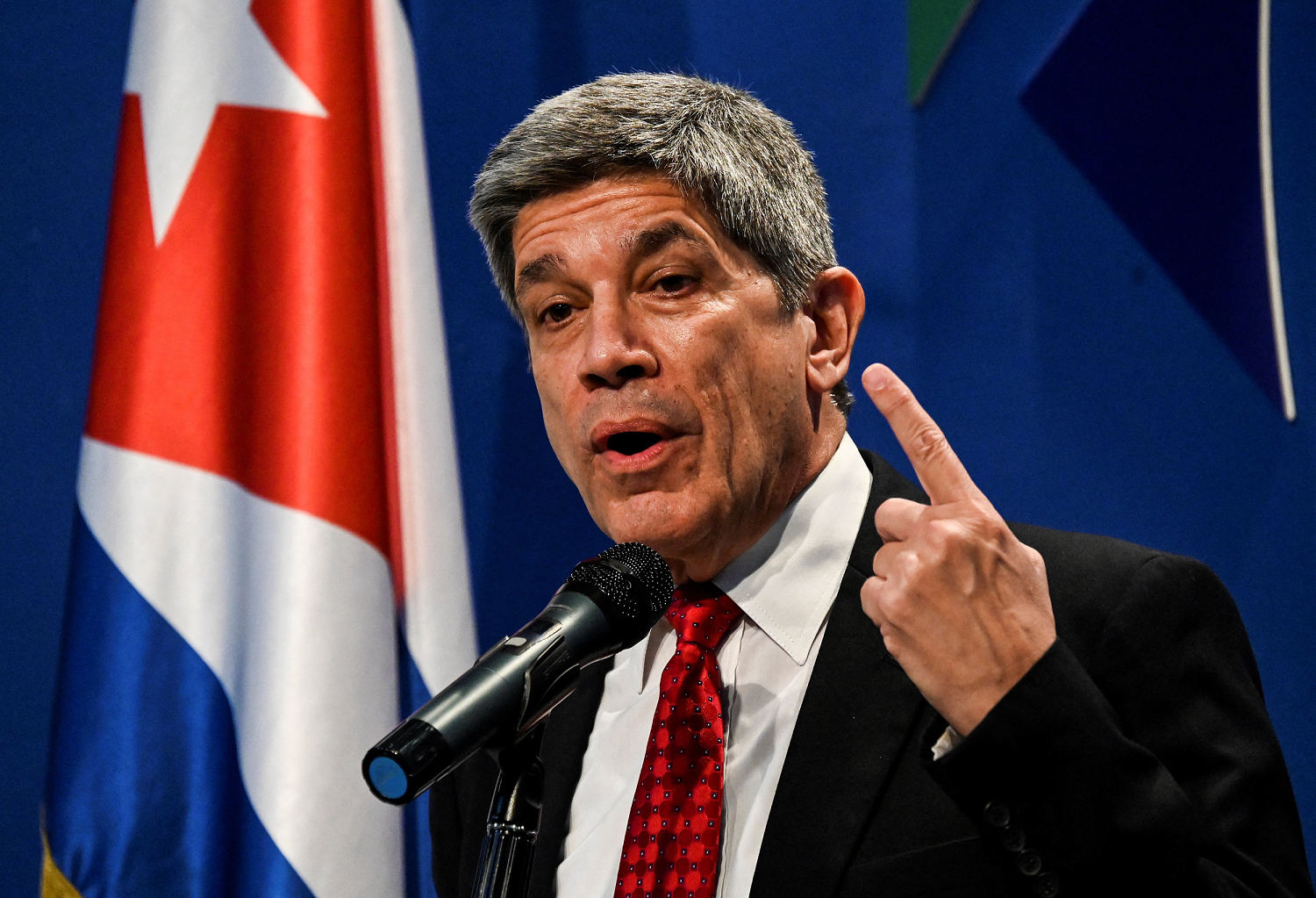
Havana is currently bracing for a nightmare. This week, Deputy Foreign Minister Carlos Fernández de Cossío confirmed that the Cuban military has shifted into an active state of preparation to repel a potential U.S. "military aggression." While the diplomat insisted the island has "no quarrel" with Washington, the rhetoric coming from the Cuban National Defense Council suggests they believe the sixty-five-year cold war is on the verge of turning hot.
This is not just another round of socialist posturing. The shift in posture follows the January 3rd U.S. military raid in Caracas that captured Venezuelan leader Nicolás Maduro, a move that decapitated Cuba’s primary economic and political lifeline. With the Maduro government gone and the U.S. military currently operating with unprecedented freedom in the Caribbean, Havana views the "possibility of military aggression" not as a theory, but as an imminent tactical reality.
The Collapse of the Venezuelan Shield
For decades, Venezuela served as Cuba’s strategic depth. It provided the oil that kept the lights on in Havana and the political cover that made a direct U.S. strike on the island too complicated for most American administrations. That shield is now shattered. Following the capture of Maduro, the U.S. has effectively imposed a total blockade on oil shipments to the island.
Since January 9, no crude has entered Cuban ports. The results are visible from space. Nationwide blackouts have become the norm, with the most recent "total disconnection" of the national electric system leaving ten million people in the dark for days. When the lights go out in a police state, the government loses more than just productivity; it loses its eyes.
President Donald Trump’s recent comments have only fueled the fire. By stating he could do "whatever he wants" with the island and describing the capture of Cuba as a potential "great honor," he has signaled that the era of containment is over. Secretary of State Marco Rubio has been even more direct, telling reporters at the White House that the Cuban leadership is "incapable" of fixing the country and that the system must change dramatically. In the language of Caribbean diplomacy, these are not suggestions. They are ultimatums.
War of the Entire People
Havana’s response has been to dust off the "War of the Entire People" doctrine. This is a cold-war era strategy designed to make any occupation of the island so costly that the U.S. military would find it untenable. President Miguel Díaz-Canel has been supervising tank exercises and urban defense drills, signaling a transition to what the government calls a "State of War" posture.
The logic is simple. Cuba cannot win a conventional fight against a U.S. carrier strike group or the 82nd Airborne. Instead, they are preparing for a decentralized insurgency. By mobilizing hundreds of thousands of civilians into territorial militias, the government hopes to create "impregnable resistance."
However, the domestic reality complicates this strategy. Unlike the 1960s, the Cuban population is hungry, exhausted, and increasingly vocal about their frustration with the ruling Communist Party. Protesters recently stormed and torched a party headquarters during a blackout. While the military is preparing for a foreign invader, they are simultaneously being deployed to maintain order in the streets. A military that is forced to look inward at its own citizens is rarely effective at looking outward toward a horizon of warships.
The High Stakes of the Oil Blockade
The current crisis is driven by energy as much as ideology. The U.S. has threatened to impose massive tariffs on any nation that continues to sell oil to Havana. This "oil blockade" is a blunt instrument designed to force a collapse of the regime from within. Without fuel, the transportation, health, and education systems are failing.
Fernández de Cossío has called this policy "ruthless," arguing that the casualties of such a blockade are as real as those of a military strike. He is right, but from the perspective of the current U.S. administration, that is the point. The goal is to maximize the "price of survival" until the Cuban government has no choice but to make a deal—one that likely includes the resignation of Díaz-Canel and a total overhaul of the socialist system.
Havana has countered by trying to open a back-channel for dialogue. Despite the "State of War" rhetoric, the Deputy Foreign Minister was careful to mention that Cuba is "willing to sit down." This is a desperate play for time. They need fuel, and they need it before the summer heat turns the current public discontent into a full-scale uprising.
Why Now Is Different
Previous tensions between Washington and Havana were often managed through a series of understood "red lines." Those lines have been erased. The capture of Maduro proved that the current U.S. administration is willing to use direct "hard power" in the Western Hemisphere in a way not seen since the invasion of Panama in 1989.
Furthermore, the regional landscape has shifted. Countries that once stood in solidarity with Havana, like Argentina and Ecuador, have moved toward the U.S. orbit. Even Mexico is reportedly weighing whether to stop its own oil shipments to Cuba to avoid U.S. retaliation. Havana is more isolated today than it was during the "Special Period" following the collapse of the Soviet Union.
The Cuban military is preparing for an invasion, but the real threat may be more subtle. If the blackouts continue and the food supply chains remain severed, the "military aggression" Havana fears might not come from a beach landing at the Bay of Pigs, but from a total internal breakdown that necessitates a "humanitarian intervention."
The Cuban government is essentially betting that its people will choose the familiar hardship of the revolution over the uncertainty of a U.S.-led transition. It is a high-stakes gamble with ten million lives in the balance. The military drills in the streets of Havana are a show of force, but they are also a mask for a government that is running out of fuel, running out of allies, and running out of time.
Watch the ports. If the tankers don't return by the end of the month, the transition from "preparing" for aggression to "experiencing" a collapse will be unavoidable.