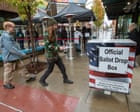
A quiet revolt in northern California just reached its logical, paradoxical conclusion. In Shasta County, a deeply conservative enclave nestled at the top of the Central Valley, voters approved Measure B, a sweeping local initiative designed to eliminate universal mail-in voting, mandate strict voter identification, and enforce a manual hand count of all ballots. What makes the outcome bizarre is not just the rural county’s defiance of deep-blue Sacramento, but the math behind the rebellion. Roughly 85 percent of Shasta County residents historically vote by mail, and data shows that the overwhelming majority of the voters who approved the restrictions used mail-in ballots to do it.
This is not a simple story of partisan friction. It is a case study in how deeply entrenched election skepticism can convince a community to vote against its own convenience.
By passing Measure B, the electorate chose to dismantle a voting apparatus they actively use. The measure restricts mail-in voting exclusively to the military, overseas citizens, and the infirm, effectively forcing the rest of the population back into physical polling places on a single Tuesday. Yet, in a striking twist of local political whiplash, these same voters simultaneously ousted Clint Curtis, the controversial, conspiracy-minded Registrar of Voters who championed the restrictions, favoring a seasoned former elections official who promised stability.
Understanding this split-ticket psychology requires looking past the national talking points and examining the grinding gears of local governance.
The Mechanics of a Paper Rebellion
The passage of Measure B represents the culmination of a multi-year campaign orchestrated by grassroots activist groups, most notably Shasta Election Reform. The group drew ideological inspiration from national figures but structured its strategy around granular, precinct-level mechanics.
Under the text of the initiative, Shasta County must abandon the digital tabulation infrastructure used by almost every modern municipality. Instead, the county is instructed to build an entirely offline system.
The new framework dictates that voter rolls be maintained on a single computer running open-source software, completely disconnected from the internet, with data backed up solely on physical external hard drives. On election day, poll workers must check in voters using physical paper poll books rather than digital databases.
The hand-counting protocol is even more meticulous. Rather than transporting ballots to a central processing facility, Measure B requires manual tallies at individual precincts using citizen volunteers. The process relies on a specific methodology outlined in activist-penned manuals, mandating four-person counting teams composed of two Democrats and two Republicans whenever possible. To ensure transparency, ballots and tally sheets must be projected onto monitors for public observation.
This hyper-localized, manual architecture is designed to replace systemic trust with physical observation. To its proponents, a ballot you can see, touch, and count next to your neighbor is the only ballot you can trust. To election professionals, it is a logistical nightmare waiting to happen.
The Impending Collision with State Law
The immediate hurdle for Shasta County is not logistics, but legality. California has spent the last decade expanding voting access, codified by laws that mandate every registered voter receive a mail-in ballot. Sacramento has also explicitly banned wide-scale manual tallies, passing legislation aimed directly at halting previous attempts by Shasta’s Board of Supervisors to scrap voting machines.
Measure B sets up an immediate, expensive legal showdown. The California Attorney General’s office has already signaled it is monitoring the results, prepared to sue the county for violating state statutes regarding uniform voting access and voter identification restrictions. Civil rights organizations, including the ACLU of Northern California, have declared the measure patently illegal.
For Shasta County taxpayers, the cost of defending an unconstitutional local ordinance could run into millions of dollars. The county's own legal counsel previously delayed the initiative's progress while assessing its compliance with state codes. Now that the measure has passed, the county finds itself in the volatile position of being legally mandated by its voters to break state law.
Why the Disconnect Persists
The paradox of mail-in voters choosing to ban mail-in voting highlights a profound shift in how conservative electorates view the concept of security versus convenience. For years, the convenience of dropping a ballot in a mailbox was a non-partisan luxury enjoyed by rural residents living miles from the nearest town. The shift occurred when national political rhetoric reframed that convenience as a vulnerability.
In rural communities where skepticism of centralized government runs high, the abstract threat of systemic fraud has eclipsed personal utility. A voter can comfortably sign their own mail-in ballot at their kitchen table while simultaneously believing the broader system is compromised by millions of other unseen envelopes. Voting to end the system is viewed not as self-sabotage, but as a necessary sacrifice to secure the perimeter.
Yet, the simultaneous ouster of Registrar Clint Curtis proves that this skepticism has limits. Curtis, who was appointed by a conservative Board of Supervisors despite having no prior experience administering elections, presided over a tenure marred by lengthy vote-reporting delays and allegations of a hostile work environment. Voters chose to return the office to Joanna Francescut, a veteran administrator with nearly two decades of experience in the department.
The electorate wanted the radical rules of Measure B, but they wanted a competent professional to execute them.
The Cost of Operational Friction
When a system transitions from automated to manual, the immediate casualty is efficiency. During the recent election cycle, Shasta County experienced severe delays in reporting basic returns. Friction within the elections office grew so palpable that local journalists reported seeing an election worker activate a stun gun inside the facility amidst escalating internal tensions.
If Measure B is somehow implemented, the operational friction will multiply. Hand-counting thousands of multi-page ballots containing complex local initiatives, school board races, and judicial appointments takes days, if not weeks. Human error rates in manual counts are historically higher than those of optical scanners, leading to inevitable recounts and prolonged disputes.
By rejecting the compromise of modern election administration, Shasta County has volunteered to become a laboratory for friction. The coming months will determine whether this experiment in hyper-local sovereignty can survive the pressure of state law, or if the financial and operational reality of counting by hand will force a return to the systems the county just voted to destroy.