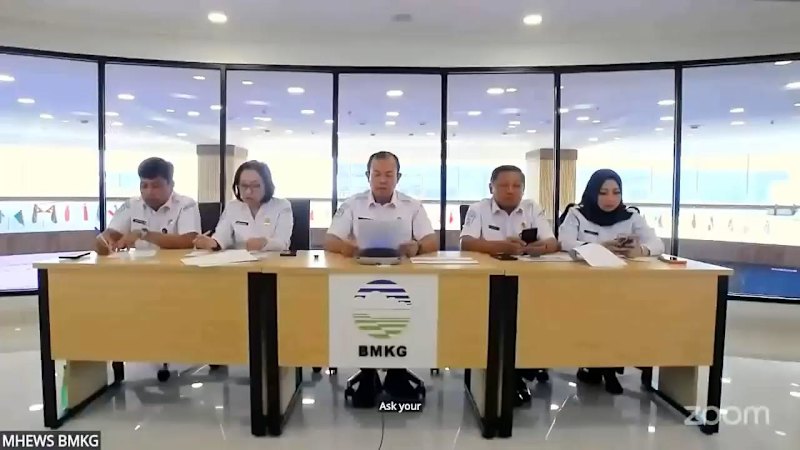
A powerful magnitude 7.8 offshore earthquake struck the southern Philippines early Monday morning, killing at least 12 people, collapsing infrastructure, and triggering urgent tsunami warnings across Southeast Asia. The seismic event, centered off Mindanao's Sarangani province at a shallow depth, sent shockwaves through the regional disaster response apparatus. Within minutes, the Indonesian Geophysics Agency (BMKG), the Philippine Institute of Volcanology and Seismology (PHIVOLCS), and the Pacific Tsunami Warning Center scrambled to issue alerts for coastlines stretching from Mindanao to northeastern Indonesia, Palau, and Malaysia. While the immediate tsunami threat has subsided, the chaos surrounding the early morning alert raises urgent questions about the region's actual readiness for a worst-case maritime disaster.
The earthquake struck at 7:37 a.m. local time. The epicenter, located near Maasim and the critical port city of General Santos, generated violent ground shaking that disrupted morning flag-raising ceremonies, flattened commercial structures, and halted operations at a key regional airport.
Yet, the real story lies not in the immediate structural damage, but in the frantic bureaucratic race against a clock that moves faster than local communications can handle.
The Illusion of Preparedness in the Celebes Sea
When the seabed ruptured, international seismological agencies initially struggled to lock down the data. The German Research Centre for Geosciences (GFZ) wildly swung its estimate from a magnitude 7.3 up to a massive 8.2 before stabilizing at 7.8. For disaster managers on the ground, those early, shifting numbers are the difference between standard evacuation protocols and outright panic.
In the southern Philippines, PHIVOLCS warned that tsunami waves could exceed normal tide levels by up to three meters along vulnerable coastlines. Across the maritime border, Indonesia immediately flagged its northeastern coastal communities for a potential one-meter surge.
The public assumes that a tsunami warning means an orderly, systematic retreat. The reality on the ground looked very different.
- Communication Blackouts: Power grids collapsed instantly in parts of General Santos City and Sarangani province. When the electricity goes, local siren networks and digital alert systems fail.
- The Proximity Dilemma: A tsunami generated by a local offshore fault takes less than twenty minutes to strike the nearest shore. Official data verification often takes ten to fifteen minutes. By the time a formal broadcast hits the airwaves, the water is already at the door.
- Border Friction: The Celebes Sea is a shared borderland. While international agencies broadcast macro-level data, localized tracking between Manila and Jakarta remains siloed, relying on separate monitoring networks that do not seamlessly talk to one another in real-time.
Behind the Numbers of the Mindanao Rupture
The port city of General Santos, a critical hub for the regional tuna export industry housing over 700,000 residents, bore the brunt of the land-based destruction. Seven of the twelve reported fatalities occurred within the city limits. Images of collapsed storefronts, fractured bridges, and students fleeing crumpled school buildings highlighted a persistent vulnerability: urban density outstripping building code enforcement.
While President Ferdinand Marcos Jr. pledged that the national government would deploy full resources to Mindanao, first responders faced a logistical nightmare.
"Our pickup truck suddenly jerked, and I thought we had a flat tire," said Rod Sosmeña, a regional director for the Office of Civil Defense. "Then people just dashed out of houses into the streets."
The panic extended to the sea. Tsunami gauges eventually recorded localized surges of roughly one meter in Sarangani and Sultan Kudarat provinces, while an 83-centimeter wave was registered off Indonesia's Sulawesi island.
The low casualty count from the wave itself is a matter of luck, not flawless execution. The earthquake occurred at a depth of roughly 33 to 35 kilometers. Had the rupture occurred just 15 kilometers shallower, the displacement of water would have been vastly more destructive, likely overwhelming the low-lying coastal villages of both nations before an evacuation could even begin.
The Warning System Lag
The Pacific Tsunami Warning Center lifted the regional alert approximately five hours after the initial tremor. For five hours, millions of people along the coasts of Indonesia, Malaysia, and the Philippines remained in a state of suspended animation, unsure whether to return to their homes or stay on exposed hillsides.
This delay points to a fundamental flaw in how the public consumes disaster data. A tsunami warning is a blunt instrument. It evaluates potential based on magnitude and location, but it cannot immediately verify whether the seafloor moved vertically (which displaces water) or horizontally (which typically does not). Until deep-ocean buoys transmit physical wave data, scientists must assume the worst.
The Transnational Risk No One Accommodates
Disaster response stops at national borders, but tectonic plates do not. The Molucca Sea, Celebes Sea, and Sulu Sea form a complex web of microplates and deep trenches that sit directly between the Philippines and Indonesia.
When a major event happens here, both nations are equally at risk, yet their mitigation strategies remain fiercely independent. Indonesia's early warning system operates out of Jakarta, tailored to its vast archipelago. The Philippines relies on PHIVOLCS in Quezon City.
A hypothetical scenario demonstrates the risk: An earthquake occurring right on the maritime boundary could trigger an Indonesian alert that fails to reach Philippine coastal barangays due to differing broadcast frequencies or bureaucratic protocols. Monday's 7.8 event was a warning shot across the bow for both governments. The infrastructure survived this time, but the underlying systemic lag remains unaddressed.
Instead of celebratory press conferences regarding a "low casualty count," the focus must pivot to the reality of the next inevitability along the Pacific Ring of Fire. True regional resilience requires shared sensory data, unified public broadcasting triggers, and a frank acknowledgement that when the big one hits the Celebes Sea, twenty minutes is all the time anyone has.