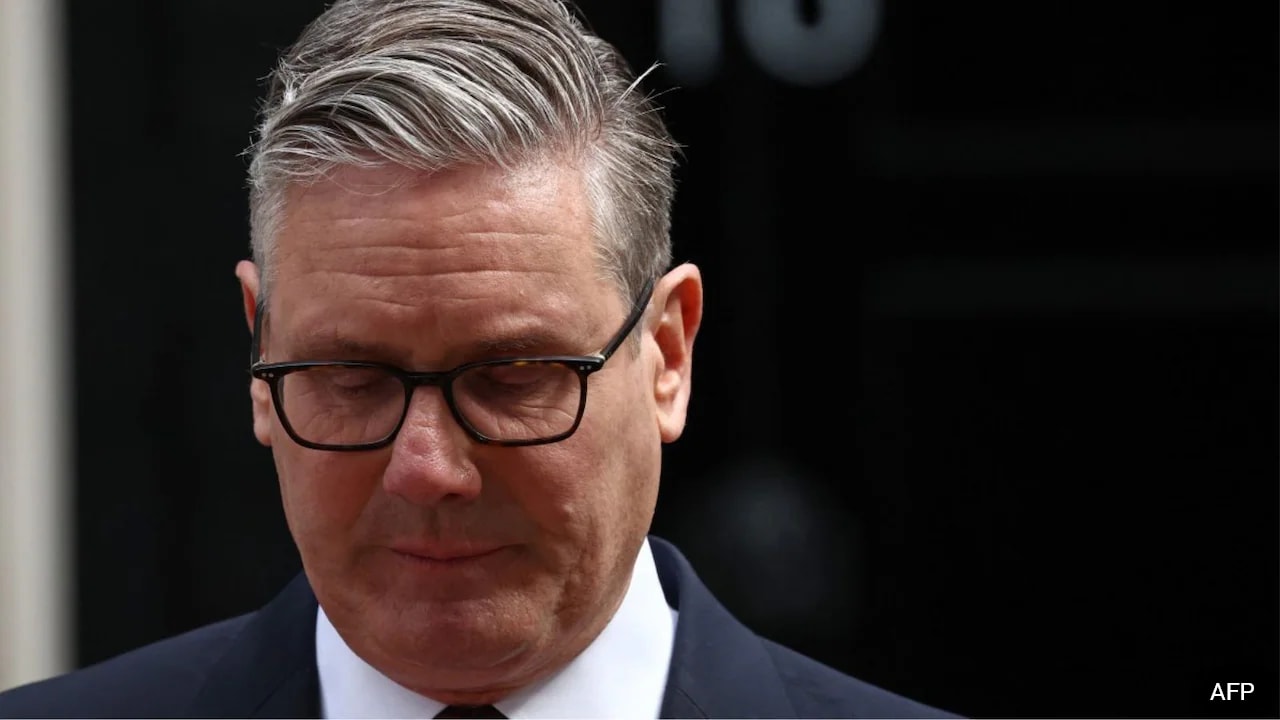
The resignation of Keir Starmer on June 22, 2026, ensures that Britain will soon welcome its seventh prime minister in a single decade. To outside observers, the British state looks like a runaway machine, throwing off leaders with the mechanical regularity of an assembly line. Commentators often chalk this up to a new national eccentricity or a sudden loss of traditional British patience. That interpretation misses the mark entirely. The constant churn at 10 Downing Street is not a cultural quirk. It is the visible symptom of a profound structural failure within the British political architecture, a system designed for a bygone era of stability that is now collapsing under the weight of unresolved economic realities.
The revolving door at the top of British politics began spinning in earnest with the 2016 Brexit referendum. David Cameron walked away from the wreckage of his own gamble. Theresa May was consumed by the impossible arithmetic of parliamentary factions. Boris Johnson was ejected by his own colleagues after a series of character crises. Liz Truss collapsed the bond market in a matter of days. Rishi Sunak presided over an exhausted party that was decisively routed at the ballot box. Now, Starmer has joined the casualty list, undone by local election defeats, cabinet walkouts, and the friction of managing a low-growth nation in an unstable world.
The Myth of the Prime Ministerial Mandate
The fundamental flaw of the modern British premiership lies in the illusion of executive power. Under the British unwritten constitution, a prime minister is not a president. They are merely the leader of the majority party in the House of Commons. They hold office only as long as they command the confidence of their parliamentary colleagues.
When a British leader encounters structural economic headwinds, they lack the independent electoral mandate that cushions a US president or a French president. They are exposed. If their poll ratings dip, backbench members of parliament begin to panic about their own seats. In the past, parties tolerated low numbers during mid-term slumps. Today, parliamentary parties operate like panicky corporate boards, treating the prime minister as a disposable chief executive who can be fired the moment the quarterly numbers look bad.
This internal mechanism has been worsened by changes in how political parties choose their leaders. By giving grass-roots party members the final vote on leadership contests, both major parties have created a dangerous disconnect. MPs are forced to work under leaders chosen by an unrepresentative sliver of the public. Liz Truss was the choice of Tory party members, not Tory MPs. Starmer fought an ongoing internal battle with a restive left wing that never truly accepted his modernization drive. The result is a prime minister who spends more time managing internal party management than governing the state.
The Economic Trap That Sinks Every Premium
No amount of political skill can overcome an unworkable economic baseline. The United Kingdom has spent a decade pretending that its political instability is a sequence of unfortunate accidents, rather than the direct consequence of economic stagnation.
Independent economic data reveals the scale of the trap. Studies from institutions like the National Bureau of Economic Research show that the UK economy has shrunk significantly relative to its pre-Brexit trajectory. By the end of last year, the long-term impact of leaving the European Single Market had reduced British gross domestic product by an estimated six to eight percent. Private investment dropped by double digits. Employment grew brittle.
UK Economic Drag Metrics (Cumulative Post-2016)
-----------------------------------------------
Gross Domestic Product:   -6% to -8%
Business Investment:      -12% to -13%
Employment Growth:        -3% to -4%
When a nation's economic pie stops growing, politics ceases to be about distributing the fruits of progress. It becomes a bitter argument over who takes the biggest loss.
Every prime minister since 2016 has hit this wall. They promise public investment, tax cuts, and improved services. Then they look at the fiscal numbers. High national debt, elevated borrowing costs, and flatlined productivity leave them with no room to move. If they try to borrow money for growth, the bond markets punish them, as Liz Truss discovered. If they try to raise taxes, their own MPs revolt. If they try to manage public services on a shoestring budget, schools crumble and hospital wait times grow, leading to electoral slaughter. Starmer tried a policy of stabilization, hoping that a return to predictable governance would magically spur investment. It did not work. The public, tired of stagnant living standards, grew impatient within two years.
The Modern Media Filter and the Death of Long-Term Planning
The speed of modern communications has turned Downing Street into a reactive operational center rather than a place of strategic governance. A veteran civil servant, speaking on the condition of anonymity, noted that the policy cycle has shrunk from years to hours. Decisions are made to survive the next morning's news cycle.
This short-term focus makes it impossible to solve the deep structural issues plaguing the country. The UK requires long-term planning across multiple sectors:
- Energy infrastructure: Britain remains highly vulnerable to global energy shocks, a vulnerability that severely strained Starmer’s relationship with international allies.
- Planning reform: The country’s restrictive planning laws make building houses, factories, and transport links slow and prohibitively expensive.
- Demographic shifts: An aging population is placing an insupportable financial burden on the National Health Service, consuming an ever-greater share of national income without delivering better outcomes.
To fix any of these problems requires a leader to endure years of unpopularity before the benefits materialize. In the current British system, a leader who is unpopular for more than six months is replaced. The system rewards short-term survival tactics, ensuring that the underlying crises continue to worsen.
The High Cost of the Special Relationship
The instability is no longer contained within the borders of the British Isles. It has begun to poison Britain’s international standing, most notably its alliance with the United States.
The relationship between Downing Street and Washington has grown increasingly transactional. Following the return of Donald Trump to the White House, the divergence in priorities became stark. Starmer’s reluctance to embroil the UK in escalating conflicts in the Middle East led to sharp critiques from Washington. The White House public remarks following Starmer's resignation, where he was criticized for his policies on energy and immigration, showed how little diplomatic cover Britain's historic alliance now provides.
Britain wants to maintain its status as a major global power, yet its defense commitments are unbacked by financial reality. The next prime minister, whether it is the front-runner Andy Burnham or a surprise challenger, will inherit a nation that cannot afford its global ambitions but cannot bear the loss of face involved in abandoning them.
The Disappearing Center Ground
The constant change of leadership has created a cyclical erosion of public trust. When voters see a new prime minister enter Downing Street promising a fresh start, only to watch them fail and leave within twenty-four months, the public concludes that the entire political establishment is incompetent.
This dynamic has fueled the rise of insurgent political movements. Reform UK and other populist entities have capitalized on the sense of permanent crisis, drawing voters away from the traditional parties of government. This fracturing of the electorate makes it even harder to build a stable governing coalition. The 2024 Labour landslide was wide but incredibly shallow, built on public exhaustion with the Conservatives rather than genuine enthusiasm for Starmer. When that shallow support evaporated in the 2026 local elections, the parliamentary party panicked, triggering the internal collapse that forced Starmer out.
Britain is trapped in a structural loop. Economic stagnation creates political crisis. The political crisis leads to a change in leader. The new leader realizes they cannot solve the economic stagnation within the lifespan of a parliament. The leader becomes unpopular. The party replaces the leader. The cycle repeats. Until a British politician finds the courage to tell the electorate the brutal truth about the country’s economic realities, and until the political parties change the rules that make prime ministers so easily disposable, the keys to 10 Downing Street will remain a temporary lease rather than a mandate to rule.