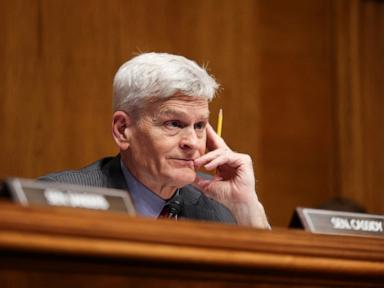
The political theater surrounding childhood literacy has reached a fever pitch. Senator Bill Cassidy and the Senate Health, Education, Labor, and Pensions (HELP) Committee have rolled out their latest legislative crusade: a sweeping reading reform push aimed at tackling multi-decade lows in National Assessment of Educational Progress (NAEP) scores. The narrative is comforting, safe, and entirely wrong. The central thesis of these legislative pushes is that if we mandate the "Science of Reading," implement early-detection dyslexia screening, and bypass school boards to hand tutoring cash directly to parents, we will cure the educational rot in this country.
It is a beautiful illusion. I have spent years tracking how public policy collides with economic reality, watching school districts incinerate millions of dollars on the latest pedagogical trends while the foundational structures of American education continue to crumble.
The lazy consensus dominating the headlines insists that literacy failure is a technology or methodology problem. Change the curriculum, retrain the teachers, and the test scores will bounce back. This diagnosis misses the fundamental breakdown. Literacy is not an isolated academic metric that can be optimized with a new federal toolkit. It is an economic and cultural output. By treating reading failure as a localized classroom bug rather than a symptom of systemic institutional collapse, our lawmakers are ensuring that the next generation remains functionally illiterate.
The Specialized Care Metaphor Is Deeply Flawed
Senator Cassidy, a medical doctor, frequently analogizes education reform to modern oncology. He argues that just as medicine transitioned from treating all cancer patients identically to deploying targeted, specialized care, education must shift to hyper-customized literacy paths.
It sounds brilliant on a Sunday morning talk show. In reality, the logistics of the American public school system completely invalidate the comparison.
Medical specialization works because it operates in a highly controlled, well-funded environment with a one-to-one or small-team-to-patient ratio. It relies on precise diagnostic machinery and clinical isolation. A public school classroom is the exact opposite. It is an chaotic ecosystem where a single teacher—frequently underpaid and overwhelmed—is expected to manage twenty-five distinct human beings, all while balancing administrative mandates, standardized testing pressures, and behavioral disruptions.
When you inject federal mandates for specialized literacy interventions into this environment, you do not get targeted care. You get a bureaucratic bottleneck. Teachers do not have the bandwidth to act as clinical clinicians. Forcing them to execute hyper-specific, individualized reading tracks without fundamentally altering classroom sizes, administrative burdens, and operational funding is a recipe for systemic paralysis.
The Illusion of the Science of Reading Mandate
The latest holy grail of educational policy is the "Science of Reading." Proponents of reading reform bills use this phrase as a cudgel to beat down old "balanced literacy" frameworks that relied on context clues and guessing games. They demand a rigid return to explicit phonics, phonemic awareness, and structural decoding.
Let us be completely honest about what happens when theory hits the pavement:
- The Curriculum Grift: The moment a state or federal body mandates a specific pedagogical framework, textbook publishers rebrand their existing, mediocre materials overnight. They slap a "Science of Reading Compliant" sticker on the cover, raise the price by 30%, and sell it to desperate school districts.
- The Compliance Trap: True literacy instruction requires deep teacher intuition and flexibility. Forcing a rigid, highly structured curriculum down the throats of educators turns them into script-readers. It strips away their autonomy and replaces actual engagement with check-the-box compliance.
- The Training Paradox: Lawmakers accuse teachers' unions of obstructing reform and ignoring evidence for the sake of expediency. But you cannot mandate additional, rigorous training for a workforce that is already fleeing the profession due to burnout and stagnant wages.
True decoding skills are necessary, but they are not a silver bullet. You can train a child to decode words perfectly, but if they lack background knowledge, vocabulary, and contextual curiosity—things built outside the classroom through stable home environments and economic security—their reading comprehension scores will still tank in the eighth grade.
Direct Funding and Parent Vouchers Will Not Create Supply
Another cornerstone of the proposed legislative push involves shifting federal education dollars away from Washington bureaucrats directly to families to pay for private tutoring and literacy support.
This sounds like a victory for free-market principles. It fails basic microeconomic analysis.
Dumping capital directly into the hands of consumers only works if there is an elastic supply of the service they want to buy. The tutoring market is completely unequipped to handle a sudden, massive influx of federal cash. Highly skilled literacy specialists and speech-language pathologists do not grow on trees. They are concentrated in affluent suburban areas or expensive private clinics.
When you hand a low-income family a voucher for tutoring in a community that lacks high-quality educators, one of two things happens:
- Price Inflation: The few elite tutoring services in the region immediately jack up their rates, pricing out the voucher's value and leaving the family exactly where they started.
- The Rise of Predatory Tutoring Franchises: Low-barrier, strip-mall tutoring centers pop up overnight to harvest federal funds. These operations rely on low-wage, uncertified college students working off a rigid software script. They provide the illusion of progress while delivering zero long-term cognitive gains.
The Dyslexia Screening Diversion
The push for early-detection screening for learning needs like dyslexia is entirely noble in intent. Statistics show that up to 20% of the population exhibits signs of dyslexia, and a shocking percentage of the incarcerated population struggles with functional illiteracy. Early screening seems like a clear win.
But what happens after the screening?
Identification without immediate, high-intensity infrastructure is a cruel joke. Right now, if a child is identified with a severe reading disability in a typical public school, they are placed on an Individualized Education Program (IEP). Because districts face a catastrophic shortage of special education professionals, those IEP accommodations are routinely diluted.
An early diagnosis does nothing if the school lacks the specialized human capital to address it. It simply labels the child earlier, creating a paper trail of administrative compliance that protects the district from lawsuits while failing to teach the kid how to read.
Address the Real Crisis
If we want to stop the multi-decade decline in American literacy, we must stop pretending that the solution lies in a 10-page congressional report or a rebranded phonics curriculum.
Stop asking how to reform reading instruction within a broken framework. Start asking why the framework is failing to retain the talent required to teach it.
We must accept the uncomfortable truth: you cannot legislate literacy from a federal desk. Until we address the foundational economic stability of families, drastically reduce classroom sizes to allow for true individual attention, and treat teaching as a prestigious, highly compensated profession rather than a civic sacrifice, reading scores will continue their downward trajectory. No amount of bipartisan political theater will rewrite that reality.
To see a direct breakdown of how current education systems handle these foundational literacy crises on the ground, watch The Science of Reading vs. Balanced Literacy Controversy. This discussion highlights the ongoing legislative tension between standardized test scores and actual classroom execution.