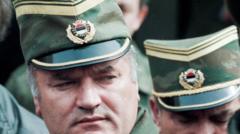
The theater of war rarely announces its monsters with horns or theatrical sneers. More often, they arrive with the mundane posture of career bureaucrats, wearing the olive drab of a dying state, holding a foreign journalist's hand across a barracks table while speaking of peace.
When veteran foreign correspondents first encountered Ratko Mladic during the opening months of the Bosnian conflict in the summer of 1992, the man who would become known as the Butcher of Bosnia did not project the cold detachment of a classic military tactician. He projected theatrical grievance. Stationed at the Lukavica barracks on the southern periphery of Sarajevo, Mladic had just returned from active frontline skirmishes, his adrenaline visibly high, his mind already weaving a narrative of historic martyrdom and inevitable retribution.
Understanding how an unremarkable career officer in the old Yugoslav People's Army transformed into the architect of modern European genocide requires looking past the courtroom verdicts of The Hague and examining the raw mechanics of manufactured ethno-nationalist hysteria.
The Machinery of Grievance
Nationalism is rarely born from thin air. It is manufactured by ambitious operators who weaponize historical memory. For Mladic, the ideological fuel was an obsessive fixation on centuries-old conflicts, specifically framing the collapse of Yugoslavia as a direct continuation of resistance against the five-hundred-year Ottoman occupation of the Balkans.
This psychological framing served a very specific tactical purpose. By convincing impressionable conscripts and paramilitaries that they were not aggressive invaders, but rather existential defenders fighting against an impending Islamic resurgence, the military leadership erased moral boundaries.
Propaganda departments did not need complex theories. They relied on simple, repeatable binaries. Every neighbor became a historic enemy; every political compromise became an existential threat. When Mladic instructed his artillery units to target the civilian infrastructure of Sarajevo, cutting off water, electricity, and basic provisions while sniper bullets turned daily bread runs into lethal gambles, his orders were executed not with rogue lawlessness, but with the chilling efficiency of ideological conviction.
The Banality of Cruelty
History often tries to compartmentalize evil, separating the charming family man from the ruthless mass murderer. Yet observing commanders like Mladic on the ground revealed a seamless blending of domestic sentimentality and absolute ruthlessness.
Before orchestrating the systematic execution of more than eight thousand Muslim men and boys in Srebrenica in July 1995—the darkest stain on European security since the second world war—Mladic was famously filmed handing out chocolate to children and patting young boys on the head. This was not a sudden psychological break. It was a manifestation of absolute paternalistic condescension. In his worldview, those he targeted were either historical enemies to be expunged or minor pawns to be managed until final dominance was achieved.
The international community chronically misread these signals throughout the early nineties. Diplomats accustomed to rational-actor models assumed that aggressive rhetoric was merely a bargaining chip for territorial division. They failed to recognize that for fanatics like Mladic, compromise was moral weakness and total victory was the only acceptable metric of success.
The Long Shadow of Impunity
Decades after the silence finally fell over the hills of Bosnia, the architecture of denial remains remarkably resilient. While international tribunals eventually secured convictions and life sentences for the primary architects of the conflict, the local political ecosystems that birthed them have never truly reconciled their history.
Statues are not erected for peacebuilders in certain enclaves; murals of condemned commanders are protected by youth groups who view them through the distorted lens of historic victimhood. Impunity leaves a deeper scar than the physical destruction of cities because it colonizes the future, teaching new generations that atrocities are merely defensive necessities.
When the news of Mladic's death inside a prison facility broke, it did not bring closure to the mothers of Srebrenica and the survivors of the Sarajevo siege. It served merely as a quiet marker of the passage of time against an unrepentant ideology that continues to haunt the political fault lines of Southeast Europe.
The warning signs of such descent are always visible in hindsight. They begin when a society decides that its security depends on the total erasure of its neighbors, wrapped in the comforting myth of historical righteousness, waiting for a charismatic general willing to pull the trigger.
Across The Balkans: Ratko Mladic Genocide Conviction Upheld
This archived discussion explores the legal and historical aftermath of Ratko Mladic's war crimes convictions and the enduring struggle for justice in the region.
http://googleusercontent.com/youtube_content/1


