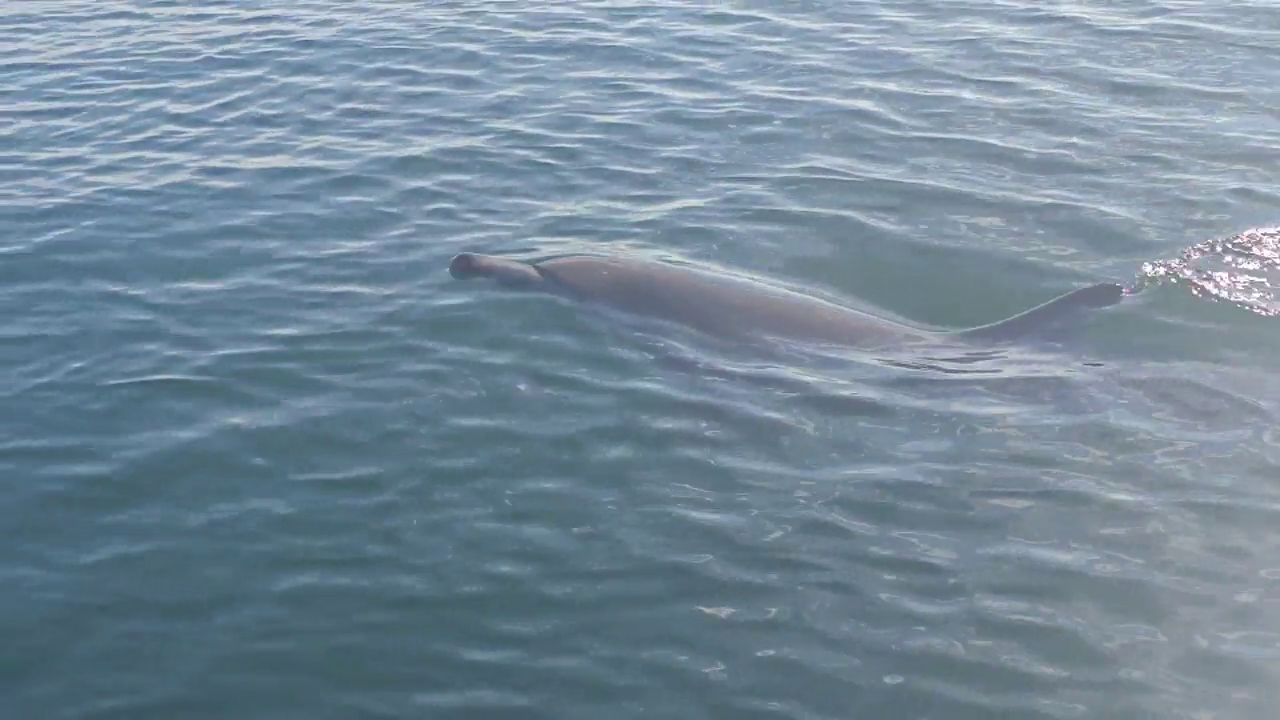
If you spend enough time scanning the cold, emerald waters of British Columbia, you get used to seeing certain things. Harbor porpoises slicing through the surface. Massive humpback whales breaching in the distance. Pods of sleek, local Pacific white-sided dolphins putting on an acrobatic show.
But earlier this month, mariners on the north island witnessed something that absolutely shouldn’t have been there.
Researchers at the Marine Education and Research Society (MERS) confirmed two separate sightings of long-beaked common dolphins (Delphinus capensis). This is a species that typically considers the warm waters of Southern California and Mexico its home turf. Seeing them north of Point Conception is unusual. Seeing them all the way up in B.C. is flat-out extraordinary.
Here is what went down, why it's happening, and what it tells us about our rapidly shifting oceans.
The Unusual Suspects in Esperanza and Knight Inlet
This wasn’t just a quick glimpse of a fin. The first sighting occurred on the northwest coast of Vancouver Island in Esperanza Inlet. Observers spotted a juvenile long-beaked common dolphin exhibiting some wildly erratic behavior. According to Jackie Hildering from MERS, the young dolphin was surfacing at high speeds and tail-slapping furiously, essentially doing a headstand in the water and slapping the surface repeatedly.
Then came a second report, this time from the northeast side of the island near Malcolm Island and Knight Inlet. Seasmoke Whale Watching captured clear photos of an adult dolphin. Leo Cox from Berry Island Lodge also snapped images of the same animal on July 4.
When MERS researchers lined up the photographs, they looked closely at the unique nicks and scars on the dorsal fin. It was a perfect match. The dolphin spotted off Malcolm Island was the exact same individual moving through Knight Inlet.
To put this in perspective, marine mammal researcher John Ford noted in his definitive book, Marine Mammals of British Columbia, that records of this species in B.C. are incredibly sparse. They simply do not belong in these cold temperate zones under normal circumstances.
The Connection to El Niño and Shifting Ocean Conditions
Why are these southern animals suddenly vacationing in Canada? The short answer is ocean temperature.
The National Oceanic and Atmospheric Administration (NOAA) states that while long-beaked common dolphins stick to tropical and warm temperate seas, their geographical distribution shifts drastically based on oceanographic conditions. When warm water moves north, the food moves, and the dolphins follow.
Historically, the few recorded sightings of this species in B.C. waters happened in 2002 and 2003. Those years perfectly overlapped with weak El Niño events. This year, we are seeing another strong El Niño influence, likely amplified by broader climate change trends. The water is warmer, the local ecosystems are changing, and southern species are pushing their geographic boundaries.
It is part of a larger, undeniable pattern. Just a few weeks before these dolphin sightings, whale watchers off Vancouver Island documented a massive fin whale. Fin whales are the second-largest animals on earth, and their presence—alongside these tropical dolphins—indicates that the northern Pacific waters are becoming a temporary refuge for species looking for food or following warm currents.
How to Tell the Difference and What You Should Do
If you are out on the water in B.C., you might think you’ve just run into a standard pod of local dolphins. It's easy to misidentify them if you don't know what to look for.
Local Pacific white-sided dolphins have a blunt snout, a highly curved dorsal fin, and distinct gray and white striping along their flanks. Long-beaked common dolphins, on the other hand, look radically different. They feature a distinct, long beak and a dark cape that forms a dramatic "hourglass" pattern on their sides, blending into shades of yellow, tan, and gray.
If you happen to spot a dolphin that looks like it belongs in San Diego rather than the Pacific Northwest, do not just take a video for social media and move on. Citizen science is the only reason we know these animals are here.
Get clear, high-resolution photographs of the dorsal fin if possible. The nicks, notches, and shape of the fin act like a human fingerprint, allowing researchers to track individual movements.
Immediately report your sightings, along with your exact GPS location and media, to the B.C. Cetacean Sightings Network or directly to MERS. Your random weekend boat trip might provide the exact data point scientists need to map how climate change is altering marine life distribution in real time.