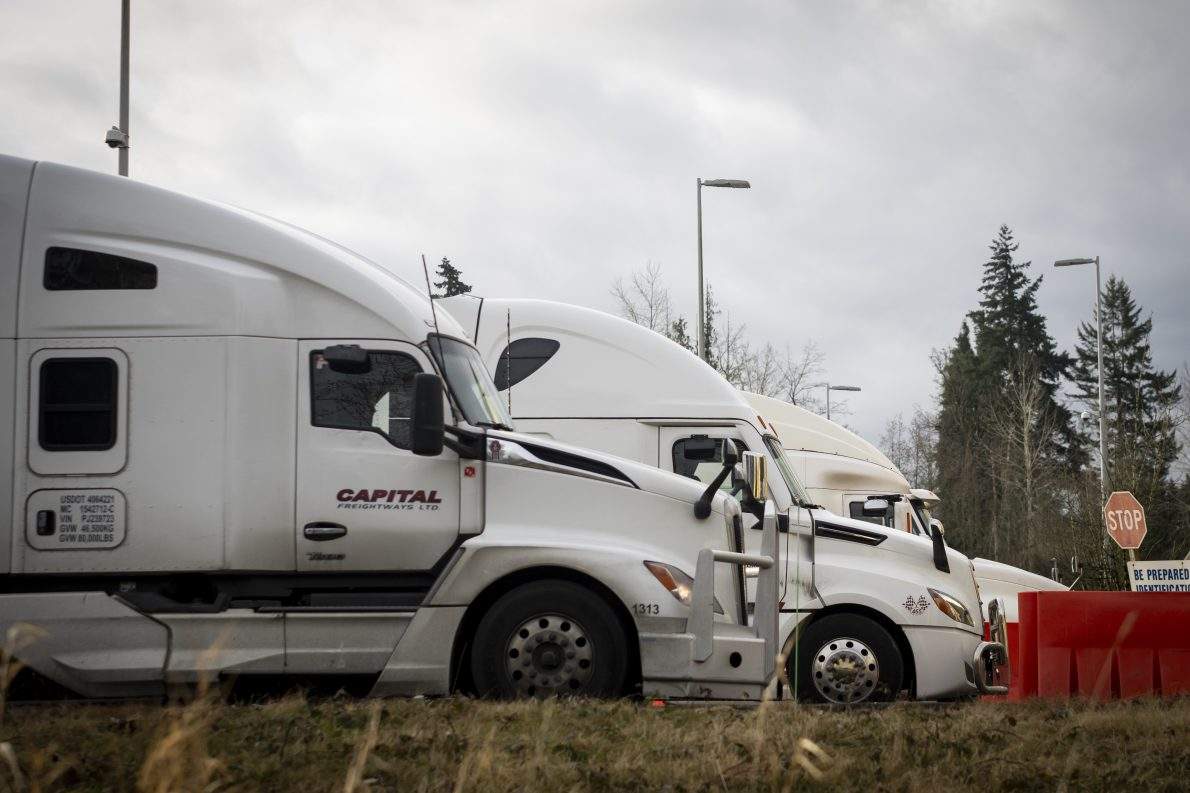
If you want to drive a massive commercial rig in Quebec, a standard provincial license exchange isn't going to cut it anymore.
The Quebec government just made a massive policy shift. Effective immediately, the Société de l'assurance automobile du Québec (SAAQ) will no longer automatically hand over a Class 1 commercial license to incoming drivers from Ontario. If an Ontario truck driver has less than 24 months of experience behind the wheel, they must pass a practical road test first. If they fail that test twice, they are headed straight into Quebec's mandatory training program. Don't forget to check out our previous article on this related article.
This isn't a random bureaucratic squabble. It's a direct response to a string of horrific, fatal crashes involving heavy trucks and a damning evaluation of how Canada's most populated province trains its drivers.
The Shocking Loophole and Why Quebec Had Enough
For years, the interprovincial license exchange system worked on a simple honor system. You move from Toronto to Montreal, show your valid Class 1 credentials, and get a shiny new Quebec license. No questions asked. To read more about the history of this, USA Today provides an informative breakdown.
Quebec Transport Minister Benoit Charette admitted that this open-door policy essentially ignored the wildly differing standards of driver education. Getting a commercial permit in Ontario is much easier than getting one in Quebec. In Quebec, a driver must go through a grueling 615-hour professional truck driving program. Ontario does not require anything close to that level of rigor.
The immediate catalyst for this crack-down was a scathing May 2026 report from Ontario’s auditor general. That audit exposed massive structural failure in Ontario's commercial driver licensing. Undercover investigators found private career colleges passing students who hadn't been taught vital safety maneuvers.
Quebec saw the writing on the wall. The province is seeing an uptick in devastating collisions involving inexperienced operators. SAAQ spokesperson Simon-Pierre Poulin noted that the new road test acts as a defense mechanism against a dangerous shortcut. People who couldn't cut it under Quebec's strict guidelines were simply getting certified through Ontario's weaker system and then transferring their papers back over.
It Protects Quebec But Leaves a Massive Blindspot
The trucking industry isn't arguing against the new rules. Marc Cadieux, CEO of the Quebec Trucking Association (QTA), openly applauded the decision. He called it a necessary first line of defense to protect compliant businesses and everyone sharing the road.
But let's look at what this measure actually does—and what it completely ignores.
This rule only applies to truck drivers who formally move to Quebec and try to exchange their licenses. Between 300 and 400 drivers pull this transfer every year.
What about the thousands of Ontario-based rigs hauling freight across the Quebec border every single day?
Absolutely nothing changes for them. An under-trained, newly licensed driver can still drive a 40-tonne tractor-trailer straight down Highway 20 from Toronto into the heart of Montreal, completely bypassing the new testing requirement. As long as their rig is plated in Ontario and they keep their Ontario license, Quebec's new policy can't touch them.
Industry veterans are pointing out that while the policy signals that the government is listening, it's a small patch on a leaky hull. Unless provincial enforcement officers step up aggressive roadside inspections, the real-world impact on daily highway safety will be minimal.
Cracking Down on Driver Inc and Foreign Worker Safeguards
Quebec is also targeting deeper industry rot. Alongside the Ontario driver restrictions, the province is creating a dedicated working group to evaluate temporary foreign workers operating heavy vehicles.
The group has six months to deliver recommendations to the SAAQ. The main goal is getting international drivers up to speed on Canada’s unique driving challenges, like handling a massive rig during a severe winter blizzard.
But the real elephant in the room is the "Driver Inc" model.
This is a widespread industry practice where trucking fleets pressure drivers to incorporate themselves as independent businesses. It sounds like standard corporate structuring, but it's a massive evasion tactic. By using incorporated drivers, companies dodge payroll taxes, workers' compensation fees, and standard employee benefits.
Worse, it completely distorts safety incentives. Stéphane Émond, president of the Centre de Formation du Routier de Montréal, pointed out that these owner-operators are often forced to take on the financial burdens of maintenance, repairs, and soaring insurance costs. When profit margins get razor-thin, what gives? Safety inspections get skipped. Maintenance gets deferred. Drivers push past their legal hours of service just to make ends meet.
Right now, companies caught abusing this model face incredibly lenient penalties. They treat minor fines as the cost of doing business, pay them, and keep rolling out unsafe trucks.
The Real Fix for Canada's Roads
Quebec's Transport Ministry is calling this a temporary policy. They are basically holding Ontario's feet to the fire, waiting for the Ford government to overhaul its career colleges and clean up its own backyard.
But temporary provincial band-aids won't fix a broken national supply chain.
If Canada wants to stop the rise of tragic highway collisions, it needs a uniform, mandatory federal training standard modeled after Quebec's 615-hour blueprint. As long as one province allows a weaker, faster track to a commercial license, bad actors will exploit the loophole.
If you are an operator or an aspiring driver, expect intense scrutiny at the scale houses. Quebec highway patrol officers are getting broader enforcement powers, and zero-alcohol tolerances for heavy vehicle operators are being strictly enforced.
If you're moving to Quebec with a fresh Ontario Class 1 license, book your SAAQ road test immediately and ensure your technical maneuvers are flawless. For carriers operating across provincial lines, it is time to audit your own recruitment standards. Relying purely on the face value of an out-of-province license is no longer a guarantee of competence. Get your drivers evaluated independently before putting them on the highway.