The air at 35,000 feet is thin, freezing, and indifferent. Inside the cabin of Air France Flight 447, however, there was only the low, comforting hum of a modern marvel. It was June 1, 2009. Two hundred and twenty-eight people were suspended over the Atlantic Ocean, traveling from Rio de Janeiro to Paris. They were reading, sleeping, sipping wine, and trusting their lives to a complex web of aluminum, wiring, and code.
They had no reason not to. Aviation had become so safe that we forgot airplanes are heavy machines defying gravity in a hostile sky. We outsourced our survival to automation.
Then, the ice came.
It did not strike like a lightning bolt. It crept up quietly, microscopic crystals clogging the pitot tubes—the small, pencil-shaped sensors protruding from the aircraft's fuselage. These tubes measure airspeed. When they froze over, the plane’s computers suddenly lost their bearings. The digital brain of the Airbus A330 essentially threw up its hands. The autopilot disconnected. The alarms began to blare.
In the courtroom in Paris, fourteen years after that terrifying night, the cold mechanics of that moment were laid bare. But the trial was never really about the ice. It was about what happens when the systems we build to protect us end up blinding us instead.
The Blind Spot in the Cockpit
Imagine driving a car down a pitch-black highway at seventy miles per hour. Suddenly, your speedometer drops to zero, your power steering cuts out, and every warning light on your dashboard starts flashing simultaneously. You have seconds to react. You cannot see the road. You cannot trust your dashboard.
This was the reality faced by the co-pilots left in control of Flight 447 while the captain took a scheduled rest.
When the pitot tubes failed, the aircraft's automated systems reverted to manual control. The pilots, accustomed to a machine that practically flew itself, were thrust into a aerodynamic crisis. Deprived of reliable speed readings, they made a fatal error. The handling pilot pulled back on the control stick, pitching the nose of the massive aircraft upward.
He was trying to climb, to get above the chaos. Instead, he was bleeding speed.
The airplane began to stall. A stall in aviation does not mean the engine stopped; it means the wings lost the lift required to keep the plane in the air. The aircraft was falling, belly-first, toward the black ocean below at a rate of 11,000 feet per minute.
Yet, because of the chaotic instrumentation and a phenomenon known as cognitive tunnel vision, the pilots did not realize they were stalling. The stall warning wailed 75 times. They ignored it, believing the erratic data on their screens meant the plane was going too fast, not too slow.
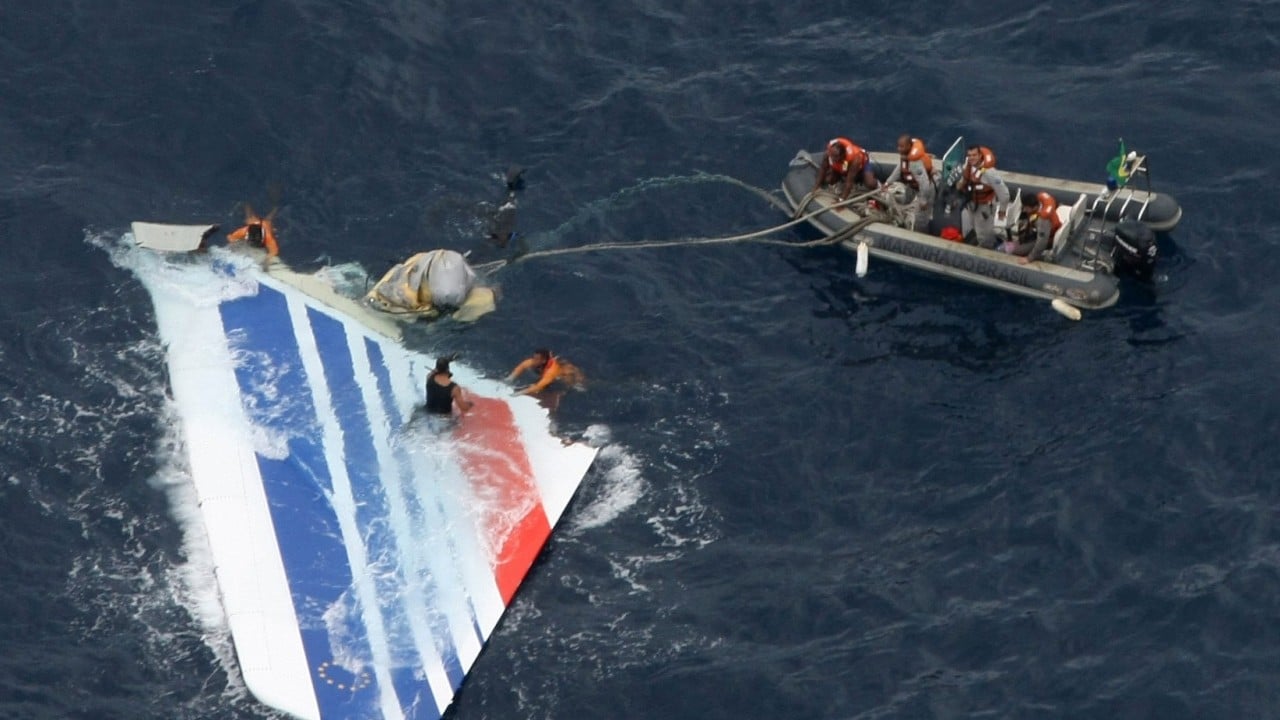
It took just four minutes and twenty-four seconds from the moment the sensors froze to the moment the plane struck the water.
A Systemic Amnesia
For more than a decade, the legal battle dragged on. Families of the victims sat in French courtrooms, forced to listen to the clinical deconstruction of their loved ones' final moments. The central question of the trial was a heavy one: Who bears the responsibility when a tragedy is born from a chain reaction of human error and mechanical failure?
Airbus, the manufacturer of the plane, pointed the finger at the pilots. They argued that the crew failed to respond correctly to a standard stall scenario. They claimed the aircraft itself functioned exactly as it was programmed to when the data corrupted.
Air France, the airline, countered by focusing on the faulty sensors. They pointed out that Airbus had known about issues with the Thales-manufactured pitot tubes on earlier flights but had not mandated an immediate replacement across the fleet. They argued that the pilots were never adequately trained to handle the specific nightmare scenario that unfolded in the dark over the Atlantic.
The prosecutors themselves initially recommended acquittal, arguing that it was impossible to prove criminal negligence against the corporate giants. They called it a tragedy caused by a combination of factors never before seen.
But the families refused to accept that explanation. To them, treating the crash as a freak accident was a form of systemic amnesia. It absolved the creators of the system from the consequences of its design.
The Verdict that Changed the Sky
The Paris court ultimately rejected the easy way out. In a landmark ruling, the judges found both Airbus and Air France guilty of involuntary manslaughter.
The court did not fine them billions; the financial penalties were capped at just 225,000 euros each, a pittance to multinational corporations. The true weight of the verdict was moral and historical.
The judges ruled that Air France had committed "acts of negligence" by failing to provide its pilots with operational information and specific training regarding pitot tube failures. They ruled that Airbus had failed to take the necessary measures to inform crews and fix a known vulnerability quickly enough, despite a surge in sensor malfunctions in the months leading up to the disaster.
The ruling shattered a longstanding paradigm in corporate accountability. It declared that you cannot build a highly automated world, fail to prepare the humans running it for the moments when that automation breaks, and then blame those same humans for failing.
The Human Core of the Machinery
We live in a world governed by algorithms and fail-safes. We trust them to steer our ships, manage our grids, and fly our planes. We do this because humans are fallible. We get tired. We panic. We miscalculate.
But the lesson of Flight 447 is that automation is only as good as the human understanding that underpins it. When the computers failed, the pilots were not rescued by technology; they were abandoned by it. They were left in a high-tech cocoon that had suddenly become an inscrutable puzzle box.
The trial in Paris concluded, the fines were logged, and the legal briefs were filed away. But the true legacy of that night lives on every time you board a commercial flight.
Because of the loss of those 228 lives, pilot training across the globe was fundamentally overhauled. Today, pilots spend hours in simulators learning specifically how to fly through high-altitude stalls and how to handle sudden losses of airspeed data. The pitot tubes on every A330 were replaced with more reliable models.
The tragedy forced the aviation industry to realize that the human element is not a liability to be engineered out of existence. It is the ultimate safety net.
The final moments of Flight 447 were not silent. The voice recorder captured the utter confusion in the cockpit, the frantic struggle against an invisible enemy, and the late realization of what was happening just seconds before impact. The last recorded words were not an engineering analysis. They were a raw, human cry of desperation as the ocean rushed up to meet them.
The court's decision ensures that those words were not lost in the depths. They remain a stark reminder that behind every line of code, every automated system, and every corporate ledger, lies a human life depending on someone to keep watch when the lights go out.