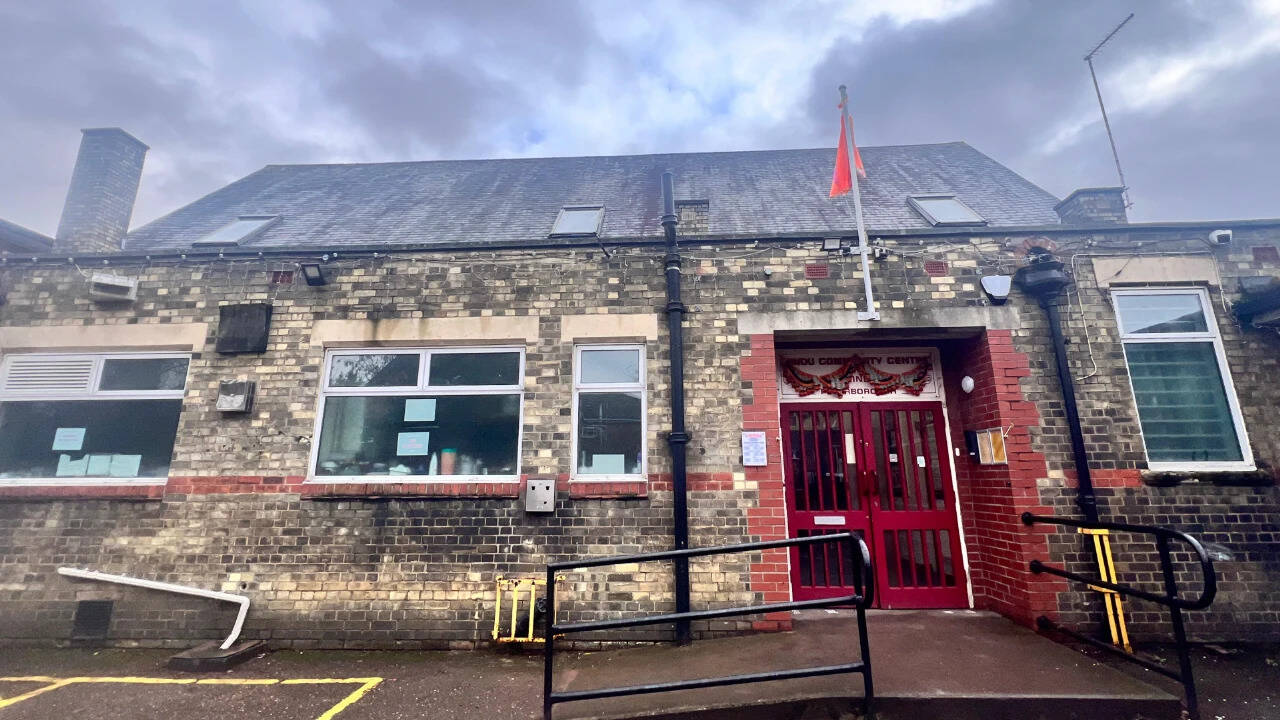
The scent of sandalwood incense does not easily cling to concrete, but over forty years, it has managed to seep into the very brickwork of Unit 6 on Rock Road.
For four decades, this nondescript corner of Peterborough has served as the Bharat Hindu Samaj temple. Inside, the brass bells chime, the deities are adorned with fresh marigolds, and the quiet murmur of prayers offers a familiar comfort to those who have crossed oceans to build lives in the East of England. For the grandmother who arrived in the 1980s, and for her British-born grandson who knows no other spiritual home, this temple is not just a building. It is a geographical anchor. It is the only Hindu temple in a thirty-five-mile radius, drawing families from across Cambridgeshire, Norfolk, Lincolnshire, and Leicestershire.
But on a rainy afternoon in a London courtroom, the warmth of that sanctuary felt very far away.
In the High Court of Justice, the language of faith is replaced by the dry, unyielding dialect of municipal accounting. Here, the battle is not over theology, but over a freehold.
The Weight of the Ledger
Consider a man we will call Amit. For thirty years, Amit has volunteered to sweep the floors of the Rock Road temple. He has watched children grow up, celebrated festivals, and offered food to the hungry. To Amit, the temple is priceless.
To the Peterborough City Council, however, the temple is part of the New England Complex—an asset on a spreadsheet that desperately needs to be balanced.
The reality of modern local government in Britain is stark. Councils are broke. Services are being slashed, roads are crumbling, and budgets are stretched to their absolute limits. When Peterborough City Council decided to sell the freehold of the Rock Road site, they were looking for a lifeline.
They found one in a bid from the United Kingdom Islamic Mission (UKIM).
UKIM put down a clean, formidable offer: £1.4 million in cash, backed by proof of £5.4 million in reserves. They also pledged to top any other cash offer by up to five percent. Their plan? To redevelop the complex into the Masjid Khadijah, a new mosque and Islamic community center.
The Bharat Hindu Samaj fought back with what they had. They offered £900,000 in cash. To bridge the gap, they added a calculation of £504,000 in "social value"—a figure representing decades of community service, free meals, integration programs, and cultural preservation.
But social value does not pay for municipal pothole repairs.
"Peterborough council is hard up," the council’s barrister, Catherine Rowlands, told the court with bruising sincerity. "We need the money."
A Silent Auction and the Law of the Highest Bidder
The temple's legal team, led by barrister Toby Fisher, stood before Mr. Justice Morris to argue that the council's decision was fundamentally flawed and unlawful.
This is not a story of religious warfare.
The temple community has been incredibly careful to make one thing clear: their anger is not directed at the local Muslim community or the mosque. "Our fight isn't with the mosque; our fight is with the council," a spokesperson emphasized during the dispute. It is a fight against a cold, bureaucratic process that treats a forty-year-old spiritual home like an old warehouse to be liquidated.
The legal challenge hinges on how the sale was handled. The temple had been in discussions with the council to secure the building's future since 2017. For years, they believed they were working toward a solution. Then, the council suddenly shifted to a competitive bidding process.
Fisher argued that the council's cabinet blindly followed the recommendations of officers without proper independent scrutiny, essentially delegating their decision-making powers. He also argued that the council failed its duties under the Equality Act 2010. If the temple is evicted, the local Hindu community has nowhere else to go. UKIM, by contrast, operates dozens of centers across the country.
The council’s defense was simple: the process was fair, transparent, and legal. The temple lost a competitive bidding process, and they are now using the courts to try to overturn a fair defeat.
But the courtroom drama revealed a deeper, more troubling disconnect.
When the council’s representative argued that the Hindu community is "valued" and that the council "wants them to stay" despite the sale, a wave of bitter laughter erupted from the public gallery. The gallery was packed with Hindus who had traveled from Peterborough on a chartered coach, many wearing saffron shirts.
"Peterborough is a big place—there are plenty of other premises," the council's barrister remarked.
In the gallery, heads shook in disbelief. To a bureaucrat, a building is just square footage. To a believer, a temple is where the divine has been invited to reside through decades of prayer. You cannot simply pack up the spiritual heart of a community and move it to a vacant retail unit next to a supermarket.
The Ghost in the Machine
The legal system is designed to look at rules, procedures, and statutory obligations. It is not designed to measure the grief of a community losing its center of gravity.
The council points out that the temple had enjoyed forty years of rent-free occupancy, a generous arrangement that must eventually yield to financial reality. Critics on online forums echo this sentiment, arguing that if the temple wanted to keep the building, they should have raised more money, bid higher, and played the capitalist game more effectively.
Perhaps they are right. Perhaps, in a world governed strictly by supply, demand, and municipal solvency, the highest cash offer must always win.
But what happens to the social fabric of a city when its public spaces are sold to the highest bidder? If every community asset is subject to the cold logic of the market, then only the wealthiest groups will ever have a place to gather.
The High Court will eventually deliver its written judgment. It will decide whether the council’s decision-making process crossed the line into unlawfulness, or whether it was simply a harsh but legal exercise of fiscal survival.
No matter the outcome, the silence left behind in Rock Road will be hard to ignore.
The brass bells of Unit 6 still ring for now, their clear, metallic tones echoing out into the Peterborough air. But those who listen closely can hear the countdown ticking underneath.