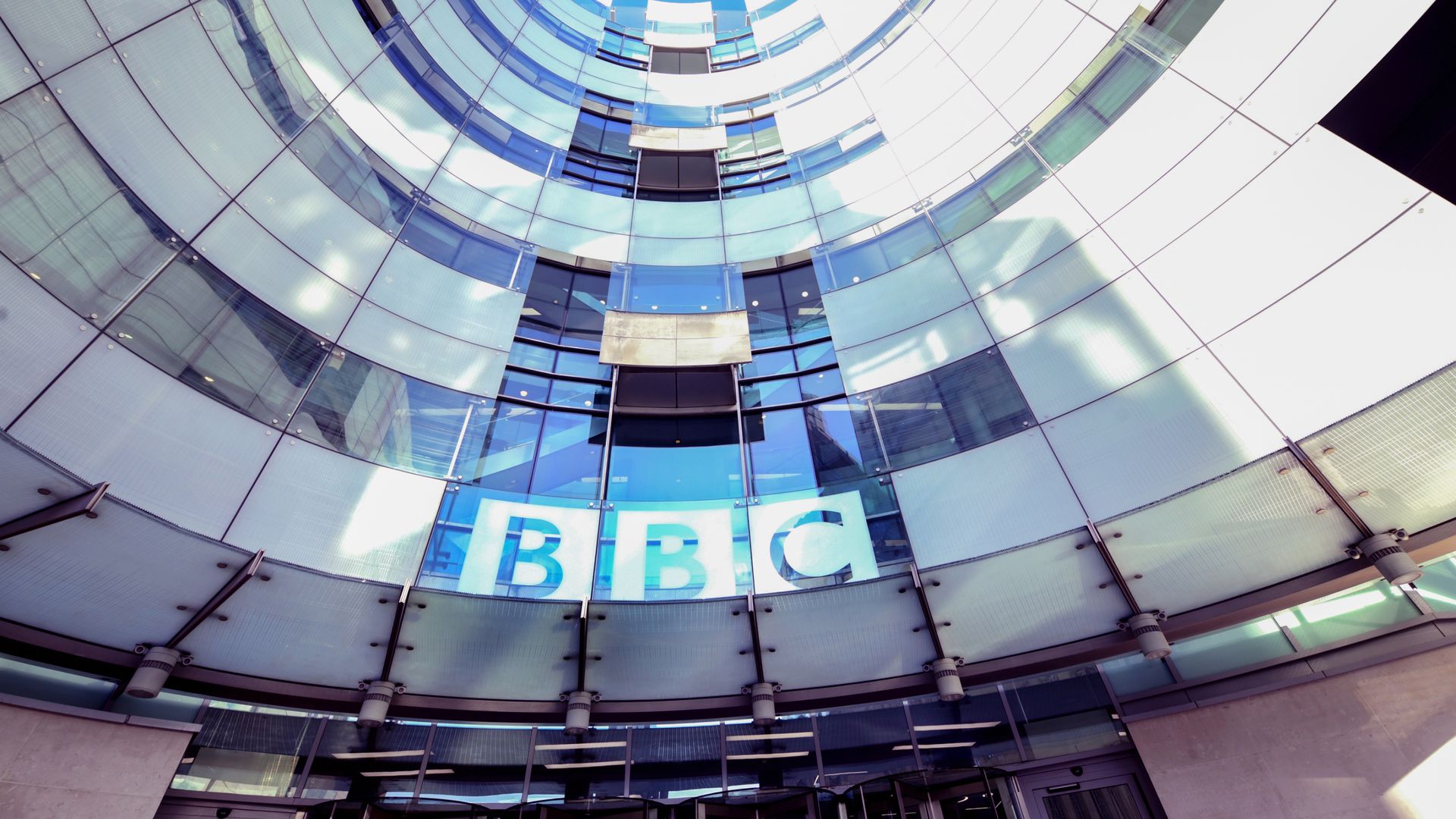
The coffee machine in the basement of New Broadcasting House has a specific, metallic rattle. It is the sound of 4:00 AM. For Sarah—a hypothetical composite of the dozens of assistant producers who actually keep the nation’s morning news on the air—that rattle is the baseline of her working life. She has spent eight years running up flights of stairs, chasing reluctant politicians down corridors, and double-checking libel laws on three hours of sleep. She loves the BBC. She believes in public service broadcasting with a secular ferocity.
But belief does not pay rent in London.
Behind the glossy studio backdrops and the familiar, comforting chimes of the hourly news countdown, a quiet panic is unfolding. The British Broadcasting Corporation is locked in a tense standoff with its own workforce. Management recently tabled a pay proposal that union officials quickly branded as "bleak." It is a corporate word for a human crisis. In strict financial terms, the offer is a real-terms wage cut. In human terms, it is the moment a public institution asks its staff to subsidize its survival out of their own pockets.
The math is brutal, even if the spreadsheets try to soften the blow. When inflation outpaces a salary increase, money evaporates. It looks like a raise on paper. It feels like a penalty at the supermarket checkout.
The Arithmetic of Exhaustion
Consider the mechanics of a modern newsroom. We often judge the health of a broadcaster by the faces we see on screen—the highly paid anchors and chief correspondents whose names become household words. This is a mistake. The true spine of the organization consists of the thousands of invisible operators. They are the sound engineers adjusting frequencies in torrential rain, the regional reporters covering local council disputes, and the digital editors monitoring feeds from war zones.
The current dispute centers on a fundamental disconnect between corporate budgeting and everyday survival. Management points to a frozen license fee and a brutal economic climate. They argue that the offer is the maximum possible allocation under extreme fiscal constraints. The unions look at the same numbers and see a breaking point.
The problem is that you cannot broadcast passion indefinitely.
Average Inflation Rate (UK) vs. Proposed Public Sector Pay Rises
[A widening gap where the cost of living line climbs steeply while the wage line plateaus]
When wages stagnate against inflation, the impact is cumulative. It starts with small sacrifices. A skipped lunch. A longer commute to find cheaper housing. Eventually, it alters the fabric of the journalism itself. When media professionals are consumed by financial anxiety, their ability to pursue difficult, time-consuming stories diminishes. Investigation requires patience. Patience requires stability.
The Invisible Migration
A strange phenomenon occurs when an institution underpays its workforce. The institution does not collapse instantly. Instead, it hollows out.
The brightest minds, particularly those in mid-career positions, begin to look elsewhere. The independent production sector, streaming giants, and corporate communications firms watch these disputes with a predatory optimism. They can offer what the public broadcaster cannot: a salary that acknowledges the price of gas and groceries.
The departures happen quietly. A farewell cake in a breakroom. A brief email expressing gratitude for "a wonderful five years." But the departure lounges of public media are filling up with institutional memory that cannot be easily replaced. When an experienced editor leaves, they take with them a decade of internalized legal knowledge, a Rolodex of trusted sources, and the instinct for what makes a story fair.
What remains is a workforce that is younger, less experienced, and increasingly burnt out. The burden shifts to those who cannot afford to leave, or those who are too new to realize they are burning their own fuel to keep the lights on.
The Myth of the Glamour Premium
There is an old, pervasive argument that working for a prestigious institution is its own reward. It is called the glamour premium. The logic suggests that because millions of people would give anything to have a BBC badge around their neck, those who possess one should be willing to suffer a little for the privilege.
This argument is structurally flawed. It assumes that prestige can be bartered for childcare.
Furthermore, the glamour premium acts as a socioeconomic filter. If a media organization relies on low wages supplemented by the sheer joy of public service, it implicitly decides who can afford to work there. People with independent wealth or family support stay. People from working-class backgrounds, who rely entirely on their monthly paycheck to survive, are squeezed out.
The ultimate casualty is representation. A newsroom that only accommodates those who can afford to take a real-terms pay cut eventually becomes an echo chamber. It loses its connection to the very public it is mandated to serve. The stories of ordinary people living through economic hardship are harder to tell authentically when the person holding the microphone is fighting the exact same battle but is forbidden from talking about it.
The Cost of the Signal
Every evening, across the country, millions of television screens light up with the exact same blue and red graphics. The signal is reliable. It is part of the national infrastructure, as vital and taken for granted as running water or electricity.
But infrastructure requires maintenance.
The current standoff is not merely a dispute over percentages and decimal points. It is a debate about value. It forces a question that nobody in leadership wants to answer directly: how much of a premium do we place on an independent, robust press? If the answer is that we value it deeply, then the cost of maintaining it must be borne by the system, not by the individuals who show up at 4:00 AM to turn on the cameras.
Sarah walks out of the building as the sun begins to hit the glass facade of the public plaza. The shift is over. The news has been delivered, precisely on time, without a single hitch. To the viewer at home, everything looked seamless, professional, and permanent. They have no reason to suspect that the person who built the broadcast spent her lunch hour calculating whether she could afford to stay in London for another six months.
The broadcast goes on, but the foundation is wearing thin.


