A quiet room in Manhattan.
The air smells faintly of stale coffee and expensive ozone. On the third floor of a boutique quantitative trading firm, a young programmer named Sarah sits with her fingers poised over a mechanical keyboard. It is a Tuesday afternoon, but the tension in the room is thick enough to choke on.
Sarah’s screen is split. On the left, a cascade of green and red tickers represents the fortunes of global oil markets. On the right, a blank browser window monitors a single social media page.
She is waiting for a man in Washington to pick up his phone.
When he does, her screen will flash. If she reacts in under three seconds, her firm makes ten thousand dollars. If she reacts in one second, they make fifty thousand. But if she is too slow—if her finger falters, or if the server in Ohio hiccups—they lose a quarter of a million dollars before she can even blink.
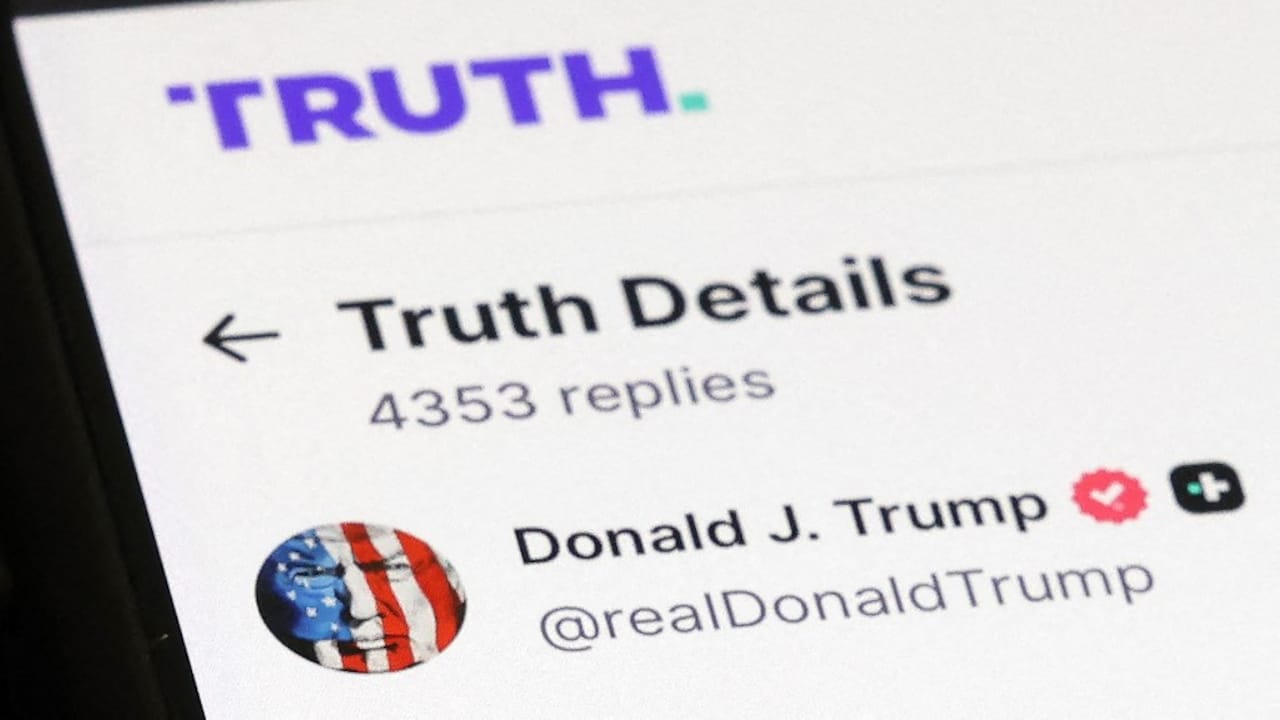
This is the reality of modern finance, where national policy is no longer delivered via formal press conferences or carefully vetted white papers. It is broadcast in raw, erratic bursts of prose on a platform called Truth Social. A single sentence about escalating tensions in the Middle East or a sudden shift in tariff policy can instantly erase or create billions of dollars in global value.
Now, those precious seconds are being packaged, priced, and sold to the highest bidder.
The Speed of Power
For years, the financial world operated under a gentlemanly illusion of shared information. When the government moved, it moved through official channels. The Federal Reserve released its notes; the SEC posted its filings; the wire services carried the news simultaneously to every desk in the country.
But power has migrated. It has gathered inside a highly volatile, publicly traded media company called Trump Media & Technology Group (TMTG).
On Thursday, TMTG quietly announced a new product that strips away any pretense of an even playing field: the Truth API.
The mechanism is deceptively simple. For a premium fee, the company will deliver a real-time data feed of the platform's ten most influential accounts directly to institutional subscribers. It is a digital fast-lane. By bypassing the standard push notifications that the average citizen receives on their phone, the feed delivers posts to Wall Street trading algorithms milliseconds before they reach the public web.
In high-frequency trading, a millisecond is an eternity. It is the difference between a predator and prey.
Consider what happens next when a major policy shift is announced. If a trading firm knows about a new tariff on foreign steel even five hundred milliseconds before the rest of the market can load the webpage, their automated systems can buy up short positions, dump vulnerable equities, and lock in profits before the broader public has even finished reading the first three words of the post.
It is a monetization of the presidency itself, wrapped in the sterile language of software engineering.
The Machinery of the Glitch
To understand why this matters, we have to look at how we got here.
In the spring of 2026, the oil markets experienced a sudden, violent spasm. Fifteen minutes before a major post regarding diplomatic talks with Iran went live to the public, a massive wave of bets surged through the crude oil market. The price of West Texas Intermediate tumbled, dragging currency markets along with it.
The official explanation was a whisper of rumors. The reality was simpler: sophisticated firms were already scraping the platform’s data, using automated bots to crawl Truth Social's public pages every microsecond, searching for any scrap of text that matched keywords like "Iran," "tariffs," or "crude."
These scrapers were clumsy. They violated terms of service. But they worked.
The new API is TMTG's response to this digital gray market. Instead of fighting the scrapers, they are inviting them through the front door—for a price. Kevin McGurn, the company’s interim chief executive, framed the move as a natural evolution of their strategy to "monetize proprietary assets."
But there is a profound difference between Reddit selling its user data to train artificial intelligence models and a sitting president's media company selling early access to his personal declarations of state.
The president is not a typical user. His words do not merely reflect the market; they create it.
When a government official's personal financial interests are directly tied to the speed at which their official decisions are communicated, the traditional boundaries of public service dissolve. Kathleen Clark, a government ethics expert at Washington University School of Law, did not mince words when analyzing the development, calling it an improper exploitation of government power designed to enrich the president’s own company.
Because the president and vice president are uniquely exempt from certain federal conflict-of-interest statutes that bar other officials from owning businesses that profit off their office, the venture is entirely legal. Yet, historically, leaders have voluntarily stepped away from active business empires to avoid the mere appearance of this kind of leverage.
Now, the leverage is the product.
Inside the Server Farms
Step back from the political theater and look at the physical landscape of this transaction.
Deep in the data centers of Northern Virginia and New Jersey, racks of black servers hum in chilly, darkened rooms. They are connected by miles of fiber-optic cables that have been laid in straight lines through mountains and under rivers, all to shave a few microseconds off the transit time of data.
In these rooms, there is no sentimentality. There is only the ruthless mathematics of information asymmetry.
When the Truth API goes live, it will plug directly into these servers. The subscribers—the quantitative hedge funds, the high-frequency trading desks, the elite financial institutions—will have their algorithms tuned to a razor's edge. They will pay sums that have not yet been disclosed, but which are guaranteed to be far out of reach for any retail investor.
The system creates two tiers of reality.
- Tier One: The algorithmic elite, who receive the raw text of executive decisions in real-time, directly into their trading engines.
- Tier Two: Everyone else. The pension funds, the independent traders, the citizens who must wait for the notification to pop up on their phones, reading the news only after the market has already reacted and adjusted the prices against them.
It is a perfect loop of capital. The president's family company, which has seen its stock drop significantly since he took office, desperate for new revenue streams to offset mounting losses, finds its most valuable commodity is not the social network itself, but the literal keystrokes of its most famous user.
The trading floor in Manhattan begins to dim as the late afternoon sun filters through the high windows. Sarah stretches her arms, her eyes dry from staring at the flickering numbers.
On her screen, the market has stabilized, but she knows the quiet is temporary. In a few weeks, her firm will integrate the new API. The manual monitoring will end. The human element of her job—the waiting, the gut check, the split-second decision to press the key—will be replaced entirely by a script running on a server three hundred miles away.
She looks down at her phone. A standard notification from Truth Social lights up her lock screen. It is an update from the president, three minutes old.
She smiles a tired, cynical smile. By the time the light of that screen reached her eyes, the money had already changed hands, flying through the dark fiber-optic cables at the speed of light, leaving the rest of the world to wonder how a fraction of a second became the most valuable commodity on earth.