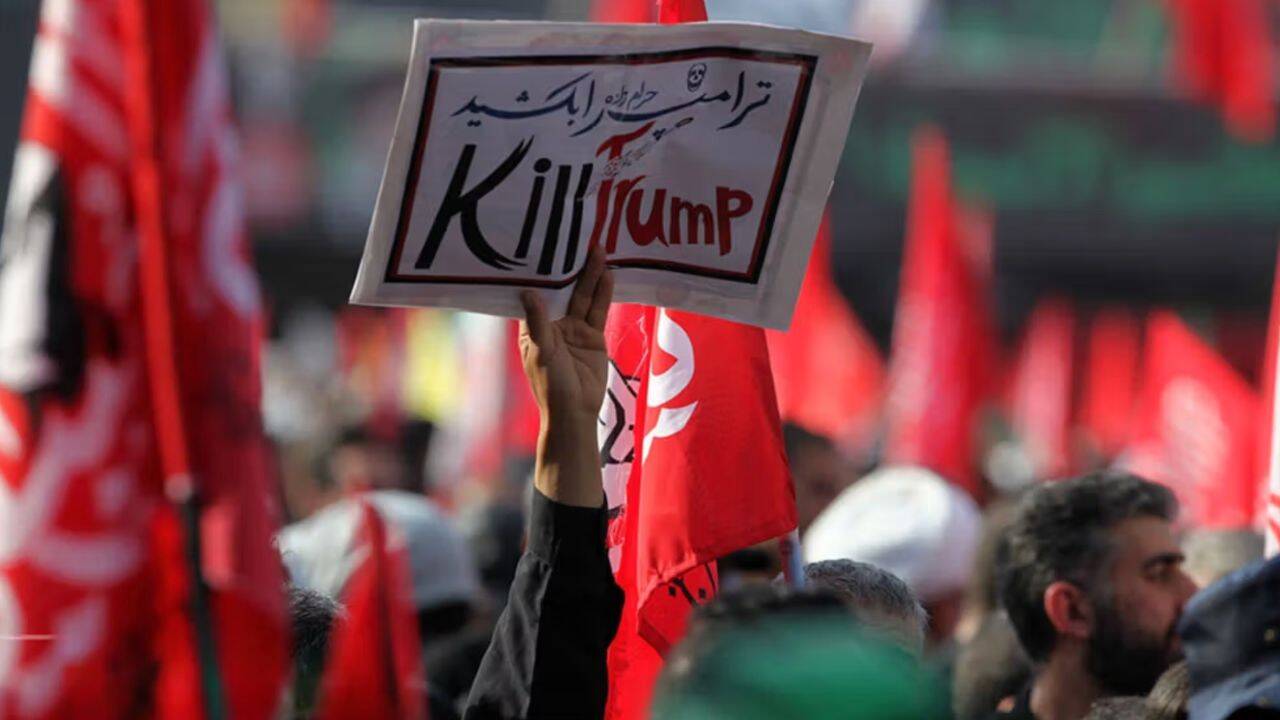
State-sanctioned grief is a highly organized industry in Tehran. When high-ranking officials or foreign allies of the Islamic Republic are assassinated, the response follows a strict, predictable script. Streets are closed. Black banners drape the concrete facades of public buildings. Hand-painted signs demanding blood and vengeance appear in the hands of mourners, seemingly out of nowhere.
The Western press routinely seizes on these spectacles. Headlines scream about crowds offering vast tracts of land or millions of dollars for the heads of American and Israeli leaders, painting a picture of a monolithic society unified in a bloodthirsty frenzy.
The reality on the ground is far more fractured.
What looks like spontaneous, popular rage is often a carefully engineered piece of political theater designed to project power outward while masking deep economic and social fractures at home. To understand the vitriol spewed at these state funerals, one must look past the burning flags and examine the cold, transactional mechanics of the regime that stages them.
The Economy of a Funeral Crowd
Mass mobilization in Iran relies on a system of patronage and coercion. The core of any state-mandated demonstration consists of the Basij, a paramilitary volunteer militia under the Islamic Revolutionary Guard Corps (IRGC). For these members, attendance is not merely a spiritual duty; it is a professional requirement tied directly to educational advancement, government employment, and financial bonuses.
Behind them are the civil servants and factory workers bused in from the provinces. In an economy suffocated by hyperinflation and international sanctions, refusing to board the state-provided buses is a luxury few working-class families can afford. A missed rally can mean a flagged file at the ministry or a canceled food stipend.
The extraordinary offers of bounties—such as donating personal land or pooling meager resources to fund an assassination—typically originate from ultra-conservative elements within these state-backed organizations. They are performative gestures aimed at demonstrating ideological purity to the leadership, rather than actionable financial contracts.
The average Iranian citizen, struggling to buy basic groceries as the rial plummets, is not offering up their family plot of land for a foreign political hit. They are trying to survive the week.
The Strategic Function of Controlled Rage
Tehran utilizes these public displays of anger for precise geopolitical leverage. By broadcasting images of an apparently unhinged, vengeful population, the regime seeks to establish a form of psychological deterrence against its adversaries.
- Signaling resolve to the axis: The display reassures regional proxies in Lebanon, Yemen, and Iraq that the central command remains fiercely committed to the struggle despite suffering major blows.
- Creating a negotiating chip: Dictatorships often use public anger as a diplomatic shield, telling Western interlocutors that they must concede to moderate elements within the government lest the "uncontrollable" masses take over.
- Deflecting domestic blame: When a high-profile figure is eliminated inside Iranian borders, it represents a catastrophic intelligence failure. Loudly demanding the enemy's head shifts the public narrative away from how the security apparatus allowed the breach to happen in the first place.
This theater, however, carries a significant risk. When a government continuously promises devastating retaliation to its core supporters and delivers only symbolic responses, the gap between rhetoric and reality begins to erode its credibility among its most loyal defenders.
The Silent Majority Behind the Banners
Away from the camera lenses of state media and foreign journalists restricted to designated press areas, the mood in the capital is entirely different. Decades of economic mismanagement have alienated vast swaths of the population, particularly the youth.
For millions of Iranians, the assassination of a regime figure or a foreign proxy leader is met not with tears, but with a quiet, anxious indifference. The primary fear is not the loss of a leader, but the economic fallout and the threat of an all-out war that a reckless state response might trigger.
The regime is acutely aware of this disconnect. The massive security presence at these funerals serves a dual purpose: it organizes the mourners, and it deters any spontaneous anti-government protests from breaking out in adjacent neighborhoods. The same state that hands out flags to marchers is ready to deploy tear gas and live ammunition if the crowd shifts its focus from foreign enemies to domestic oppressors.
High-end journalism requires looking past the performance to see the strings. The fiery rhetoric emanating from the streets of Tehran is not a measure of the regime's absolute control, but a symptom of its perpetual insecurity.