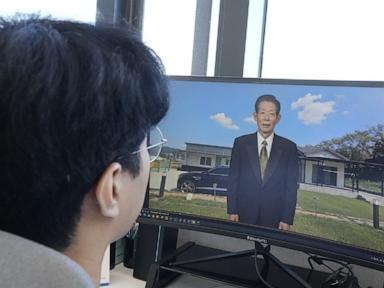
South Korean families are increasingly turning to generative AI providers to construct video and voice replicas of deceased relatives, paying tech startups hundreds of dollars for synthesized interactions designed to substitute for traditional mourning rituals. Driven by profound cultural pressures to honor ancestors and perform precise memorial rites, the demand has moved from experimental television spectacles to a systematized, transactional market. Startups like Vaice and DeepBrain AI now service hundreds of clients monthly, synthesizing facial expressions, vocal inflections, and personalized scripts from sparse legacy data like old photos and text messages. While early adopters describe a sense of emotional relief, psychiatrists and technology researchers warn that commercializing artificial replicas of the dead creates a profitable cycle of emotional dependency, trapping vulnerable consumers in an engineered state of perpetual mourning.
The transaction is simple, efficient, and chillingly corporate. For roughly 600,000 won, a grieving client can upload a handful of video clips, photographs, and audio snippets of a deceased parent or grandparent. Within days, algorithms spit out a three-to-five-minute, high-definition video of the departed. The digital likeness looks into the camera, blinks with calculated realism, and recites a scripted message dictated by the living. For an alternative look, consider: this related article.
This is the current reality of East Asia's rapidly expanding "grief tech" sector. What began years ago as isolated, high-budget virtual reality experiments broadcasted for national television has scaled into an affordable, assembly-line commodity.
Yet beneath the comforting promises of digital closure lies a predatory economic engine. By transforming the universal human experience of loss into a subscription model or a premium, one-time purchase, tech firms have discovered how to monetize the psychological vulnerabilities of the bereaved. The real issue is not that the technology is failing to convince us; it is that it is succeeding well enough to alter how human beings process reality and death. Related analysis on this trend has been shared by Engadget.
The Cultural Machinery Driving the Digital Afterlife Market
To comprehend why South Korea has become the global epicenter for this industry, one must look beyond the country's hyper-advanced digital infrastructure. The true catalyst is cultural.
Traditional Korean society places an immense, non-negotiable burden on the living to care for the dead. Through Chuseok (autumn harvest festival), Seollal (Lunar New Year), and Jesa (ancestral memorial rituals), families are bound by Neo-Confucian duties to offer food, bows, and updates to the spirits of their progenitors.
When a parent dies, the guilt of things left unsaid can become debilitating. Startups have explicitly engineered their business models to exploit this specific cultural friction.
Consider a hypothetical example. A middle-aged salaryman in Seoul, consumed by the grueling hours of corporate life, misses the final moments of his father’s battle with cancer. The resulting guilt is a paralyzing weight. A tech startup steps into this emotional void, offering a 180-second synthetic video where the digital avatar of the father explicitly tells the son, "I am proud of you, you did enough."
This is not a historical archive. It is a fabricated catharsis sold for a premium.
The demographics of the consumer base confirm this trend. The primary buyers are not tech-obsessed teenagers or early adopters; they are men and women in their 40s and 50s. These are individuals caught in the vice grip of intense professional obligations and deep-seated cultural expectations, looking for a shortcut through agonizing remorse.
The Engineering of an Illusion
The technical mechanisms behind these videos are no longer groundbreaking, but their application is highly refined. Startups utilize deep learning models capable of reconstructing a full 3D facial mesh from a single, low-resolution photograph.
Voice cloning engines analyze the acoustic timbre, pitch, and cadence of a dead person’s voice using just a few seconds of raw audio harvested from old smartphone videos or KakaoTalk voice notes. The resulting synthetic persona is then mapped onto a generic digital body, which executes standardized, non-verbal gestures—a slight tilt of the head, a sympathetic blink, a subtle nod.
The industry categorizes these products into two distinct tiers.
Passive Playback Clips
These are pre-scripted, non-interactive videos lasting a few minutes. The client writes the script, and the AI mimics the deceased reading it. This format is widely used as a digital centerpiece during modern funeral services or family holiday gatherings.
Interactive Griefbots
This is the high-tier, far more controversial segment. Companies like DeepBrain AI have developed dedicated memorial showrooms featuring massive screens and immersive audio systems. Living relatives sit in a private studio and hold real-time, two-way conversations with the digital twin.
To achieve this level of fidelity, the subject must typically spend up to seven hours in a recording studio before their death, conducting pre-interviews and logging extensive journals to train the natural language processing model on their personal history and linguistic quirks.
The Financialization of Permanence
The commercial incentives to expand this technology are massive. Global market research estimates indicate that the digital afterlife industry will balloon into an $80 billion market within the next decade.
For tech companies, the dead represent the ultimate sticky product. A living user can cancel a streaming subscription or switch phone brands without psychological trauma. Canceling a subscription to an AI avatar that speaks with your late mother’s voice, however, feels like a secondary abandonment.
This creates a terrifying asymmetry of power between the software provider and the consumer. If a startup goes bankrupt, updates its terms of service, or raises its monthly maintenance fees, the grieving client is forced to pay whatever price is demanded to prevent their loved one from being deleted a second time.
Furthermore, the data collection practices underlying these services operate in a legal and ethical vacuum. When a family uploads the personal videos, private messages, and voice recordings of a deceased relative to a third-party server, they are surrendering intimate behavioral data to private enterprises. These databases are highly vulnerable to security breaches, raising the very real prospect of dead relatives being hijacked by malicious actors to perpetrate highly targeted deepfake scams against their own surviving children.
The Psychological Trap of Engineered Grief
Mainstream marketing materials present these digital resurrections as a therapeutic "soft landing" for trauma. They frame the technology as an advanced photo album—a way to preserve a memory in high definition.
Psychiatrists specializing in prolonged grief disorder see a far darker trajectory.
Human neurological systems did not evolve to interact with the responsive echoes of the dead. The natural mourning process requires a stark, painful confrontation with reality: the person is gone, they cannot return, and the living must adapt to a world defined by their absence. This painful cognitive restructuring is the exact mechanism that allows the human psyche to heal.
Grief tech disrupts this evolutionary adaptation. By providing a simulated, on-demand replacement, the technology enables an intense form of emotional avoidance.
Instead of moving through the stages of grief, the user is incentivized to retreat into a digital simulation. The danger is not that people will mistake the avatar for a real human being. The danger is that they will prefer the controllable, static digital phantom over the messy, unpredictable world of the living.
The Erasure of Consent
The most glaring omission in the current rush to commercialize death is the complete absence of consent from the deceased. In the vast majority of cases involving passive video clips, the person being digitized never gave permission to have their likeness, voice, and identity reconstructed by a private software firm.
When a person dies, they lose control over their image. A granddaughter can take a photograph of her grandmother, train an AI model, and force that digital replica to say things the real woman would have vehemently opposed in life.
There are already documented instances within the global industry where trial versions of grief bots, upon expiration of the family's subscription plan, began using the voice of the deceased to suggest retail purchases or prompt the family to enter their credit card information to continue the chat.
This is the ultimate degradation of human dignity. The dead are converted into corporate sock puppets, stripped of their autonomy, and repurposed as toolsets for commercial retention metrics.
The Institutional Seduction
As traditional physical burial plots vanish across land-scarce East Asian urban centers, funeral homes and memorial halls are actively partnering with AI startups to modernize their offerings. Digital screens are replacing traditional stone tablets. QR codes on columbarium niches now link to synthetic video messages.
The institutionalization of this technology gives it an aura of respectability and normalcy. It reframes a radical, psychologically volatile technological intervention as a standard, comforting evolutionary step in the history of human mourning.
But a photograph does not talk back. A video recording from 1998 does not alter its words based on what you say to it. The fundamental distinction between an archival artifact and a generative AI entity is that the generative entity simulates agency. It pretends to listen, it pretends to think, and it pretends to care.
A Systemic Pivot Toward Reality
We are racing toward a future where the boundary between memory and digital delusion is entirely erased. If society continues to treat grief tech as a harmless consumer commodity, we risk codifying a culture of permanent emotional arrest, where no one ever truly passes away, and no one ever truly heals.
The immediate imperative is not to completely ban the development of generative models, but to strip away the predatory business structures that exploit human sorrow. Legally binding digital asset frameworks must be established, granting individuals absolute sovereignty over their post-mortem data before they die.
More importantly, families must recognize the fundamental difference between honoring a legacy and subsidizing an illusion. True remembrance requires accepting the finality of a closed book, rather than paying a software developer to write endless, artificial chapters.