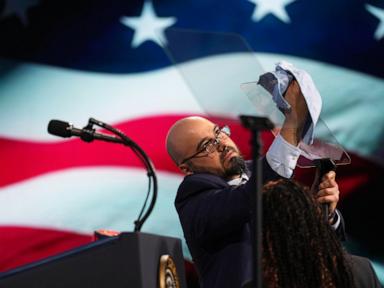
When a long-serving White House technical assistant named Gabriel Perez allegedly pulled down more than $100,000 by wagering on President Donald Trump’s speech contents, the initial shock waves hit standard compliance offices hard. Perez didn't trade traditional stocks or rely on corporate earnings leaks. Instead, he reportedly utilized the regulated prediction platform Kalshi, specifically targeting niche "Mentions" markets where users stake capital on whether specific words or policy phrases will cross a principal's lips during major addresses, such as the State of the Union.
The resulting fallout exposed a dangerous, fast-expanding regulatory vacuum at the intersection of modern finance, political accessibility, and digital gambling architecture. For years, watchdogs focused on congressional stock portfolios and traditional insider trading vectors. They entirely missed the micro-economy of speech-craft wagering.
The Mechanics of Micro-Wagering Exploits
How does an operator working right behind the glass manage to exploit a prediction market without raising immediate alarms? The anatomy of the scheme relies heavily on how modern speech texts evolve right up to the final second.
Perez had served as a trusted technical fixture since 2016, managing the physical scroll and text blocks of the presidential prompter. Drafts pass through multiple administrative hands, but the final, finalized copy sits directly in front of the operator minutes before airtime. In a standard corporate environment, possessing the exact transcript of an unreleased announcement constitutes classic material nonpublic information.
Yet, prediction markets operating under alternative asset classes have historically lagged behind traditional brokerages in detecting granular insider exploitation. Kalshi’s automated surveillance systems eventually caught the anomalous volume—flagging accounts placing hyper-specific bets on exact vocabulary choices—and alerted the Commodity Futures Trading Commission.
By then, however, the structural vulnerability was already laid bare. When an individual has mechanical control over the delivery medium, predictive contracts regarding rhetorical flourishes cease to be a test of public sentiment. They become an open vault.
The Blind Spots of Self-Policing Platforms
Prediction exchanges market themselves as democratic barometers of future events, utilizing crowdsourced probabilities to out-predict traditional polling. To maintain liquidity and appeal to retail traders, these platforms have aggressively expanded beyond macro-elections into granular, real-time cultural and political metrics.
When you open a market on whether a specific phrasing will appear in a primetime address, you invite transactional participation from people who possess intimate, non-public operational access to the event itself.
- Automated surveillance filters look for statistical anomalies, but they struggle to differentiate between an exceptionally well-informed political analyst and an insider with a thumb on the scale.
- Account verification protocols often capture basic identity markers, yet they rarely cross-reference real-time employment rosters inside executive or legislative offices.
- Asset freezing mechanisms only work after the algorithm triggers a red flag, leaving a window of exposure where illicit profits can cycle through the ecosystem.
The assumption that decentralized wisdom crowds out bad actors falls apart when the asset being traded is micro-behavioral data controlled by a single technician.
Regulatory Whiplash and the Enforcement Gap
Federal watchdogs find themselves grappling with a legal framework that was never designed for binary contracts on speech patterns. Traditional securities law relies on definitions tied to stocks, bonds, and commercial issuers. While regulatory bodies like the CFTC retain oversight over designated contract markets, policing internal government ethics breaches within decentralized prediction architecture requires an entirely new toolkit.
Government ethics guidelines explicitly forbid federal employees from leveraging non-public government information for personal financial gain. Yet, enforcement has historically lagged behind technological adoption. When public officials or civil servants discover novel financial instruments that sit outside standard brokerage reporting requirements, accountability often arrives only after a whistle is blown or an exchange's internal compliance flags an outlier trader.
The incident involving the White House prompter setup underscores a broader systemic rot. As long as digital contracts allow individuals to monetize the minutiae of governance, the incentive structure for low-level staffers with high-level access remains fundamentally compromised. Fixing this requires more than administrative leave or targeted account freezes. It demands mandatory disclosure frameworks that treat real-time political prediction contracts with the same strict compliance oversight traditionally reserved for Wall Street boardrooms.
The next loophole is already being tested by someone with a front-row seat to power and a smartphone app open under the desk.
White House teleprompter operator made $100K+ betting on Trump speeches
This video provides additional context and live news coverage regarding the initial discovery and official White House response to the teleprompter betting controversy.
http://googleusercontent.com/youtube_content/1