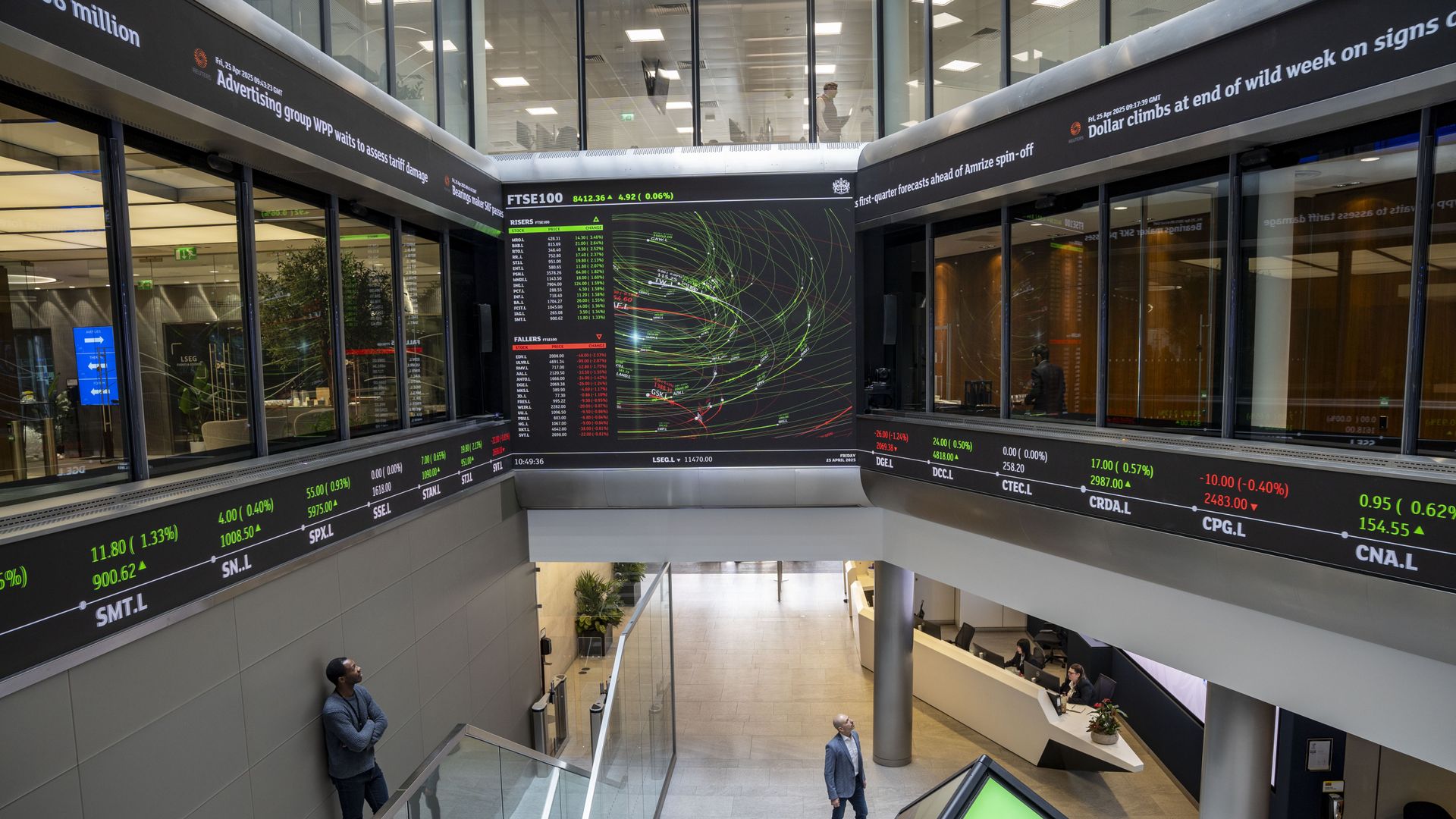
The stock market rarely tolerates a broken growth story. Investors recently signaled their impatience with Pop Mart as shares slid following reports of cooling momentum in overseas markets. For years, the Chinese art toy giant relied on its aggressive international expansion to justify its premium valuation. Now that the secondary markets and specific retail territories are showing signs of exhaustion, the firm finds itself in a precarious position. When a company built on the engine of rapid global scaling hits a roadblock in its primary growth geography, the math changes instantly.
Citigroup analysts reacted by slashing their price target, citing the dip in non-Chinese sales data. This move sent a shockwave through the investment community, highlighting a widening gap between the company's lofty promises and the cold, hard numbers hitting the ticker. The core issue centers on whether Pop Mart is a global cultural phenomenon or simply a localized craze that struggles to maintain its grip once the initial novelty of mystery boxes wears off in foreign markets.
The Mystery Box Problem
The business model relies heavily on the dopamine hit of the blind box. Consumers pay a fixed price for a sealed package containing one of several stylized vinyl figures. Some are common; others are rare or hidden editions. This mechanism is essentially a controlled form of gambling that mirrors the mechanics of digital loot boxes in video games.
The psychological hook is potent. In China, Pop Mart built a cultural infrastructure around this, using massive retail footprints and ubiquitous vending machines to turn toy collecting into a social status signal. Expanding this model into North America and Europe requires more than just exporting inventory. It demands the replication of a specific retail ecosystem that has not yet taken deep root elsewhere.
Analysts have long warned that the blind box model faces scrutiny from regulators in different jurisdictions. If local authorities begin to treat these items as gambling products rather than toys, the entire retail structure could face severe operational headwinds. The recent data suggests that even without the intervention of regulators, the natural fatigue of the consumer base is becoming a tangible threat. Once the novelty fades, the company lacks a deep library of intellectual property that can sustain long-term engagement across diverse cultures.
Overestimating the Global Appetite
Pop Mart succeeded by capturing a generation of urban professionals in China who found comfort and identity in high-end collectible toys. The strategy for overseas growth assumed this phenomenon was universal. However, the international market is fragmented. Success in Southeast Asia, where the aesthetic often aligns with Chinese trends, did not automatically translate to the Western world.
Competitors in the West often focus on established franchises. Look at how the toy industry functions in the United States. Hasbro or Mattel lean on decades of brand recognition. A character like Labubu, while undeniably successful as a design, does not carry the historical weight of a superhero or a legacy cartoon character. When the marketing budget pulls back, the customer retention rate for these transient trends often craters.
The cooling data from non-China territories suggests that the company is struggling to transition from a curiosity-driven purchase to a recurring habit. If the cost of acquiring a new customer exceeds the lifetime value of that collector, the business model essentially burns capital to maintain a facade of growth. This is the exact trap that many retail disruptors fall into when they push too hard into markets they do not fully understand.
The Illusion of Scale
Expansion metrics can be deceiving. A company can report record-breaking new store openings while the actual sales density per square foot declines. That is the warning sign hidden in the current financial reports. When top-line revenue growth depends entirely on opening more locations, the business is not scaling efficiently. It is merely buying reach.
Profit margins are currently compressed by the heavy investment required to set up logistics, retail staff, and localized marketing in new countries. These costs do not just disappear. They represent a structural drag on profitability that shareholders are no longer willing to ignore. The patience for high-growth, low-profit, international expansion is gone.
Investors are now demanding proof of sustainable profitability. They want to see that a store opened in London or Los Angeles can generate consistent, organic traffic without needing a constant influx of capital from the parent company. As of the latest reports, that proof is absent. The reliance on Chinese success to prop up global operations is an unsustainable long-term strategy for a company claiming a global presence.
The Intellectual Property Trap
The strength of any toy manufacturer rests on the longevity of its IP. Disney maintains its dominance because its characters are woven into the fabric of childhood across multiple generations. Pop Mart creates trends, but trends are, by definition, temporary. Labubu is a breakout star today, but the company must constantly manufacture the next sensation to stay relevant.
This forces the firm into a relentless cycle of production and marketing. If the creative team misses a beat—if the next series of characters fails to resonate with the fickle younger demographic—the entire financial forecast for the year collapses. The lack of a diversified portfolio of evergreen IP makes them incredibly vulnerable to shifts in youth culture. They are essentially running a fashion business where the shelf life of a product is measured in months, not years.
Management has hinted at diversifying into theme parks and media content, attempting to build a narrative world around their characters. This is a common defensive maneuver. It is an attempt to create a "moat" that protects the brand from market volatility. However, building a successful theme park or a high-quality animated series is exponentially more difficult than printing vinyl toys. It requires a level of creative execution that the current organization has yet to demonstrate at scale.
Managing the Investor Exodus
The stock price reaction is not just about a temporary dip in revenue. It is about a loss of narrative control. For years, the story of Pop Mart was one of inevitable, unstoppable expansion. The moment that story is questioned, the premium multiple on the stock disappears.
Institutional investors are re-evaluating their positions. They are looking at the saturation of the Chinese market and realizing that the company cannot keep growing at historical rates without a massive, immediate, and profitable surge in non-China revenue. That surge is not appearing. Instead, they are seeing higher overheads and lower conversion rates.
The leadership team must now choose a difficult path. They can either scale back international ambitions to focus on maximizing profitability in their core markets, or they can double down and burn even more cash to attempt a breakthrough in the West. Neither option is palatable to shareholders who are currently in the mood for stability over high-risk speculation.
The pivot toward higher quality control and selective store placement is a tactical necessity, not a choice. They must prove that the brand has the staying power to outlast the initial "hype" phase. This requires a shift from being a retailer of surprises to a curator of enduring character brands. If they cannot make this transition, they will become a cautionary tale about the limits of exporting a localized consumer trend into a global market that values heritage and consistency over the thrill of the next mystery box.
The market has spoken, and it is no longer impressed by the speed of the expansion. It is looking for the substance beneath the plastic veneer. The company has a narrow window to prove that they are more than just a passing fad in the global retail space, or they risk drifting into the background as the next wave of trend-driven enterprises takes their place.