The attempt to blame a "defeatist" media and partisan sabotage for the lack of public appetite regarding a conflict with Iran is not just a rhetorical strategy; it is a fundamental misreading of two decades of American exhaustion. When Pete Hegseth, a figure deeply entrenched in the intersection of military identity and media influence, points the finger at "defeatist Democrats" and a "biased press," he is reviving a "stab-in-the-back" narrative that has failed to hold water since the Vietnam era. The reality is far more grounded in math and memory than in political betrayal. The American public is not being misled into skepticism by talking heads; they are looking at the balance sheet of the Global War on Terror and refusing to sign another blank check.
The disconnect between the interventionist wing and the average voter has reached a breaking point. To understand why Hegseth’s accusations resonate with a specific base but fall flat with the broader electorate, one must look at the mechanics of manufactured consent and why those mechanics have seized up in the modern era. Don't forget to check out our previous post on this related article.
The Strategy of Displaced Blame
The core of the argument presented by Hegseth relies on the idea that military victory is a certainty, provided the home front remains unified and the media provides uncritical coverage. This assumes that public opinion is a faucet that the press can turn on or off at will. It ignores the fact that the skepticism toward an Iranian campaign is bipartisan and deeply rooted in the rural communities that provide the bulk of the military's recruiting base.
Blaming "defeatist" elements serves a specific function. It preemptively explains away the logistical and strategic nightmares of a war with Iran—a country with a sophisticated military, a mountainous geography that dwarfs Iraq, and a population of 85 million. By framing the lack of support as a moral or patriotic failure of the domestic opposition, the actual risks of the kinetic operation are sidelined. The conversation shifts from "Can we win?" to "Why don't you want us to win?" To read more about the history here, NPR offers an excellent summary.
This is a classic diversion. It avoids the uncomfortable reality that an invasion or a sustained bombing campaign against Tehran lacks a clear "day after" plan. The military can destroy targets with surgical precision. They cannot, however, bomb a stable, pro-Western democracy into existence. The public knows this because they have watched the same movie play out in Tripoli, Kabul, and Baghdad.
The Ghost of the Vietnam Syndrome
Hegseth’s rhetoric is a direct descendant of the post-Vietnam critique, which argued that the U.S. military didn't lose the war in the jungle but in the living rooms of America. This theory posits that if the press had simply stopped showing body bags and focused on the "mission," the outcome would have been different.
Applying this to Iran is a massive tactical error. In the 1960s, the media held a monopoly on information. Today, information is decentralized. The public's hesitation isn't coming from a few liberal newsrooms; it’s coming from veteran-led organizations, independent geopolitical analysts, and the raw data of the last twenty years.
The Math of Modern Warfare
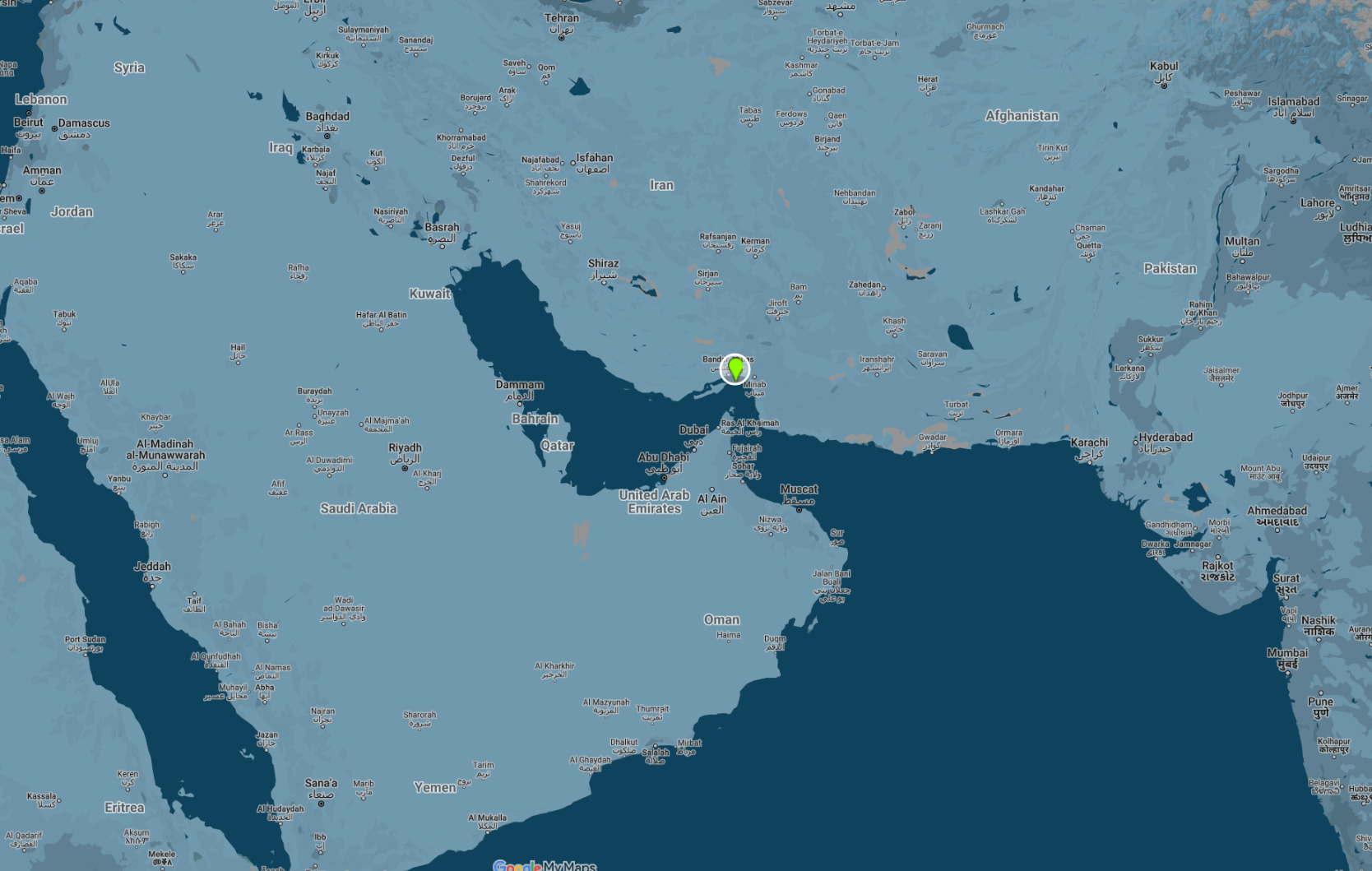
When we talk about Iran, we are not talking about a "cakewalk." The technical reality of the Persian Gulf makes any conflict a global economic catastrophe.
- The Strait of Hormuz: Approximately 20% of the world's petroleum passes through this narrow waterway. Any escalation leads to an immediate spike in global energy prices.
- Asymmetric Capabilities: Iran's drone programs and ballistic missile technology are not the outdated relics of the 1990s Iraqi Republican Guard.
- Proxy Networks: A conflict would not be contained within Iranian borders; it would ignite a regional firestorm involving Lebanon, Syria, Iraq, and Yemen.
The public isn't being "defeatist" when they acknowledge these facts. They are being realistic. Calling this realism "media-driven" ignores the very real concerns of the American taxpayer who is already struggling with the cost of living. A war that doubles the price of gas is not a hard sell because of the media; it’s a hard sell because it's a bad deal.
The Institutional Credibility Gap
The most significant factor Hegseth and others overlook is the total collapse of institutional trust. In 2003, the "intelligence community" and the "expert class" convinced a majority of Americans that Saddam Hussein had weapons of mass destruction. The fallout from that error—or deception, depending on your perspective—was catastrophic.
A generation of soldiers grew up in the shadow of that mistake. Now, those same soldiers are the ones Hegseth is speaking to, and many of them are not buying the rhetoric. When a veteran hears that the "media" is the problem, they remember being told that the mission was accomplished while they were still taking fire in Anbar Province.
The burden of proof has shifted. It is no longer enough to claim that a regime is "evil" or a "threat." The American people now demand a clear definition of victory, a timeline for withdrawal, and an honest accounting of the costs. When the interventionist wing fails to provide these, they resort to attacking the messenger.
The False Binary of Patriotism
There is a dangerous trend in Hegseth's analysis that equates skepticism with a lack of resolve. This binary—you are either for the war or you are a defeatist—stifles the exact kind of rigorous debate required before committing troops to a theater of operations.
True patriotism involves the sober assessment of a nation's interests and the well-being of its citizens. Throwing the "defeatist" label at anyone who asks for a cost-benefit analysis is an attempt to shame the public into compliance. It didn't work in 2019, and it isn't working now.
The press, for all its flaws, is actually following the public's lead on this issue, not the other way around. Reporters are reflecting the exhaustion of a country that has been at war for most of the 21st century. To suggest that a few news segments can outweigh twenty years of lived experience is an insult to the intelligence of the American voter.
The Role of Conservative Realism
Interestingly, some of the loudest voices against a war with Iran are coming from the "New Right" or the nationalist-populist wing of the Republican party. These are not "defeatist Democrats." These are MAGA-aligned voters who believe in "America First" and see foreign interventions as a drain on national resources.
Hegseth finds himself in a strange position where his pro-interventionist stance puts him at odds with the very populist base he claims to represent. This isn't a left-vs-right issue. It’s an interventionist-vs-realist issue. By blaming the "media," Hegseth avoids having to confront the fact that his own side of the aisle is increasingly skeptical of the "forever war" industrial complex.
The Industrial Logic of Escalation
We must look at why the push for conflict remains so persistent despite public opposition. There is an entire ecosystem of think tanks, defense contractors, and media personalities whose relevance and revenue depend on a state of perpetual tension.
In this ecosystem, "peace" is a stagnant market. "Conflict" is a growth industry. When Hegseth rails against the media, he is performing for an audience that views the world through a lens of constant existential threat. This mindset requires a villain, and if the foreign enemy isn't enough to rally the troops, then the domestic "traitor" must be invoked.
The Mechanics of the Echo Chamber
The strategy works like this:
- Identify a threat: Iran is the perennial candidate.
- Propose military action: Frame it as the only "strong" option.
- Encounter resistance: Observe that the public and the press are skeptical.
- Attack the resistance: Label the skeptics as "defeatists" or "anti-American."
- Ignore the consequences: Never address the actual logistical or human costs of the proposed action.
This loop ensures that the merits of the war are never actually debated. Instead, the debate becomes about the "loyalty" of the people questioning the war. It is a brilliant, if cynical, way to avoid talking about the $8 trillion already spent on Middle Eastern conflicts.
The Failure of the "Great Man" Theory of Media
The idea that a few "defeatist" personalities can steer a nation of 330 million people away from a "necessary" war is a fantasy. It overestimates the power of the media and underestimates the autonomy of the citizen. People are perfectly capable of seeing the smoke and realizing there is a fire without a news anchor telling them so.
The public's refusal to support an Iran war is a rational response to an irrational proposal. Iran is not a desert sandbox; it is a sophisticated state with the ability to retaliate in ways that would be felt on American soil, primarily through cyber-attacks and economic disruption.
The "defeatism" Hegseth decries is actually a sophisticated form of national self-preservation. The American people have learned that "short, sharp conflicts" have a way of turning into decades-long occupations. They have learned that "precision strikes" often lead to "unintended consequences" that haunt our foreign policy for generations.
Moving Beyond the Blame Game
If those advocating for a harder line on Iran want to win over the public, they need to stop attacking the media and start answering the hard questions. They need to explain why this time will be different. They need to show where the money will come from, how many lives will be sacrificed, and what a "stable" region looks like after the dust settles.
Until those questions are answered, the "defeatist" label will remain a hollow slur used by those who have run out of arguments. The American public isn't being fooled by the media; they are being educated by history.
Stop treating the electorate like a programmable mass that has been "glitched" by the press. The skepticism is the signal, not the noise. To ignore it is to court a disaster that no amount of patriotic rhetoric can fix. Respect the public's caution as a hard-earned wisdom rather than a partisan defect. Only then can a real conversation about national security begin.