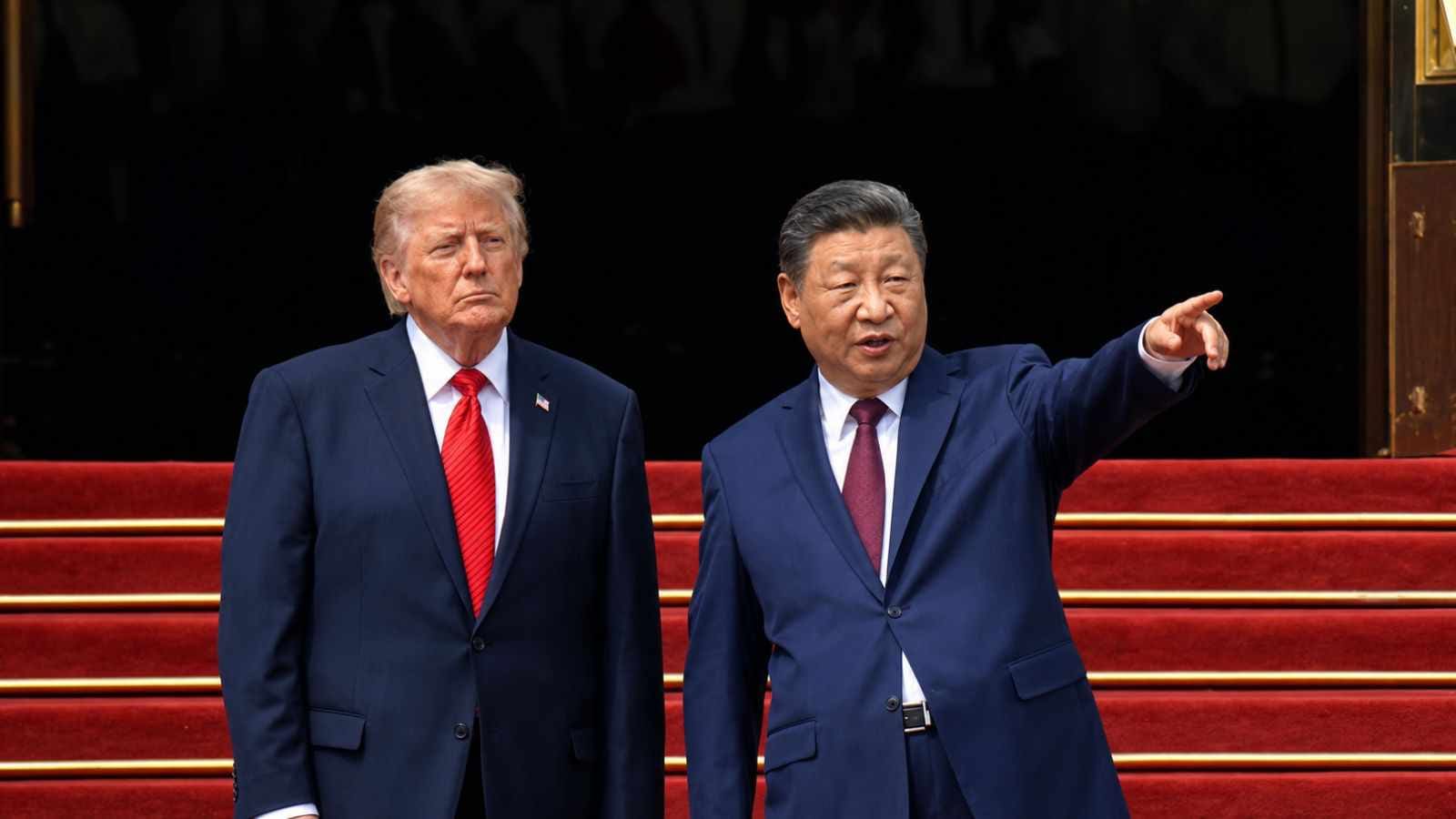
Don’t let the gold-plated curtains and the polite handshakes at the Great Hall of the People fool you. While Donald Trump is busy telling the press it’s an "honor" to be Xi Jinping's friend, the Chinese leader just laid down a marker that should make every diplomat in Washington lose sleep.
The 2026 Trump-Xi summit in Beijing started with the usual theater—booming cannons, military bands, and children waving flags—but the closed-door reality is far grimmer. Xi isn't just asking for a better trade deal anymore. He's telling Trump that if the U.S. keeps its current course with Taiwan, we aren't just looking at a trade war. We’re looking at a shooting war.
The Dangerous Place Xi Is Talking About
Xi’s warning that mishandling Taiwan could push ties to a "dangerous place" isn't just standard rhetorical flair. It’s a direct response to the $11 billion weapons package the Trump administration recently approved for Taipei. For years, the U.S. has played a game of "strategic ambiguity," basically keeping everyone guessing about whether we'd actually fight for Taiwan. Trump, in his typical style, has replaced that ambiguity with a mix of high-stakes arms deals and confusing "will-he-won't-he" signals.
Xi is done with the guessing game. In his view, the "Taiwan question" is the "most important issue" in the entire relationship. He's essentially telling Trump that there’s no path to a stable global economy if the U.S. doesn't back off on its military support for the island.
Why Trump Is Playing a Different Game
If you watch the footage, Trump looks like he’s having the time of his life. He’s calling Xi a "great leader" and bragging that this could be the "biggest summit ever." But look at his domestic situation. His approval ratings are taking a hit because of the ongoing conflict in Iran, and he needs a win.
He wants China to start buying massive amounts of American soybeans, beef, and aircraft again. He needs to show his base that he’s the master negotiator who can fix the economy. Xi knows this. By dangling the carrot of trade "progress"—which Xinhua news has already started praising—Xi is trying to leverage Trump's need for a domestic victory to get concessions on Taiwan.
It’s a classic squeeze play.
The Thucydides Trap Is No Longer Theoretical
During the opening remarks, Xi specifically mentioned the "Thucydides Trap." For those who aren't history nerds, that’s the idea that when a rising power (China) threatens to displace an existing power (the U.S.), war is almost inevitable.
Xi has brought this up before, but bringing it up while Trump is offering platitudes about friendship is a cold move. He’s telling the world that while the U.S. is focused on the next election cycle and trade figures, China is focused on the next century.
- The Trade Reality: China is the largest purchaser of Iranian oil.
- The Security Reality: Secretary of State Marco Rubio is already pushing for Beijing to use its influence on Iran, but Xi isn't giving that away for free.
- The Red Line: Every time the U.S. sends a new missile system to Taipei, Beijing sees it as a breach of the "One China" principle.
What This Means for Your Wallet
You might think a summit in Beijing doesn't affect your daily life, but you’re wrong. If these two can’t find a "common denominator"—as Xi calls it—on Taiwan, the trade truce they struck last October is toast. We’re talking about:
- Supply Chain Shocks: If the Taiwan Strait becomes a "dangerous place," the shipping lanes that carry most of the world's semiconductors will go dark.
- Inflation 2.0: A return to aggressive tariffs would undo any progress made on cooling down prices at home.
- Market Volatility: Markets hate uncertainty, and "potential conflict" between the world's two largest nuclear powers is the definition of uncertainty.
Stop Overthinking the Diplomacy
Diplomats love to analyze every syllable of these readouts, but the math is actually pretty simple. Trump wants trade numbers he can put on a billboard. Xi wants a guarantee that the U.S. won't interfere with his "reunification" plans for Taiwan.
The problem is that these two goals are fundamentally at odds. You can't have a stable, booming trade relationship while one side is arming a territory the other side claims as its own.
What Happens Next
Watch the trade announcements over the next 48 hours. If we see a massive purchase of U.S. agricultural goods without any mention of "security cooperation," it means Trump has kicked the Taiwan can down the road to get his trade win. But don't think for a second that Xi has forgotten.
If you're invested in tech or international trade, now is the time to hedge. The pageantry in Beijing is a mask for a relationship that’s thinner than it’s been in decades.
Check your exposure to companies heavily reliant on the Taiwan Strait. If Xi’s "dangerous place" becomes a reality, the "biggest summit ever" won't be remembered for the handshakes—it'll be remembered as the last time we had a chance to stop the clock.
US-China Summit Analysis
This video breaks down the strategic tension between Trump and Xi, specifically focusing on how the Taiwan issue complicates trade negotiations.
http://googleusercontent.com/youtube_content/1