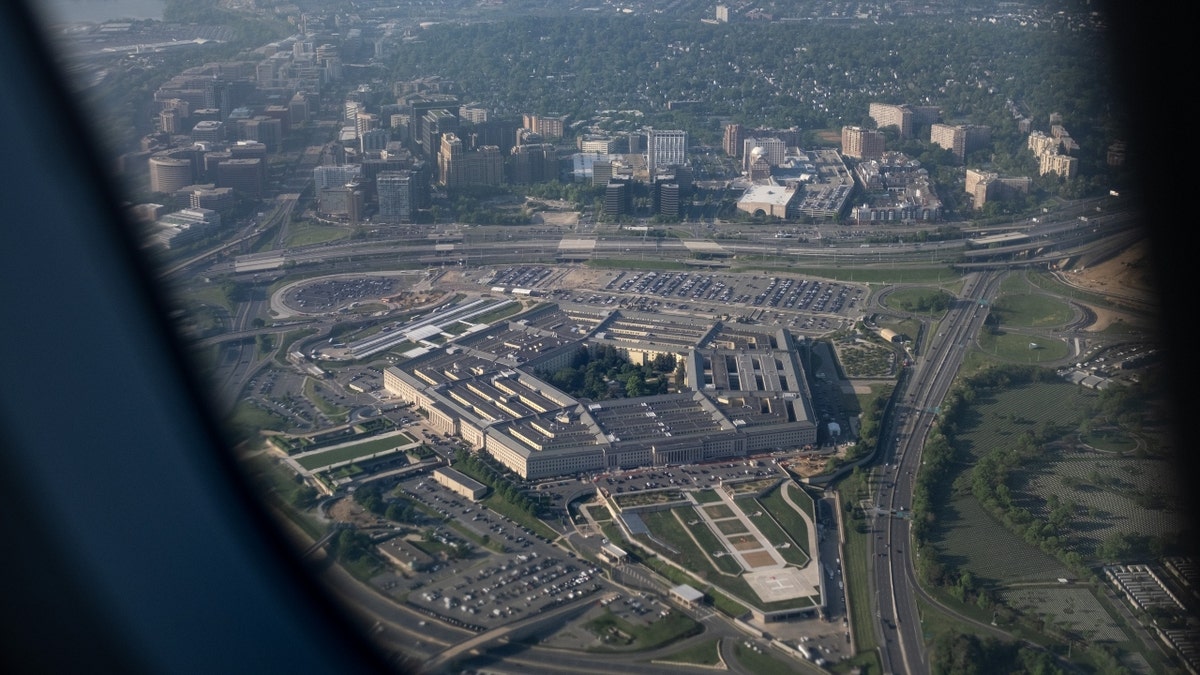
The Pentagon recently delivered a sobering briefing to Congress that shifts the math on global energy security. At the heart of the warning is a nightmare scenario where the Strait of Hormuz is shuttered not by a conventional fleet, but by a new generation of low-cost, GPS-guided naval mines. While historical clearing operations in the region took weeks, the sheer sophistication of modern Iranian-linked ordnance means that reopening this vital artery would now likely take at least six months. This delay would effectively cripple global oil markets and force a complete redraw of the geopolitical map.
The math of the Strait is unforgiving. Roughly 21 million barrels of oil pass through this 21-mile-wide chokepoint every day. If the water is salted with "smart" mines, the global economy hits a brick wall.
The Evolution of the Lethal Nuisance
Naval mines have long been dismissed as the "poor man's weapon," a remnant of World War II-era thinking. That dismissal is a dangerous mistake. In the late 1980s, during the "Tanker War," the USS Samuel B. Roberts was nearly split in half by a contact mine that cost less than a used sedan. Today, the technology has moved from simple contact triggers to sophisticated influence sensors that detect the specific acoustic, magnetic, and pressure signatures of targeted vessels.
The new threat profile involves mines that are not merely floating balls of explosives. They are networked. Intelligence reports suggest that the latest iterations can be programmed to ignore minesweepers and wait specifically for a VLCC (Very Large Crude Carrier). Some are even equipped with GPS-guided propulsion systems that allow them to "creep" back into a cleared channel after a sweep has been completed. This makes the traditional concept of a "clear" path a temporary illusion.
Why Six Months is the New Reality
In the past, the U.S. Navy could rely on heavy-duty minesweepers and divers to clear a corridor. Those days are gone. The briefing provided to Congress highlights three specific bottlenecks that have expanded the recovery timeline from weeks to months.
The Problem of Identification
Modern mines are increasingly made of composite materials and shaped to mimic the seafloor or debris. When a mine looks like a rock and acts like a computer, the detection phase slows to a crawl. Underwater Unmanned Vehicles (UUVs) must scan every square meter of the seabed. In the turbulent, silt-heavy waters of the Strait, visibility is often near zero. You aren't just looking for a needle in a haystack; you are looking for a needle that looks like hay.
The Saturation Strategy
Iran and its proxies don't need to destroy every ship. They only need to create a "risk-prohibitive environment." Insurance companies like Lloyd’s of London will pull coverage for any vessel entering a zone where even one smart mine remains unmapped. The Pentagon’s six-month estimate accounts for the time required to provide "99% assurance" to the commercial shipping industry—a standard far higher than what is required for purely military transit.
Mechanical Exhaustion
The U.S. Navy’s mine countermeasures (MCM) fleet is aging and overstretched. While the littoral combat ships (LCS) were supposed to take over this role with modular mission packages, the transition has been plagued by technical failures. We are currently relying on a handful of Avenger-class ships that are literally wooden-hulled relics. If dozens of these ships are needed simultaneously, the logistics of transporting them to the Persian Gulf and maintaining them under constant threat of drone swarms becomes a secondary nightmare.
The GPS Guided Ghost
The most alarming part of the secret briefing involves "repositionable" ordnance. Imagine a scenario where a Navy UUV clears a 500-yard wide lane. In a conventional conflict, that lane stays clear. However, if the mines are equipped with low-power thrusters and GPS receivers, they can simply drift or drive themselves back into the "safe" zone during the night.
This creates a "whack-a-mole" dynamic. The clearing effort becomes a recursive loop where the tail of the convoy is never truly safe because the water behind the lead ship is being re-mined in real-time by the ocean itself. This isn't science fiction; it is the logical endpoint of cheap drone technology applied to subsea warfare.
The Economic Shrapnel
The fallout of a six-month closure extends far beyond the price at the pump. We are talking about a systemic collapse of the "just-in-time" energy delivery model.
- Refinery Starvation: Most advanced refineries in Asia and the U.S. Gulf Coast are calibrated for specific grades of Middle Eastern sour crude. They cannot simply switch to Texan light sweet overnight without massive hardware overhauls.
- The Insurance Spiral: Even if the U.S. military offers to escort tankers, the private sector will likely refuse. The liability of a $200 million hull and a billion-dollar cargo is too great for any board of directors to stomach without a guarantee that the Navy currently cannot provide.
- Sovereign Debt Crises: Many emerging economies rely on stable oil prices to service their dollar-denominated debt. A six-month spike to $200 a barrel would trigger a wave of national defaults across the Global South.
Tactical Asymmetry and the Drone Factor
We cannot look at the mine threat in a vacuum. Any attempt to clear the Strait would happen under a constant rain of shore-based anti-ship missiles and "suicide" suicide boats. The Pentagon’s briefing reportedly emphasized that the mine-clearing vessels—which must move slowly and predictably—are sitting ducks.
To protect the minesweepers, the Navy would need to establish a massive "bubble" of air and sea superiority. This requires at least two carrier strike groups. Keeping those assets in a high-threat environment for half a year is an enormous drain on global readiness. It pulls resources away from the Pacific and the Mediterranean, creating openings for other adversaries to exploit.
The Failure of Deterrence
For decades, the assumption was that Iran would never close the Strait because they need it to export their own oil. That logic is fraying. With the rise of the "ghost fleet" and land-based pipelines that bypass the Strait (such as the Goreh-Jask terminal), Tehran’s dependency on the chokepoint is diminishing while the West’s remains absolute.
The ability to hold the global economy hostage for six months provides a level of leverage that no amount of traditional sanctions can counter. It is the ultimate "area denial" strategy.
Rethinking the Response
The U.S. and its allies are currently playing catch-up. The solution isn't just building more ships; it’s about a fundamental shift in how we view subsea security.
We need a permanent, "always-on" sensor grid on the floor of the Strait. This would involve thousands of stationary nodes that can detect the arrival of new objects in real-time. We also need to move away from large, manned minesweepers in favor of swarms of expendable, autonomous "kamikaze" UUVs designed to find and detonate mines without risking a single sailor's life.
The six-month window isn't a guess; it's a warning of a structural deficit in Western naval power. If a conflict breaks out tomorrow, the time to build these systems will have already passed. The global energy market is currently floating on a layer of water that we can no longer guarantee is safe, and the cost of that uncertainty is about to become very real.
Strategic reserves can buy us weeks, but they cannot buy us half a year. The era of the "safe" Strait is over, and the Pentagon is finally admitting it behind closed doors. The only question remains whether the civilian leadership will move fast enough to diversify the energy transit routes before the first smart mine is dropped.
Naval mines are no longer just a tactical hurdle. They are a strategic checkmate. If the Strait closes, the world's economy doesn't just slow down; it stops. We are currently unprepared for the duration of that silence.