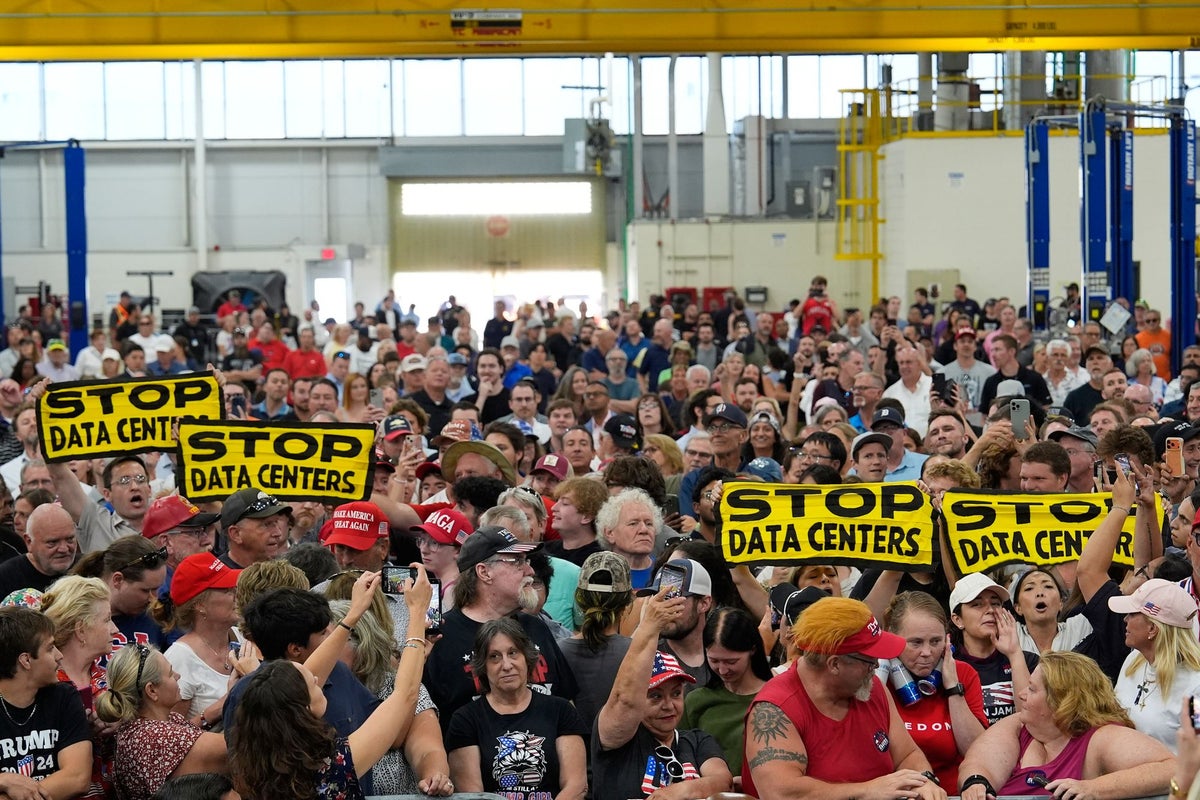
Big tech companies thought they could slide massive artificial intelligence facilities into quiet towns without anyone noticing. They were wrong. Local anger over electricity grid strain and secretive industrial builds has officially crossed over from town hall arguments into high-stakes congressional advertising.
In Pennsylvania, Scranton Mayor and Democratic congressional candidate Paige Cognetti dropped a campaign spot targeting data centers head-on. She's challenging Republican Representative Rob Bresnahan in a swing district. Her message is blunt: Big Tech is taking resources while locals foot the bill. This shift proves that digital infrastructure is no longer just a boring zoning issue. It is a major political battleground.
The Clash Over Power and Privacy
If you live near an industrial corridor in the mid-Atlantic, you already know what's happening. Massive server farms require immense amounts of electricity and water to keep running around the clock. Utility bills for everyday residents have climbed upward. At the same time, corporations routinely use non-disclosure agreements and private deals to keep local communities in the dark until bulldozers show up.
Cognetti's ad touches a deep historical nerve in northeastern Pennsylvania. Towns here know what it means to host boom-and-bust industries like coal and shale gas. Companies come in, promise jobs, extract value, and leave behind environmental complications. Residents see data centers as the exact same script written by modern tech giants.
The political calculus here is fascinating. On one side, federal leaders push hard to build out artificial intelligence capacity to beat international rivals like China. On the other side, local voters deal with humming substations, soaring power demands, and transmission lines cutting through their backyards.
How Politicians Are Responding to the Backlash
Elected officials are scrambling to figure out which side of the fence to stand on. Incumbent Republicans like Bresnahan have tried to shield themselves by proposing measures like the Local Control Protection Act. This bill attempts to stop large corporations from using federal lawsuits to steamroll local zoning boards that reject data center applications.
The tension highlights a split within conservative politics right now. The national party wants an aggressive build-out of tech infrastructure. Local voters want municipal control preserved. When billion-dollar server hubs threaten to crowd out residential power grids, local politicians have to choose between tech donors and angry constituents.
Democrats see an opening in this friction. By tying data center expansion to rising utility rates and corporate secrecy, campaigns can paint their opponents as defenders of out-of-state tech monopolies. It changes a complex macroeconomic debate into a simple question of local survival.
What This Means for Future Elections
Data center expansion won't slow down anytime soon. The computing power required to train large language models doubles at a staggering pace. That means power hungry facilities will keep hunting for cheap land, abundant water, and lax regulations.
When you look at upcoming races across swing districts, expect to see more candidates picking up this playbook. Local anxiety over infrastructure is a potent mobilizer. Voters might not always follow the nuances of semiconductor chips or grid management, but they notice when their monthly power bill spikes.
Tech companies need to change their approach immediately. Hiding behind closed doors and leaning on state-level tax incentives backfires the moment a campaign puts it on a 30-second TV spot. If developers want to build massive infrastructure in populated regions, they have to earn community trust first. Otherwise, they will find themselves right in the middle of a political crossfire.