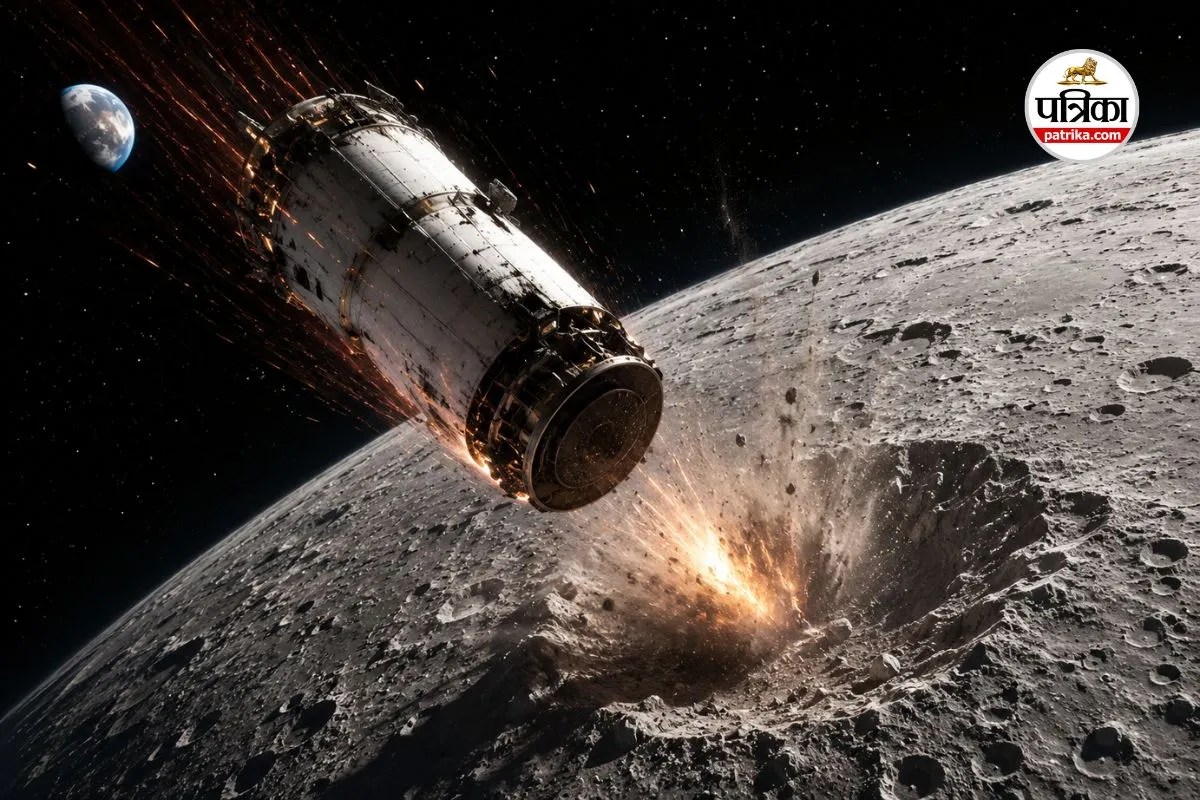
The headlines screamed about a runaway booster on a collision course with the lunar surface. Pundits wrung their hands over celestial vandalism. Environmentalists hyperventilated about pristine craters desecrated by American industrial waste.
It was all noise.
The breathless outrage surrounding that spent Falcon 9 upper stage slamming into the Moon at thousands of miles per hour exposed a profound societal illiteracy regarding orbital mechanics, deep space geography, and the actual physical reality of our solar system. People looked at a hunk of aluminum alloy hitting a dead rock and saw an existential tragedy. I saw a masterclass in cosmic insignificance.
Let us dismantle the panic.
The Lazy Consensus Of Space Cleanliness
The lazy consensus dominating public discourse runs on a simple, deeply flawed emotional reflex: space used to be clean, humans are dirty, therefore any human object hitting a celestial body is pollution.
This argument collapses the moment you look at actual data instead of sci-fi dystopia aesthetics. The Moon takes a relentless, unremitting beating from nature every single day. Micro-meteoroids, cometary fragments, and asteroids bombard the lunar surface constantly. These impacts happen at velocities that make a 5,400 mph booster look like it is moving in slow motion. High-speed celestial impacts deliver kinetic energy orders of magnitude higher than our discarded hardware.
Nature does not maintain a pristine museum exhibit. The Moon is a battered, scarred impact zone. Adding a few tons of processed iron and aluminum to a world already composed of trillions of tons of pulverized rock is the statistical equivalent of spitting in the ocean.
I have spent decades watching aerospace programs manage orbital budgets, and the pearl-clutching from outsiders always stems from the same cognitive error. They judge space through the lens of a pristine national park. Space is not a park. It is a violent, indifferent vacuum where high-energy physics reigns supreme.
The Physics They Refuse To Acknowledge
Let us talk velocity and mass. Critics love to cite the speed—5,400 mph—because it sounds terrifyingly fast. In terrestrial terms, it is fast. A car traveling that fast would atomize instantly.
In orbital terms? It is practically a Sunday stroll.
Asteroids routinely hit the Moon at velocities ranging from 20,000 to over 45,000 mph. At those speeds, the kinetic energy unleashed is catastrophic, vaporizing rock and excavating massive craters. A spent Falcon 9 second stage moving at 5,400 mph lacks the velocity to cause global seismic shifts or alter lunar orbits. It dug a shallow trench, vaporized a fraction of its own metal framework against the basaltic regolith, and settled into the dust quietly.
To understand why this panic is manufactured, you have to understand the anatomy of a deep-space trajectory. When SpaceX launched the DSCOVR satellite for NOAA back in 2015, the upper stage finished its primary mission and found itself stranded in a chaotic gravitational high-ground between the Earth and the Sun, known as a Lagrange point orbit. With insufficient fuel to return to Earth for a controlled atmospheric burn, and too far away to circularize around our planet, the booster became a gravitational drift object.
For seven years, it tumbled through cislunar space. The Earth-Moon gravity well finally captured it, pulling it down.
Was it intentional garbage disposal? No. It was the mathematical consequence of operating heavy payloads beyond low Earth orbit without infinite propellant reserves. If you want to explore deep space, you accept that objects will occasionally cross paths with gravity wells.
The Hypocrisy Of The Outrage Industry
What fascinates me most about the lunar impact hysterics is the selective memory of the critics.
Where was this fierce protectionist rage during the Apollo era? NASA intentionally crashed multiple Saturn S-IVB upper stages and lunar module ascent stages directly into the Moon on purpose. They did it as active science experiments, using the impacts to calibrate seismic sensors left behind by astronauts. Nobody protested the "desecration" of Mare Cognitum or Oceanus Procellarum then because the public understood the utilitarian trade-offs of exploration.
Today, the outrage machine feeds on ignorance. A private company achieves what nation-states used to do, and suddenly every armchair astronomer with a Twitter account fancies themselves an interplanetary environmental lawyer.
Let us be brutally honest about the real risks of space debris. Low Earth Orbit is congested. Spent satellites, dead rocket bodies, and paint flecks traveling at 17,500 mph pose a legitimate hazard to operational infrastructure like the International Space Station or active communication constellations. That is a real problem requiring orbital debris mitigation strategies, active removal tech, and strict passivation protocols.
The Moon is not Low Earth Orbit.
Crashing a booster into the lunar far side or near side has zero impact on operational assets. It does not threaten humanity. It does not choke out future generations. It is an inert piece of metal resting peacefully under layers of sterile dust.
The Counter-Intuitive Truth About Space Industrialization
The uncomfortable reality that nobody in the mainstream media wants to admit is this: if we ever want to become a multi-planetary species, we are going to leave a lot more junk lying around.
Civilization leaves traces. You cannot build a bridge without disturbing a riverbed. You cannot mine iron without scarring a mountain. And you cannot expand human presence into the solar system without dropping hardware onto surfaces that nobody currently occupies.
Sanitized, frictionless exploration is a myth peddled by people who prefer their science fiction on a screen rather than fought for in the physical universe. Every great leap in logistics involves waste. The Phoenicians lost ships. The transcontinental railroad littered the American plains with scrap iron and ties. SpaceX putting a stray booster into a lunar crater is the mechanical equivalent of a footprint in the sand during a massive storm.
Instead of crying over a localized puff of lunar dust, we should be asking a much sharper question: why are we still treating deep-space transit as an anomalous event rather than a routine industrial corridor?
We spend billions analyzing the trajectory of a dead booster while ignoring the structural failures of terrestrial institutions that prevent us from building a robust cislunar economy faster. The panic over the lunar crash is a symptom of a risk-averse culture terrified of its own shadow, projecting terrestrial anxieties onto a dead rock that stopped caring about impacts four billion years ago.
Let the metal rest. Go look at the stars instead.