The utilization of coordinated suicide detonations in Gwoza, Borno State, represents a shift from random insurgency to a high-lethality operational framework designed to overwhelm local medical and security infrastructure. On June 29, 2024, at least 23 individuals were killed and over 100 wounded in a series of three distinct detonations. This was not a singular event of violence but a calculated sequence of "secondary and tertiary strikes" intended to maximize the casualty-to-explosive ratio by targeting the social feedback loops of the community—specifically weddings and funerals.
To understand the strategic gravity of these attacks, one must deconstruct the tactical deployment of the improvised explosive devices (IEDs) and the specific demographic profiling of the operatives involved.
The Triple-Strike Architecture
The Gwoza attacks followed a tiered execution model. This model relies on the predictability of human response patterns to initial trauma.
- The Primary Strike (The Social Anchor): The first detonation occurred at a wedding celebration. In asymmetric warfare, weddings serve as high-density, low-security targets. The objective is the immediate disruption of civilian morale and the creation of a "mass casualty incident" (MCI) that forces first responders and civilians to congregate at a single node.
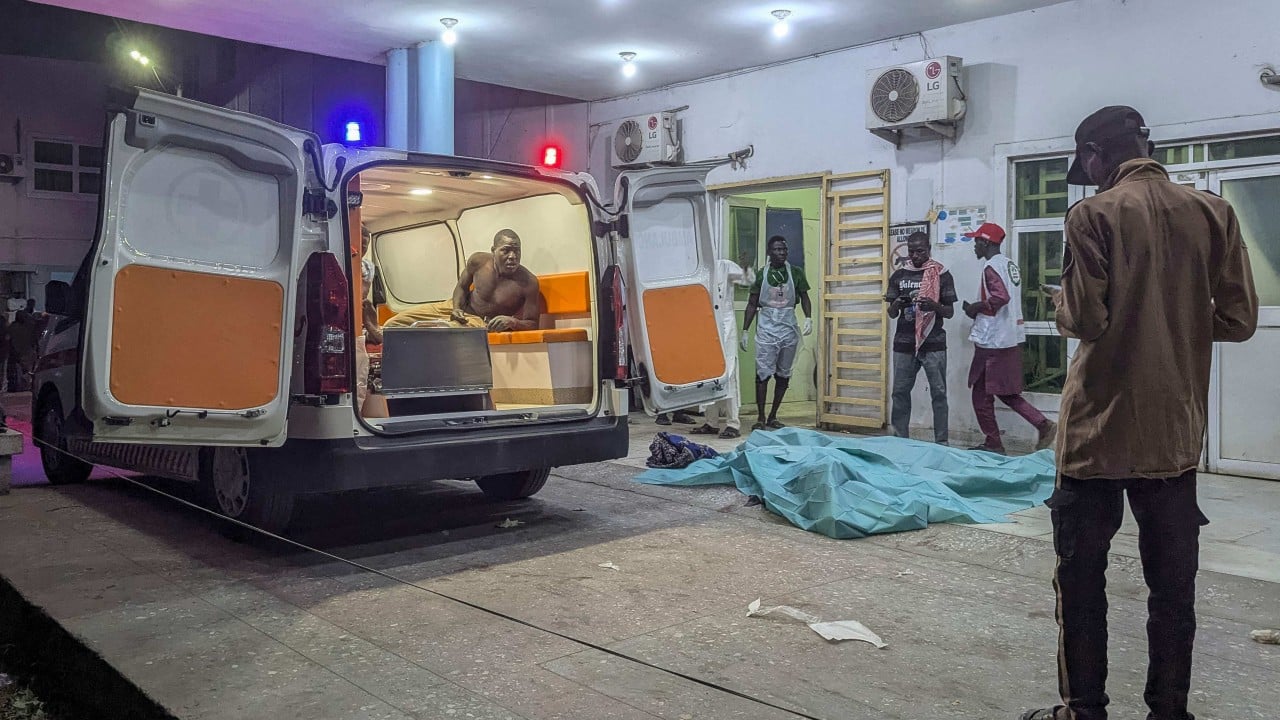
- The Secondary Strike (The Logistics Disrupter): Following the initial blast, a second operative detonated an IED near the General Hospital in Gwoza. This is a classic "interdiction strike." By targeting the vicinity of the medical center, the attacker creates a bottleneck in the casualty evacuation chain. It induces a state of "systemic paralysis" where victims of the first blast cannot reach care, and medical personnel are forced into a defensive posture rather than a life-saving one.
- The Tertiary Strike (The Ritual Target): The final detonation targeted the funeral of the victims from the first blast. This is the most psychologically devastating phase of the matrix. It exploits the cultural necessity of burial rites to target the same survivor group twice within a 24-hour window, effectively shattering the community's social cohesion and trust in public safety.
Demographic Weaponization: The Female Operative Variable
A defining characteristic of the Gwoza strikes is the deployment of female suicide bombers, including one reportedly carrying an infant. This is an intentional exploitation of "security heuristics"—the mental shortcuts used by security personnel to assess threat levels.
In the Lake Chad Basin conflict, the use of women and children as IED delivery systems serves several tactical functions:
- Permeability: Female operatives often face less rigorous physical searches at checkpoints due to cultural sensitivities or a perceived lower threat profile.
- Concealment: The use of flowing garments (such as the hijab or niqab) allows for the concealment of "vest-type" IEDs without altering the operative's silhouette.
- The "Motherhood Shield": The presence of an infant is a sophisticated camouflage technique designed to bypass the most vigilant security filters. It creates a cognitive dissonance in the observer; the brain struggles to reconcile the image of a caregiver with that of a lethal threat.
The casualty rate—exceeding 120 total affected individuals—suggests the use of high-velocity fragmentation materials (such as ball bearings or nails) packed around a core of home-made explosives (HME), likely ammonium-nitrate based.
The Cost-Benefit Ratio of Asymmetric Attrition
From the perspective of an insurgent group like Boko Haram or ISWAP (Islamic State West Africa Province), suicide attacks represent an incredibly efficient "cost function."
- Financial Cost: The materials for a vest-borne IED are negligible, often costing less than $200 USD in raw components.
- Human Capital: While the loss of an operative is permanent, the "replacement cost" for a marginalized or coerced individual is low compared to the training required for a conventional soldier.
- Strategic Output: A $200 investment that yields 23 deaths and 100 injuries achieves a disproportionate impact on state resources. The cost of treating 100 trauma patients, repairing infrastructure, and maintaining an increased military presence in Gwoza runs into the millions of dollars.
This creates a "negative-sum game" for the Nigerian state. Every dollar spent on reactive security is a dollar diverted from the socio-economic development needed to de-radicalize the region.
The Gwoza Medical Bottleneck
The severity of the injuries in Gwoza highlights a critical failure in "Golden Hour" logistics. In trauma medicine, the first 60 minutes after an injury are the most vital for survival. Gwoza’s geographic isolation and the secondary strike on the hospital created a "resource-depleted environment."
Trauma Load Analysis
The injuries reported—loss of limbs, severe abdominal penetration, and thermal burns—require specialized surgical intervention. When 100 such cases arrive simultaneously at a rural facility, the system enters a state of "triage failure."
- Blood Supply: Massive hemorrhage is the primary cause of death in IED incidents. Rural hospitals in Borno State rarely maintain the blood bank capacity required for a triple-strike event.
- Aeromedical Evacuation: The necessity of moving the critically injured to Maiduguri (the state capital) introduces a time delay that converts "survivable injuries" into fatalities.
The data suggests that the death toll in such attacks is often suppressed initially because the "delayed mortality" (those who die in transit or days later due to sepsis) is not always aggregated with the immediate scene count.
Security Architecture Deficiencies
The recurrence of these attacks in Gwoza, a town that has been "liberated" multiple times, indicates a fundamental flaw in the "Hold and Build" phase of counter-insurgency.
The current security model relies on "Point Defense"—guarding specific buildings or checkpoints. However, asymmetric threats utilize "Fluid Vectors." If a checkpoint is established, the attacker simply moves 50 meters to a crowded market or a wedding.
To mitigate this, the intelligence apparatus must transition from "Visual Detection" (looking for bombers) to "Signature Detection" (tracking the precursor chemicals and the logistics of IED assembly).
- Supply Chain Interdiction: Monitoring the flow of urea-based fertilizers and electronic blasting caps in the Borno region.
- Community Intelligence Loops: Establishing anonymous reporting mechanisms that bypass the local police, who are often viewed with suspicion or as targets themselves.
- Human Terrain Mapping: Identifying the social networks used to recruit or coerce the female operatives used in these specific strikes.
Strategic Forecast
The Gwoza attacks signal a resurgence of "spectacle violence" aimed at delegitimizing the Nigerian government's claims of victory over the insurgency. We should expect a continuation of the "Triple-Strike" pattern in other satellite towns surrounding Maiduguri.
The immediate tactical requirement is the deployment of "Mobile Trauma Units" capable of stabilizing victims on-site, thereby bypassing the targeted local hospitals. Without a fundamental shift in how the "Security-Medical-Intelligence" triad operates in Borno, the casualty counts from these asymmetric strikes will remain high, regardless of the number of troops on the ground.
State actors must recognize that in a conflict of attrition, the side that manages to maintain the "Normalcy of Social Rituals"—weddings, funerals, and markets—wins. Currently, the insurgents are successfully weaponizing those rituals to ensure that normalcy remains impossible.
The regional command must now prioritize the hardening of "soft targets" through decentralized, community-led surveillance and the immediate integration of biometric screening at all major social gatherings in high-risk zones. Failure to adapt the security perimeter to the fluid nature of these attacks will result in Gwoza becoming a template for future urban destabilization across the Sahel.