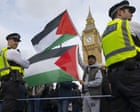
The Metropolitan Police’s deployment strategy for the al-Quds Day rally in London is not merely a public order exercise; it is a sophisticated application of Managed Friction. This strategy aims to balance the constitutional right to assembly against the high-probability risk of sectarian escalation. By issuing specific "pre-event warnings," the police are establishing a legal and behavioral baseline designed to reduce the ambiguity that often leads to kinetic confrontations.
The Triad of Public Order Constraints
Effective policing of politically charged demonstrations relies on three distinct operational pillars. When any of these pillars are compromised, the likelihood of a "critical incident"—one where police lose control of the perimeter—increases exponentially.
1. Statutory Thresholds and Section 12/14 Powers
The Public Order Act 1986 provides the primary mechanism for state intervention. Police do not "allow" protests; they regulate them based on the threshold of "serious public disorder, serious damage to property, or serious disruption to the life of the community."
For the al-Quds Day rally, the Met’s "warning" signals a low tolerance for deviations from the agreed-upon route. By pre-defining the geographic and temporal boundaries of the march, the police convert a fluid social movement into a static, predictable logistical flow. This allows for the precise allocation of Serial-level resources (units of 20 officers plus a carrier) at specific "choke points" where opposing factions are most likely to intersect.
2. The Intelligence-Led Perimeter
The "warning" issued to protesters is a psychological tool intended to shape the demographic of the crowd. By highlighting the presence of specialist officers—including those trained in facial recognition and counter-terrorism—the Met aims to deter "aggravators" while maintaining a permissive environment for "legitimate" marchers.
The intelligence cycle in these scenarios follows a specific loop:
- Direction: Identifying high-risk symbols or banners that may violate the Terrorism Act 2000.
- Collection: Using Forward Intelligence Teams (FIT) to document individuals and groups in real-time.
- Dissemination: Feeding live data to the Gold Commander to determine if the threshold for a "dispersal order" has been met.
3. The Proportionality Calculus
Every arrest made during a high-profile rally carries a high "political cost." If an officer arrests a protester for a minor infraction, it can trigger a "de-arrest" attempt by the crowd, leading to a general surge. The Met’s current strategy utilizes Tactical Patience. This involves documenting offenses via body-worn video for post-event prosecution rather than intervening in the heat of the moment, thereby preserving the physical integrity of the police line.
Behavioral Economics of the Protest Line
Protest dynamics can be analyzed through the lens of Crowd Contagion Theory. A rally is not a monolithic entity; it is a collection of subgroups with varying degrees of radicalization. The police objective is to isolate the "radical core" from the "compliant periphery."
The Barrier Effect
Physical barriers (Heras fencing and police vans) serve a dual purpose. Beyond physical obstruction, they create a Cognitive Buffer. When protesters are separated from counter-protesters by a 10-meter "no-man's-land," the physiological arousal—measured by heart rate and cortisol levels—remains significantly lower than in face-to-face confrontations. The Met’s insistence on specific assembly points is a deliberate attempt to manage these arousal levels.
The Cost of Non-Compliance
The "warning" acts as a formal contract. By stating that "certain flags or chants will lead to arrest," the police move the burden of risk onto the individual. This utilizes a basic Deterrence Model:
$$D = P \times S$$
Where $D$ is the deterrence value, $P$ is the perceived probability of apprehension, and $S$ is the severity of the legal sanction. By increasing the visibility of "evidence gatherers," the Met artificially inflates $P$, even if they lack the capacity to arrest every offender.
The Geopolitical Feedback Loop
London’s al-Quds Day rally is unique because it acts as a microcosm of Middle Eastern proxy conflicts. The Met must account for Transnational Sensitivity. An incident in Westminster can have immediate repercussions for community policing in boroughs like Barnet or Tower Hamlets.
This creates a "Security Dilemma" for the Met:
- Over-policing (high-visibility, heavy gear) validates the narrative of state oppression, potentially radicalizing the periphery.
- Under-policing (low-visibility, permissive) allows for the display of illegal iconography, eroding public trust in the Met’s ability to enforce the law impartially.
The "warning" is the Met’s attempt to find the "Goldilocks Zone" of enforcement—firm enough to satisfy the requirements of the Home Office, yet flexible enough to avoid a riot.
Operational Limitations and Structural Blind Spots
Despite the rigorous planning, several variables remain outside of police control. These represent the "Residual Risk" of the operation.
- The Lone Actor Problem: Structural policing is designed to manage groups. It is poorly equipped to handle a single individual intent on a high-impact act of violence within a dense crowd.
- Digital Flashpoints: Social media allows for "swarming" behavior. If a video of a perceived police injustice goes viral during the march, the crowd's intent can shift from "marching" to "confronting" within minutes, outpacing the speed of physical reinforcements.
- The Legal Grey Zone: Many symbols used in al-Quds Day rallies occupy a legal ambiguity. Differentiating between a symbol of national identity and a symbol of a proscribed organization requires a level of nuance that a frontline officer, under extreme stress, may not possess.
Strategic Recommendation for Urban Governance
The current model of "warning and containment" is a reactive posture. To elevate this into a sustainable model of urban stability, the following structural adjustments are necessary:
First, the transition from Post-Event Prosecution to Real-Time Digital Interdiction must be finalized. The time-lag between a crime being committed on camera and an arrest being made allows for the build-up of a "perceived impunity" narrative.
Second, the Met should implement Dynamic Route Mapping. Rather than a fixed path, the route should be subject to real-time adjustments based on the density of counter-protest "hotspots," communicated via a centralized public broadcast system to the marchers’ mobile devices. This would reduce the "friction of the unknown" that often leads to panic or aggression.
The success of the al-Quds Day deployment will not be measured by the number of arrests, but by the absence of a "legacy incident"—a moment of violence or perceived bias that lingers in the collective memory of London’s diverse communities. The Met is betting that clear communication of boundaries will yield a self-regulating crowd. If this bet fails, the subsequent shift toward more restrictive legislation under the Police, Crime, Sentencing and Courts Act 2022 will become an inevitability.
The final move for the Metropolitan Police is the deployment of Specialist Liaison Modules. These are not standard officers, but mediators trained in the specific theological and political nuances of al-Quds Day. By embedding these mediators within the crowd's leadership, the police can leverage internal social hierarchies to enforce order, turning the protest's own organizational structure into an extension of the public safety apparatus.