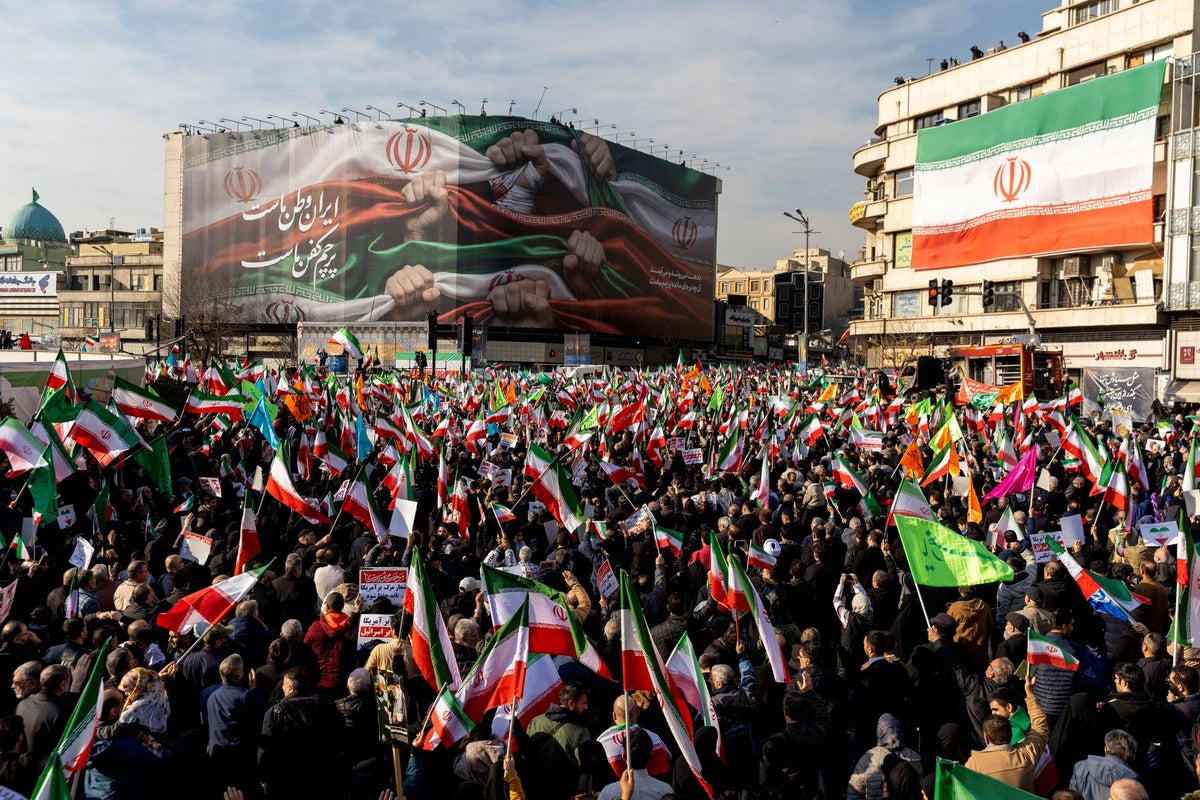
Two weeks of sustained precision strikes have decapitated the top tier of the Iranian clerical establishment, yet the Islamic Republic remains vertical. The assumption that high-tech kinetic warfare—what the Pentagon has dubbed Operation Epic Fury—would trigger a spontaneous internal combustion of the regime is proving to be a catastrophic miscalculation of Tehran’s structural resilience.
According to latest intelligence assessments, despite the death of Supreme Leader Ayatollah Ali Khamenei and a rotating cast of his inner circle, the administrative and repressive machinery of the state has not splintered. This isn’t a fluke of luck. It is the result of four decades of "coup-proofing" and a survival strategy built on the expectation of exactly this scenario.
The Decapitation Paradox
On paper, the losses are staggering. Since February 28, 2026, U.S. and Israeli forces have effectively cleared the boardroom of the Iranian state. The strike that claimed Khamenei and much of his immediate family was intended to be the final straw. Instead, it has triggered a predictable, albeit brutal, succession. Mojtaba Khamenei, though injured, has moved to consolidate power, leaning heavily on the Islamic Revolutionary Guard Corps (IRGC) to fill the vacuum.
Western analysts often mistake the "head" for the "body." In Iran, the body is the IRGC—a multi-billion-dollar paramilitary conglomerate that owns the economy as much as it polices the streets. For an IRGC general, the death of a cleric is a tragedy for the cameras but a promotion in practice. The regime’s survival does not depend on a single charismatic figure; it depends on a shared interest in avoiding a gallows at the hands of an angry public.
The intelligence reports surfacing this week in Washington confirm a grim reality. There have been no mass defections. No division commanders have turned their guns on the Ministry of Interior. The "Epic Fury" from the skies has, if anything, provided the IRGC with a wartime state of emergency to justify a domestic "cleansing" that makes previous crackdowns look like crowd control.
Cyber Asymmetry and the Information Dark Age
While the kinetic war rages, the digital front has seen unprecedented tactics. Israel and the U.S. have deployed a sophisticated suite of cyber tools, including the hijacking of Iranian telecommunications and even the takeover of state-sanctioned prayer apps to broadcast anti-regime messaging. However, these digital incursions face a physical wall.
Tehran’s response to the January 2026 protests—which saw nearly 7,000 deaths—was to refine the "National Information Network." This is a domestic intranet that allows the state to kill the global internet while keeping its own command-and-control systems alive. When the U.S. strikes targets in Isfahan or Tehran, the regime simply cuts the cord to the outside world.
In this dark age of information, the Iranian public is trapped between the fear of American bombs and the certainty of IRGC bullets. The "fingers on the trigger" order issued by FARAJA (Law Enforcement Force) commander Ahmadreza Radan on March 9 categorized any domestic protest as "cooperation with the enemy." This isn’t just rhetoric. It is a legal authorization for the military to use live ammunition against civilians as a standard operating procedure of war.
The Regional Spillover Strategy
Tehran knows it cannot win a conventional exchange with the United States. Its strategy has shifted to Horizontal Escalation. If the regime is to go down, it intends to take the global energy market with it.
The numbers are telling. Iran has launched nearly 2,000 missiles and drones against the United Arab Emirates, Bahrain, and Kuwait since the conflict began. By targeting the Strait of Hormuz and Gulf energy infrastructure, the regime is gambling that the "economic windfall" for some oil producers will be outweighed by a global panic that forces Washington to the negotiating table.
- Oil Prices: Brent crude is seeing a $25 surge, creating a $6 billion monthly windfall for some, but threatening a global recession.
- Proxy Resilience: While Hezbollah has been battered in Lebanon, the Houthis in Yemen and the Popular Mobilisation Forces in Iraq remain largely intact and active.
- The Shadow Fleet: Despite the capture of Venezuelan assets and the interception of sanctioned tankers like the Marinera, Iran’s "dark" economic ties remain a lifeline.
The Missing Revolutionary Component
For a revolution to succeed, five pillars are typically required: a fiscal crisis, divided elites, a diverse opposition coalition, a convincing narrative, and a favorable international environment. As of mid-March 2026, Iran has the fiscal crisis—the rial is trading at 1.4 million to the dollar—and a hostile international environment.
But the other three pillars are missing. The elites are not divided; they are huddled together for survival. The opposition is diverse but lacks a unified command or a presence on the ground that can withstand an IRGC "state of emergency."
The U.S. intelligence community’s assessment that the regime is not at risk of imminent collapse is a sobering admission. It suggests that while the military mission may succeed in degrading Iran's nuclear and missile capabilities, the political goal of regime change via external pressure remains a ghost.
The IRGC is utilizing the war to liquidate its internal rivals and finalize a transition to a more overt military dictatorship. For the Iranian people, the "Epic Fury" of the West has created a paradox: the more the regime is weakened externally, the more it tightens its grip internally, using the rubble of the war to build a fortress of absolute repression.


