The global energy market is currently fixated on a singular, jagged number that represents the limit of American economic endurance. While talking heads argue over daily fluctuations, the real danger zone begins when crude oil sustains a price above $138 per barrel. This is not a random figure plucked from a spreadsheet. It is the inflation-adjusted threshold where energy costs as a percentage of Gross Domestic Product historically trigger a systemic breakdown. When the price of oil crosses this line, the mechanics of the U.S. economy stop bending and start breaking.
The math of a recession is often simpler than the Federal Reserve wants to admit. In 2008, as the housing market crumbled, the final blow came from oil prices peaking near $147. Today, with a global supply chain that is significantly more fragile, the $138 mark serves as the definitive tripwire for a forced contraction. At this price point, the cost of moving goods, heating homes, and fueling the industrial base exceeds the consumer's ability to pay, leading to an immediate and involuntary drop in demand that ripples through every sector from retail to tech.
The Invisible Ceiling of Energy Intensity
Economies possess a specific "energy carrying capacity." For decades, the United States has operated under the assumption that cheap energy is a birthright, but the structural reality is that the economy can only afford to spend about 4% to 5% of its total GDP on energy before growth stalls. When oil reaches $138, that ratio enters the danger zone.
Money spent on a gallon of diesel is money that cannot be spent on a new mortgage, a car payment, or a software subscription. This is the "energy tax" that no politician votes for but every citizen pays. Unlike a standard government tax, this revenue doesn't circulate back into the domestic infrastructure; much of it leaks out to foreign producers or sits in the capital expenditure accounts of massive energy conglomerates.
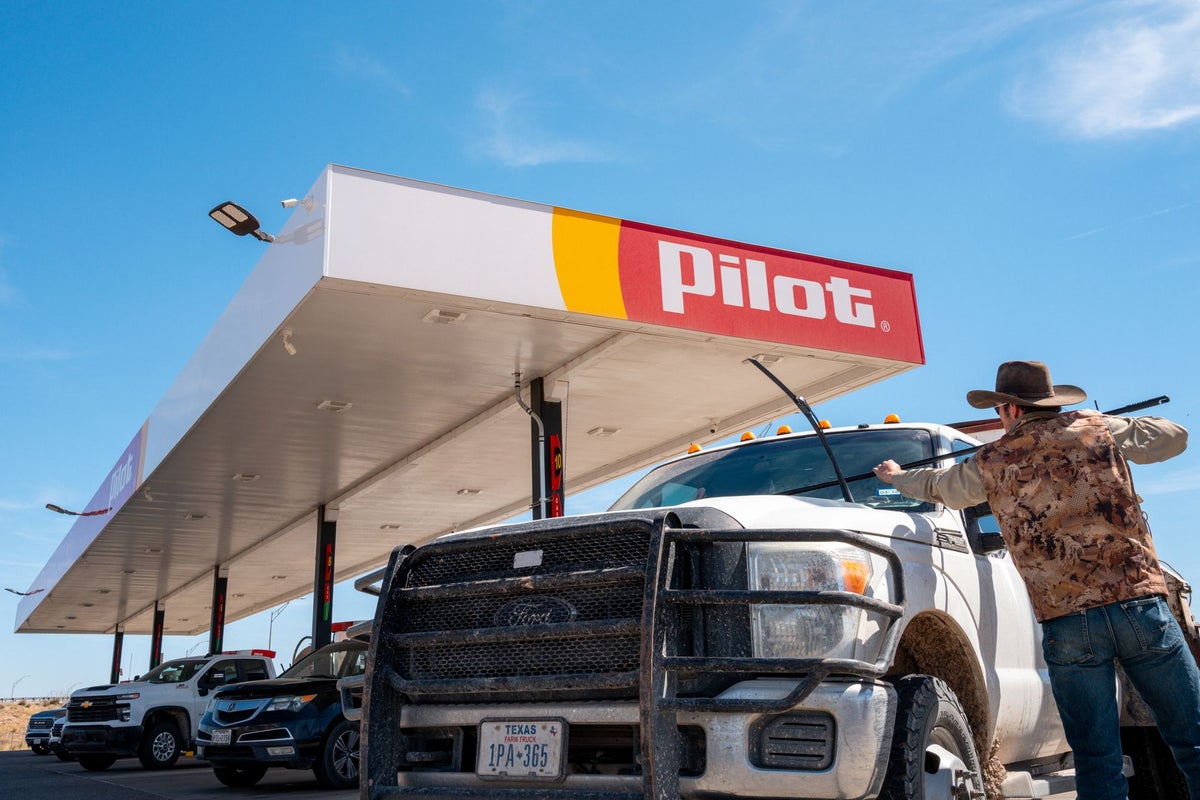
The impact is most visible in the logistics sector. Long-haul trucking operates on razor-thin margins. When diesel prices spike in tandem with $138 crude, freight surcharges become a permanent fixture of the invoice. This isn't just a headache for shipping companies; it is an inflationary pressure that acts as a lead weight on every physical product sold in the country. If you can’t move the product profitably, you stop moving the product.
Why Domestic Production Cannot Save the Consumer
There is a popular myth that because the United States is a leading producer of oil, it is insulated from these price shocks. This perspective ignores the fundamental reality of a globalized commodity market. Oil is fungible. A barrel produced in the Permian Basin is priced against the same global benchmarks as a barrel from the North Sea or the Middle East.
The Refinery Bottleneck
Even if the U.S. pumped twenty million barrels a day, the capacity to turn that crude into usable gasoline and jet fuel is capped. We haven't built a major, "grassroots" refinery with significant capacity in the United States since the mid-1970s. We are running an aging fleet of refineries at nearly 95% capacity. When oil hits $138, the input costs for these facilities skyrocket, and any mechanical failure or weather event becomes a catastrophic failure point for the entire grid.
The Capital Discipline Trap
In previous cycles, high prices led to a "drill, baby, drill" mentality. That era is dead. Wall Street has demanded that oil companies stop chasing volume and start returning cash to shareholders through dividends and buybacks. This shift in corporate strategy means that even when prices scream toward $140, the supply response is sluggish. Producers are no longer willing to gamble their balance sheets on new projects that might take five years to come online, only to find the market has shifted. This creates a supply-side rigidity that keeps prices higher for longer, extending the duration of the economic pain.
The Geopolitical Trigger and the $138 Threshold
Oil is the ultimate geopolitical weapon, and the current global environment is more volatile than at any point since the 1970s. The $138 mark is often reached not through steady demand growth, but through a "fear premium" caused by instability in key transit corridors.
- The Strait of Hormuz: A significant portion of the world's traded oil passes through this narrow waterway. Any credible threat to this passage adds $20 to $30 to the price of a barrel instantly.
- The Fragmentation of Trade: The world is moving away from a single, unified energy market. As countries form "energy blocs," the efficiency of the global supply disappears. Inefficiency is always expensive.
- The Strategic Petroleum Reserve (SPR): The safety net is thinner than it used to be. The U.S. has drawn down its reserves to manage short-term spikes, leaving less ammunition to fight a sustained climb toward the $138 ceiling.
When the price reaches this level, it forces a realignment of national priorities. Foreign policy ceases to be about diplomacy and becomes a desperate scramble for BTU security.
The Consumer Breaking Point
We must look at the "wallet share" of the average American household. For the bottom 60% of earners, energy and food are non-discretionary expenses. They are inelastic. When oil hits $138, the cost of gasoline typically hovers well above $5.00 per gallon nationally.
At this price, the psychological shift is profound. Consumers stop "going out." They cancel vacations. They switch from name-brand goods to generics. This is the "demand destruction" that economists talk about in clinical terms, but on the ground, it looks like small businesses closing and families taking on credit card debt just to commute to work.
This shift hits the automotive industry with particular force. The demand for high-margin SUVs and trucks—the lifeblood of Detroit—evaporates. In its place comes a desperate search for efficiency that the current infrastructure isn't fully prepared to meet. The transition to electric vehicles is a decade-long project; an oil spike to $138 is a next-month catastrophe.
The Federal Reserve's Impossible Choice
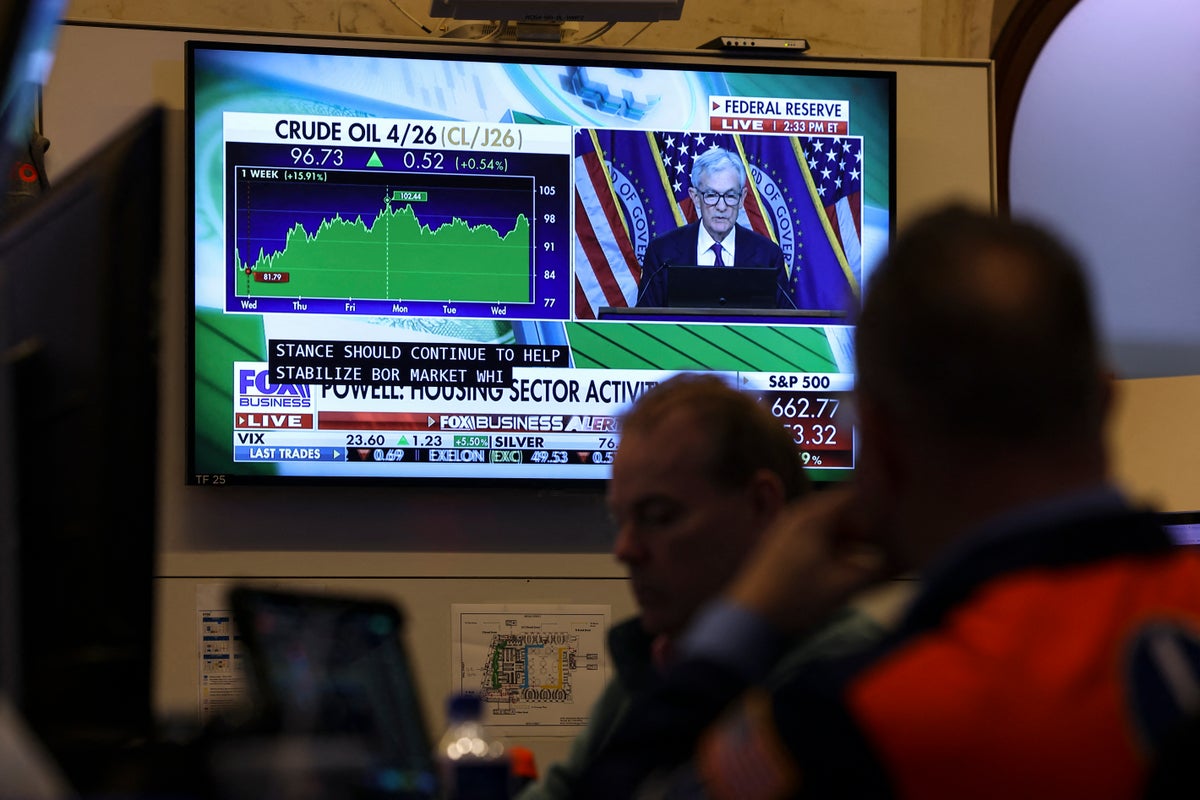
When oil prices drive inflation, the Federal Reserve finds itself in a corner. Standard inflation is managed by raising interest rates to cool the economy. But interest rates cannot produce more oil. They cannot fix a broken pipeline or settle a war in a producing region.
If the Fed raises rates while oil is at $138, they risk a "hard landing" by crushing the consumer from two sides: high energy costs and high borrowing costs. If they do nothing, inflation embeds itself in the expectations of the public, leading to a wage-price spiral that is even harder to break. This is the definition of stagflation—a stagnant economy paired with rising prices. It is the worst-case scenario for any industrial nation, and $138 oil is the primary catalyst.
The Myth of the Green Pivot as an Immediate Shield
It is a mistake to think that renewable energy acts as a buffer against a $138 oil spike in the short term. In fact, high oil prices often make the "green transition" more expensive. The machinery used to mine lithium, the ships used to transport wind turbine blades, and the plastics used in solar panel components all rely on the very fossil fuel infrastructure that is currently under stress.
We are in a dangerous "in-between" period. We have divested from traditional energy enough to tighten supply, but we haven't scaled alternatives enough to replace the base load. This gap is where the $138 price point lives. It is a vacuum that sucks the liquidity out of the markets.
Tracking the Velocity of the Rise
The absolute price of oil matters, but the speed at which it reaches $138 matters more. A slow climb over three years allows the economy to adjust through incremental efficiency gains. A "vertical" move—the kind caused by a sudden conflict or a sudden supply disruption—is what causes a systemic shock.
The current volatility index for oil suggests that the markets are primed for a vertical move. Speculative capital, which fled the energy sector for a decade, is returning. When "hot money" enters the futures market, it creates an overshoot. The price doesn't just go to where the fundamentals suggest; it goes to where the most panicked buyer is forced to pay. That is how we reach $138.
The Structural Threat to the Dollar
Oil is priced in dollars. This has been the bedrock of American financial hegemony for half a century. However, as the price climbs toward $138, the "Petrodollar" system faces unprecedented pressure. Emerging economies, forced to pay exorbitant prices for oil in a currency that is also strengthening due to Fed rate hikes, begin to look for alternatives.
When energy becomes unaffordable, nations stop playing by the rules of the global financial system. They seek bilateral trade deals, bartering goods for barrels, or using alternative currencies. A sustained period of $138 oil doesn't just threaten the U.S. GDP; it threatens the dollar's status as the global reserve currency. If the world stops needing dollars to buy oil, the U.S. loses its ability to export its inflation to the rest of the world.
The Industrial Reality Check
For the manufacturing sector, oil is more than just fuel; it is a feedstock. From fertilizers that grow our food to the resins in our medical devices, petroleum is the building block of modern life. At $138, the "cost of goods sold" for the entire manufacturing sector undergoes a permanent upward shift.
Companies that have spent years optimizing for "just-in-time" delivery find that their models are broken. The cost of holding inventory becomes cheaper than the cost of moving it. This leads to a de-globalization of supply chains, as companies move production closer to the end consumer to save on transport costs. While this might be good for domestic jobs in the long run, the transition period is marked by shortages, high prices, and extreme market volatility.
The Survival of the Leanest
The $138 mark is a filter. It separates companies with genuine pricing power from those that are merely surviving on cheap credit and low input costs. In a high-energy-cost world, the "zombie companies" that have haunted the markets for years are finally liquidated.
Investors must look beyond the surface-level earnings reports. You have to ask: how much of this profit is dependent on $70 oil? If the answer is "most of it," that company is a ticking time bomb. The winners in a $138 world are those that control their own energy destiny—either through extreme efficiency, long-term supply contracts, or a product that is so essential that the consumer will pay any price to obtain it.
Monitor the spread between Brent and WTI crude. When that gap narrows while the overall price accelerates toward the $130s, it indicates that the domestic supply cushion has evaporated. That is the moment to de-risk. The $138 price point isn't just a number on a screen; it is the sound of the American economic engine beginning to seize.
Analyze your exposure to the transportation and discretionary retail sectors now. If the barrel hits the mark, the window for a graceful exit will have already slammed shut.