Every six months, think tanks in Washington, London, and New Delhi roll out the exact same tired graphic: a neat little triangle connecting Beijing, New Delhi, and Islamabad, complete with ominous red arrows pointing every which way. The narrative is always identical. We are told that Asia is standing on the precipice of a three-way nuclear cataclysm, that missile modernizations are spiraling out of control, and that an accidental launch between any two capitals will inevitably drag the third into the abyss.
It is a neat story. It sells papers, justifies defense budgets, and keeps armies of policy analysts comfortably funded to write white papers that change precisely nothing.
It is also fundamentally wrong.
The lazy consensus in modern security analysis treats international relations like a game of high-stakes billiards, where every action produces a predictable, linear reaction. If China builds a submarine, India must build two. If India acquires a multiple independently targetable reentry vehicle system, Pakistan must lower its nuclear threshold. This is the orthodox view. It assumes absolute paranoia, zero institutional friction, and a complete lack of strategic adult supervision.
I have spent years tracking defense procurement cycles, analyzing nuclear doctrine shifts, and watching how real capitals handle actual crises behind closed doors. The reality on the ground bears zero resemblance to the paranoid geometry scribbled on whiteboard diagrams by academics who have never managed a crisis desk in their lives.
The dangerous nuclear triangle is a myth. Not because these nations lack nuclear weapons, but because treating their arsenals as an interconnected, multilateral system fundamentally misunderstands how nuclear deterrence actually operates.
The Fallacy of the Three-Way Equilibrium
Let us address the core misconception holding up the entire edifice. The standard line is that China, India, and Pakistan form an action-reaction chain. Analysts love to map out triangular stability models as if Beijing loses sleep over Islamabad's tactical cruise missiles, or as if New Delhi calculates its strategic fleet solely based on the People's Liberation Army Rocket Force.
This model collapses under the weight of basic geography and distinct strategic objectives.
Deterrence is not a multilateral spectator sport. It is bilateral, localized, and ruthlessly specific. India has two distinct nuclear deterrent relationships that share zero operational overlap. The first is with Pakistan, defined by low thresholds, short flight times, first-use ambiguities, and a primary focus on conventional military imbalances. The second is with China, defined by a 1960s-vintage No First Use policy, immense geographical buffers across the Himalayas, massive asymmetries in overall warhead stockpiles, and a quiet, grudging acceptance of mutual strategic stalemate.
Beijing does not coordinate its nuclear modernization with Rawalpindi. Islamabad does not calibrate its strategic posture based on South China Sea naval patrols. When Pakistan builds up its fissile material production, it is reacting to India's Cold Start doctrine and conventional overmatch. When China fields hypersonic glide vehicles, it is countering American missile defense systems in the Western Pacific, not worrying about Indian artillery positions in Ladakh.
To lump these three distinct security dilemmas into a single geometric shape is intellectually lazy. It forces complex, asymmetric regional dynamics into a neat little box so analysts can brief senior officials in twenty minutes or less.
Dissecting the Pakistan Paradox
Let us talk about Pakistan’s nuclear posture, because this is where the conventional narrative hits peak hysteria. For decades, the Western press has run the same recurring headline: Pakistan is the most dangerous nuclear flashpoint on Earth, its command-and-control systems are perpetually on the verge of falling apart, and its tactical nuclear weapons—the Nasr missile system, specifically—are hair-trigger tripwires waiting for an excuse to turn the Punjab into glass.
I have spoken with military attachés and intelligence officers who roll their eyes so hard at this trope they risk detaching their retinas.
The reality of Pakistan’s nuclear management is characterized by extreme institutional self-preservation. The Pakistan Army treats its strategic assets not as frontline battlefield tools to be casually lobbed at advancing Indian armor, but as the ultimate regime insurance policy. The Strategic Plans Division operates under multi-layered custody controls that make the loose-nukes scenarios of 1990s thriller novels look absurd.
Imagine a scenario where a rogue brigade commander in the field decides to fire a tactical nuclear weapon during a border skirmish. In reality, the physical separation of warheads from delivery vehicles, combined with decentralized authorization triggers and biometric safeguards designed by paranoid institutionalists, ensures that the chain of command is practically unbreakable by a rogue element.
The function of Pakistan's low-yield nuclear posture is not war-fighting. It is strategic paralysis. It is designed to freeze Indian conventional superiority in its tracks by creating an intolerable risk threshold. Islamabad knows it cannot win a long conventional war against India's industrial depth. The nuclear deterrent exists purely to ensure that India's military planners cannot execute a decisive conventional campaign without risking existential escalation.
It is a defensive crouch, not an offensive swagger. Calling it an escalating risk factor in a grand triangle misreads the entire psychological makeup of the Pakistan military establishment, which views its arsenal as a shield, not a sword.
The Indian Strategic Shift
On the other side of the border, India is undergoing a quiet, profound evolution in its nuclear philosophy that the Western security establishment completely fails to grasp because it is too busy looking at Pakistan.
For decades, New Delhi clung to a rigid interpretation of its official doctrine: Credible Minimum Deterrence and No First Use. It was a posture born of moral posturing and economic necessity. But as any defense procurement officer in New Delhi will tell you, minimum deterrence is a shifting baseline.
Today, India's strategic community has realized that minimum deterrence against a rising, assertive China is a fool's errand. You cannot deter a superpower with an arsenal you can count on two hands and a strict moral code.
This is why India is quietly, deliberately expanding its strategic triad. The commissioning of the Arihant-class nuclear submarines, the development of intercontinental ballistic missiles like the Agni-V with ranges capable of reaching China's eastern seaboard, and the gradual shift toward canisterized storage point to a hardheaded pivot toward realistic deterrence.
Yet, Western analysts misinterpret this pivot as an aggressive arms race. They panic over every new missile test, warning that India is upsetting regional stability. This is nonsense. India is simply trying to achieve what the great powers have maintained for three-quarters of a century: a survivable second-strike capability against a peer competitor.
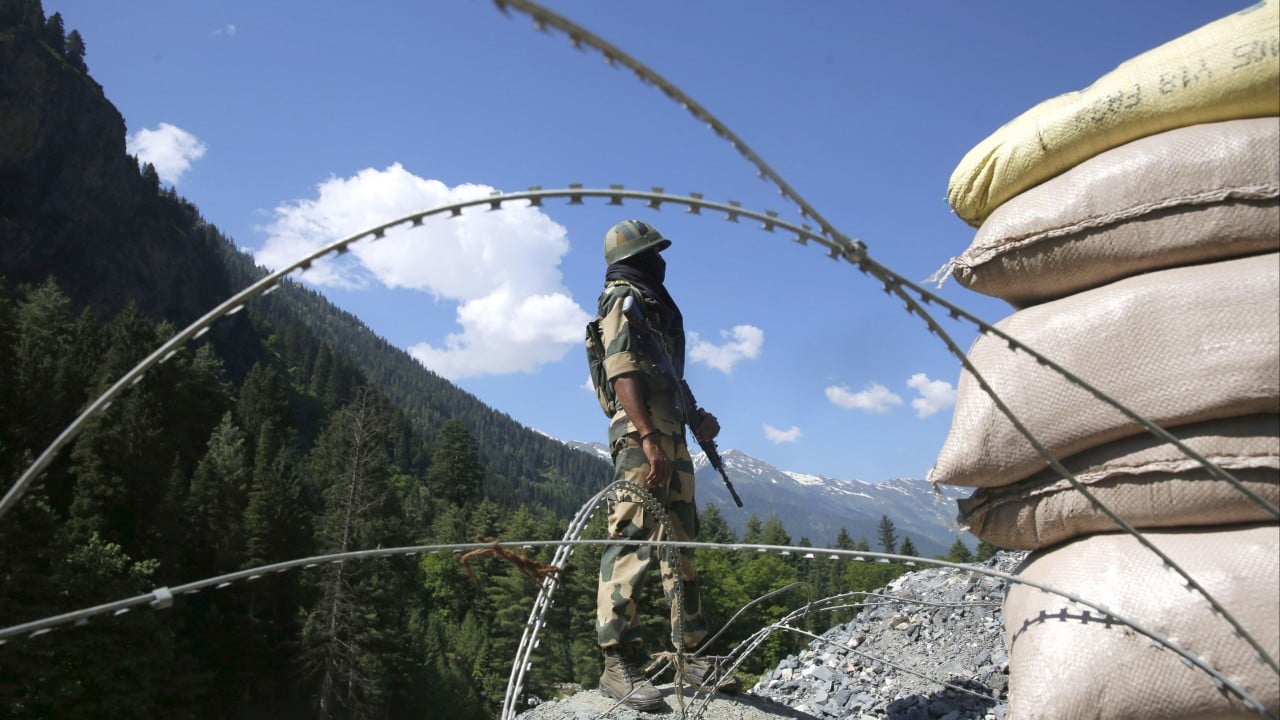
The idea that India's nuclear growth threatens global stability assumes that New Delhi has revisionist territorial ambitions in Beijing. It does not. India wants strategic breathing room, nothing more. The border disputes in the Himalayas are nasty, violent, and politically charged, but they are fought with batons, iron rods, and occasionally small arms precisely because both sides know that crossing the nuclear threshold is a mutual suicide pact with zero strategic payoff.
China’s Calculus and the Silent Giant
Then we have Beijing, the apex predator in this imaginary triangle. The standard narrative claims that China is aggressively expanding its nuclear silo fields in Xinjiang and Inner Mongolia because it feels threatened by India's conventional rise and American containment strategies.
Let us look at the actual mechanics of what is happening. China's nuclear modernization program is massive, unprecedented, and terrifying to look at on satellite imagery. But view it through the lens of strategic vulnerability rather than regional hegemony.
For decades, Beijing maintained a lean, highly vulnerable nuclear force structure based primarily on liquid-fueled, soft-silo missiles that took hours to fuel. It worked when American and Soviet arsenals were smaller, but the rapid proliferation of prompt global strike capabilities, advanced conventional weapons, and space-based surveillance made China's old deterrent dangerously obsolete.
China's current silo construction boom is about survivability, not conquest. By building hundreds of new hardened silos while keeping the actual number of deployed warheads fluid, Beijing is playing a high-stakes shell game. If an adversary cannot determine which silo holds a live missile and which one is empty, a disarming first strike becomes mathematically impossible.
How does this affect India or Pakistan? It barely registers in Beijing's primary security calculus. The primary driver of China's nuclear evolution is the United States, followed at a distant second by Russia. India is a regional neighbor with whom China shares a heavily fortified, largely static border. Beijing's nuclear posture toward New Delhi has always been one of strategic disdain mixed with localized caution. The idea that China views India as a nuclear peer is a flattering delusion harbored by Indian nationalists and alarmist Western journalists.
The Real Danger Is Not the Triangle, It Is Miscalculation
If the structural triangle is a myth, where does the real danger lie?
It does not lie in grand strategic chess moves or multilateral arms races. It lies in the mundane, greasy friction of modern technology and human error.
The real threat in South Asia is not a deliberate three-way nuclear exchange. It is the integration of artificial intelligence, automated early warning systems, and hypersonic delivery vehicles into environments characterized by zero institutional trust and hair-trigger political leadership.
When flight times drop from fifteen minutes to five, decision-making cycles shrink from hours to seconds. In a genuine crisis between India and Pakistan, political leaders will not be consulting strategic triangles or balancing equations against Beijing. They will be staring at ambiguous radar returns on a screen, pushed by hyper-nationalist media ecosystems, trying to decide whether an incoming blip is a weather anomaly, a conventional drone, or a decapitating nuclear strike.
That is where the danger lives. Not in the geometry of the triangle, but in the erosion of crisis communication channels and the dangerous belief that technology can substitute for diplomacy.
We need to stop writing about this region as a dramatic geopolitical thriller. It is a grinding, high-stakes standoff defined by institutional caution, geographical reality, and mutual deterrence that has held firm through multiple conventional wars and terrorist provocations.
Stop looking at the triangle. Look at the wires.