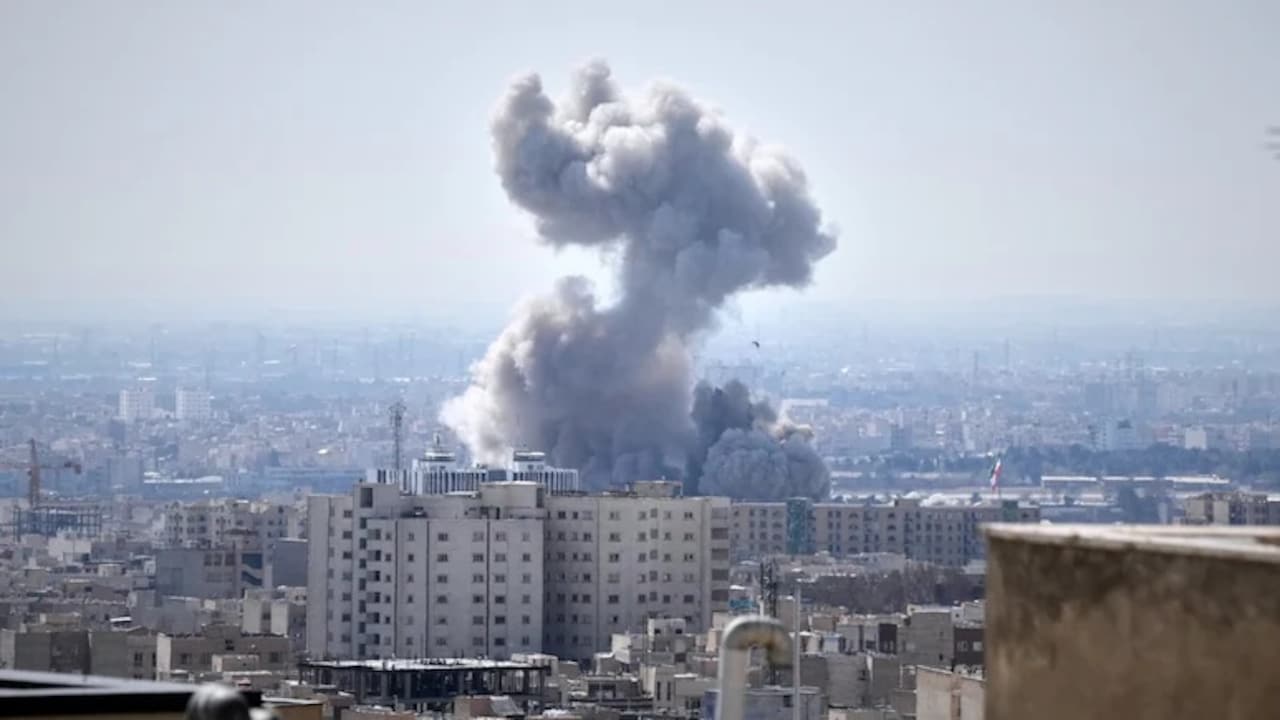
Israel ran a sprawling network of clandestine military positions directly along Iran’s periphery during the recent war, utilizing highly specialized assets in Azerbaijan to launch cross-border strikes and blind Iranian radar. Newly disclosed intelligence confirms that Israel Defense Forces commandos, Mossad operatives, and heliborne search-and-rescue teams from Unit 669 operated from southern Azerbaijan, some just 60 miles from the major Iranian city of Tabriz. This quiet northern deployment formed the backbone of a multi-sided containment web that also stretched into Iraq, the United Arab Emirates, and a newly established logistical outpost in Somaliland.
While the official diplomatic line from Baku remains a fierce denial, the operational reality points to a calculated, multi-year geopolitical courtship that paid off when the shadow war with Tehran turned hot. For decades, Western military analysts focused on Israel’s long-range refueling capabilities and its Mediterranean training runs. They looked the wrong way. The real vulnerability for Tehran was always sitting right across its northern border.
The Architecture of the Outpost
The deployment did not happen overnight. Israeli intelligence planners began installing advanced surveillance equipment and establishing secure logistics nodes along the Azerbaijani border months before the outbreak of open hostilities, predicting the collapse of regional diplomatic backchannels.
What began as a contingency plan rapidly evolved. Initially, the commandos and Unit 669 crews were positioned to act as a deep-theater extraction force. Had an Israeli F-35 lightning II been downed during the initial waves of airstrikes over northern Iran, an extraction flight from Israel or the Mediterranean would have arrived far too late. By staging assets in southern Azerbaijan, Israel cut emergency response times down to minutes.
Once the conflict intensified, these forward positions became active offensive launchpads. Rather than relying solely on predictable, long-range missile trajectories from the south, Israel used its foothold in Azerbaijan to deploy low-altitude reconnaissance drones and loitering munitions. This allowed planners to map the radar gaps of Iran’s air defense network in real-time, feeding targeting data directly to strike packages crossing Iraqi airspace.
The proximity allowed for unparalleled tactical agility. An electronic warfare unit operating from a hidden position near the Aras River can do more to scramble local communications than a massive cyber disruption launched from Tel Aviv.
The Decapitation of the Special Operations Division
The most severe blow dealt from this northern pocket occurred on March 4, with the targeted killing of Rahman Moghaddam. As the chief of the Islamic Revolutionary Guard Corps Special Operations Division, Moghaddam was the architect of Iran’s asymmetric retaliation strategy. He was responsible for activating proxy cells tasked with tracking Israeli shipping, targeting Western military installations, and mapping the movements of political leaders abroad.
Intelligence officials indicate that the precise, real-time tracking required to eliminate Moghaddam inside northwestern Iran was managed directly from the Azerbaijani side of the border. The physical proximity eliminated the typical latency found in satellite-relayed drone operations.
The retaliation was swift but masked in plausible deniability. Within twenty-four hours of Moghaddam’s death, explosive drones tore through a terminal at the Nakhchivan International Airport, an Azerbaijani exclave nestled between Armenia, Turkey, and Iran. While Baku loudly blamed Tehran for an act of terrorism, and Iran just as loudly denied it, the message was clear. The border had become an active combat zone. Days later, Azerbaijan’s State Security Service announced it had disrupted a domestic IRGC plot targeting Jewish community centers and infrastructure, acknowledging a joint intelligence operation alongside Mossad and the Shin Bet to neutralize the threat.
Baku's High-Stakes Balancing Act
To understand why Azerbaijan took such an immense gamble, one must look at the ledger of regional survival. Azerbaijan is a secular, Shiite-majority nation that has long viewed the clerical regime in Tehran with deep suspicion. Tehran has historically backed Armenia in regional disputes, viewing a strong, independent Azerbaijan as a potential catalyst for unrest among its own massive ethnic Azerbaijani population.
This mutual distrust created a perfect transactional alliance with Jerusalem. The relationship is built on a simple trade of survival commodities.
| Asset Supplied by Azerbaijan | Asset Supplied by Israel |
|---|---|
| Crude oil via the Baku-Tbilisi-Ceyhan pipeline | Advanced military hardware (Harop drones, Barak-8 missiles) |
| Forward geographic access to Iran's northern flank | Satellite imagery and electronic intelligence sharing |
| Secure transit and logistics infrastructure | Counter-drone systems and cyber defense architecture |
This transaction explains the furious rhetoric coming from the Azerbaijani Foreign Ministry following recent leaks. Baku has demanded retractions, stating it has never allowed, and will never allow, its territory to be used for hostile acts against third countries. This denial is legally necessary but tactically irrelevant. In the calculus of Eurasian geopolitics, public deniability is the currency that prevents local border skirmishes from transforming into total regional wars.
The Peripheral Web
Focusing entirely on Azerbaijan misses the broader operational picture of the war. The northern outpost was merely one node in a larger strategy designed to force Iran to defend every quadrant of its airspace simultaneously.
To the west, covert Israeli units operated two distinct radar and intelligence-gathering stations inside Iraq, monitoring the movement of ballistic missile launchers in the western desert. To the south, air defense assets and personnel were integrated into positions within the United Arab Emirates to counter incoming drone swarms.
The final piece of the perimeter came from the Horn of Africa. Following Israel’s diplomatic recognition of the self-declared Republic of Somaliland, a maritime and aerial refueling post was quietly secured near the Gulf of Aden. This gave Israeli aircraft an unimpeded flight path from the Red Sea toward southern Iran, bypassing the heavily monitored airspace of the central Middle East.
Iran possesses the second-largest landmass in the region. Defending it requires a highly centralized command structure. By forcing Tehran to look north toward Azerbaijan, west toward Iraq, and south toward the Gulf and the Horn of Africa, Israel effectively diluted the effectiveness of Iran's early warning systems.
The New Strategic Reality
The deployment of elite forces to the Caucasus changes the parameters of future deterrence in the Middle East. The long-standing military assumption that Israel would always be forced to fight a war of long-range projection from its own borders has been disproven.
Baku will continue to issue stern denials to protect its energy infrastructure and prevent outright conflict with its northern neighbor. Israel will maintain its policy of ambiguity regarding special operations. Yet the infrastructure built along the Aras River remains intact, the intelligence channels are open, and the precedent has been set. Tehran now has to operate under the permanent assumption that its northern border is entirely transparent.