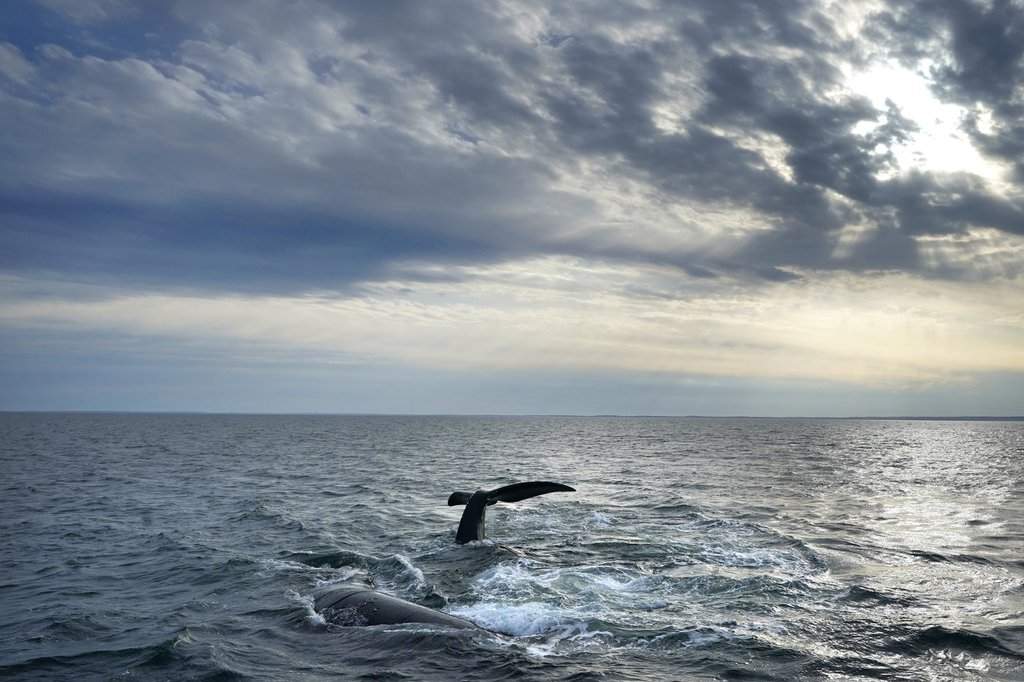
The survival of the North Atlantic right whale (Eubalaena glacialis) represents a complex operational and environmental crisis. The recent sighting of a known, chronically entangled individual in the Gulf of St. Lawrence highlights a critical failure in current marine wildlife management protocols. This issue is not merely an animal welfare concern; it is a systemic conflict between industrialized commercial fisheries and a critically endangered population. Resolving this crisis requires analyzing the mechanics of entanglement, evaluating current monitoring limitations, and scaling structural interventions.
The Tri-Factor Mechanics of Entanglement
Entanglement is fundamentally a function of spatial-temporal overlap, gear vulnerability, and whale morphology. When these three variables align, the probability of an interaction reaches near certainty. Don't miss our earlier post on this related article.
1. Spatial-Temporal Overlap
The North Atlantic right whale population has shifted its migratory and foraging patterns over the past decade. Driven by changing ocean temperatures, their primary prey—the copepod Calanus finmarchicus—has declined in traditional habitats like the Bay of Fundy and shifted north into the Gulf of St. Lawrence. This ecological pivot forced the population into one of the busiest maritime shipping and commercial fishing zones in North America. The overlap occurs during peak spring and summer snow crab and lobster fishing seasons, when tens of thousands of vertical lines fill the water column.
2. Gear Vulnerability (The Vertical Line Problem)
The primary vector of entanglement is the static vertical line, or "buoy line," running from a seafloor trap or pot to a surface buoy. These lines are constructed from high-tensile synthetic polymers designed to withstand heavy tides and rocky bottoms. To a foraging whale, which swims with an open mouth to filter food, these lines are practically invisible obstacles. To read more about the history of this, Associated Press provides an informative summary.
[Surface Buoy]
      │
      │ ← High-Tensile Vertical Line (The Primary Vector)
      │
[Seafloor Trap / Pot]
3. Morphological and Behavioral Susceptibility
Right whales are uniquely vulnerable due to their feeding behavior and anatomical structure. As skim feeders, they move through the water column with open mouths for extended periods.
- The Mouth Baleen Bottleneck: Vertical lines easily catch in the rough baleen plates or the corners of the mouth.
- Flipper and Fluke Wrapping: Once hooked, a whale’s natural reaction is to roll. This twisting motion wraps the line tighter around the pectoral flippers and the caudal peduncle (the base of the tail).
- The Drag Coefficient: Unlike smaller marine mammals that might break the line, a mature right whale can drag hundreds of pounds of commercial gear for months or years. This creates immense hydrodynamic drag, leading to starvation, systemic infection, and reproductive failure.
The Asymmetry of Detection and Monitoring Systems
The observation of an entangled whale in the Gulf of St. Lawrence reveals a significant lag between the initial entanglement event and its discovery. This detection gap exists because current monitoring regimes rely heavily on passive, opportunistic, or intermittent surveillance methods.
Visual Surveillance Limitations
Aerial surveys and vessel-based monitoring are the primary methods for tracking right whales. However, these systems suffer from severe sampling bias. Aerial surveys require specific weather conditions—low wind, high visibility, and no fog—which are rare in the Gulf of St. Lawrence. Furthermore, whales spend the vast majority of their time submerged, meaning visual counts only capture a fraction of the population at any given moment. An entangled whale can travel hundreds of miles undetected before surfacing near a surveillance asset.
Passive Acoustic Monitoring (PAM) Constraints
While hydrophone arrays can detect right whale vocalizations (such as "upcalls") in real-time, they cannot determine if an individual is entangled. PAM provides spatial presence data but fails to assess the physical condition of the animal. If a whale is severely stressed or exhausted from dragging gear, its vocalization rates drop, rendering it acoustically invisible to monitoring networks.
The Dynamic of Multi-Jurisdictional Reporting
The migratory route of the North Atlantic right whale crosses the international border between the United States and Canada. This creates operational friction. Differences in regulatory frameworks, reporting timelines, and data-sharing protocols between the National Oceanic and Atmospheric Administration (NOAA) in the U.S. and Department of Fisheries and Oceans (DFO) in Canada delay coordinated disentanglement efforts. By the time a sighting is verified and a response team is deployed, weather conditions or ocean currents often shift, causing the team to lose track of the animal.
Evaluating the Intervention Matrix
Addressing the entanglement crisis requires evaluating current and emerging interventions against two metrics: immediate efficacy and long-term economic viability for commercial fisheries.
The Limitations of Direct Disentanglement
Human-led disentanglement is a dangerous, highly specialized stopgap measure, not a population-level solution. Response teams face extreme physical risks when approaching a stressed, multi-ton animal in small vessels.
More importantly, disentanglement rarely resolves the underlying trauma. Line cuts often leave embedded rope within the whale’s tissue, leading to necrotic wounds, bone deterioration, and long-term reproductive suppression in females. Relying on disentanglement as a primary conservation strategy is a reactive policy that fails to address the root cause.
Technological Subversion: On-Demand (Ropeless) Fishing
The most definitive technical intervention is the transition to on-demand, or "ropeless," fishing technology. This system removes the persistent vertical line from the water column entirely.
The system operates via a distinct mechanical framework:
- Subsurface Storage: The trap or pot is deployed with its buoy and retrieval line stored in a cage or bag on the seafloor.
- Acoustic Triggering: When the fisher returns to retrieve the catch, a surface vessel sends a unique acoustic signal into the water.
- Release Mechanism: An acoustic receiver on the trap triggers a release valve or galvanic link, inflating a lift bag or releasing a submerged buoy that floats the retrieval line to the surface.
The primary limitation of ropeless technology is financial and operational scalability. Current systems cost thousands of dollars per vessel, creating a significant capital barrier for independent fishers. Furthermore, without a visible surface buoy, there is a risk of "gear conflict," where trawlers or other fishers accidentally set their gear on top of existing ropeless traps. Resolving this requires developing and mandating standardized gear-marking software that allows fishers to see subsurface trap locations via a shared digital ledger or GPS overlay.
Regulatory Interventions: Dynamic vs. Static Closures
Fisheries management currently uses two primary regulatory mechanisms to reduce entanglement risk: static seasonal closures and dynamic closures.
| Management Attribute | Static Seasonal Closures | Dynamic Closures |
|---|---|---|
| Trigger Mechanism | Calendar dates based on historical migration data. | Real-time visual or acoustic detection of a whale. |
| Operational Impact | Highly predictable for fishers; completely halts economic activity in a zone for months. | Unpredictable; requires rapid gear removal within 48–72 hours of a sighting. |
| Conservation Efficacy | High within the closed zone, but risks pushing fishing efforts into adjacent, unprotected waters. | High precision, but reliant on flawless detection systems to trigger the closure. |
The systemic flaw in dynamic closures is the time lag. If a whale is detected today, the area may not officially close for several days to allow fishers to retrieve their gear. During this window, the risk of entanglement surges as panicked or rushed gear-retrieval operations fill the water column with tense lines.
Operational Roadmap for Population Stabilization
To prevent the extinction of the North Atlantic right whale, management agencies must abandon reactive measures and implement a structural risk-reduction model. The goal must be to reduce human-caused mortality to less than one individual per year—the threshold calculated by scientists to allow population recovery.
Phase 1: Harmonize Transboundary Regulatory Thresholds
The U.S. and Canada must synchronize their regulatory triggers. If a right whale is spotted within a specific buffer zone of the international border, identical closure mechanisms must apply simultaneously in both jurisdictions. This eliminates the regulatory loopholes where whales exiting protected Canadian waters immediately enter high-density, unprotected U.S. fishing zones, or vice versa.
Phase 2: Mandate Weak-Link Requirements globally
Until ropeless technology is fully integrated, all commercial vertical lines must be retrofitted with engineered weak links or weak-insertion ropes. These lines are manufactured to break at a tension of 1,700 pounds ($7,562\text{ N}$).
Data shows that adult right whales have the physical strength to break lines at this tension threshold, allowing them to escape before a life-threatening entanglement occurs. This measure serves as an immediate risk-reduction bridge while the industry transitions away from vertical lines.
Phase 3: Subsidize and Scale Ropeless Infrastructure
Governments must view the transition to ropeless fishing as a critical infrastructure upgrade. Direct subsidies, funded by both environmental allocations and seafood consumer tariffs, should cover the capital cost of ropeless gear for small-scale fishers. Simultaneously, maritime authorities must mandate a unified subsurface spatial visualization platform to prevent gear conflict, ensuring that the commercial fishing fleet can coexist with a recovering whale population without suffering catastrophic economic collapse.


