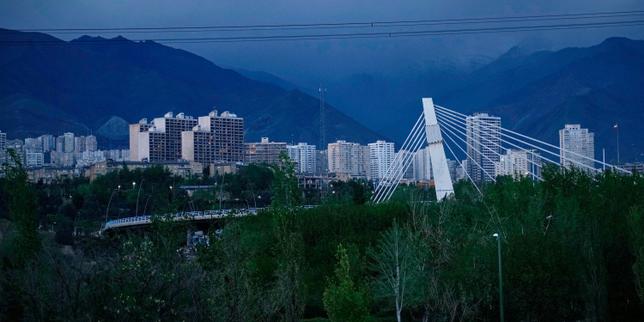
The headlines are carbon copies of each other. "Situation normal." "Business as usual." "Air defense systems activated, but no damage reported." Iranian state media, echoed by global outlets, wants you to believe that the smoke clearing over Tehran is a sign of a return to the status quo.
They are lying. Or worse, they are delusional.
In the world of high-stakes geopolitics, "normal" is a sedative administered to the public to prevent panic. When air defense batteries light up the night sky over a capital city, the baseline of reality has fundamentally shifted. To call the aftermath "normal" is to ignore the structural decay of deterrence. We are witnessing the slow-motion collapse of regional stability, repackaged as a quiet Tuesday.
The Myth of Successful Interception
The consensus view suggests that if a missile or drone doesn't hit a high-value target, the defense was a success. This is a tactical victory but a strategic catastrophe.
Every time a battery fires, it reveals its position, its reaction time, and its frequency. Modern warfare is an iterative learning process. An "unsuccessful" strike by an adversary is actually a data-gathering mission. They aren't trying to blow up a building; they are stress-testing a network.
By claiming everything is back to normal, the Iranian authorities—and the Western media outlets parroting them—ignore the fact that the threshold for violation has been crossed. Once you start firing missiles at a sovereign capital, the "red line" becomes a pink suggestion. You don't go back to normal after that. You go to a state of permanent, high-friction readiness that drains resources and frazzles the nerves of the civilian population.
The Cost of the Invisible War
Let’s talk about the economics of "normal."
I have watched analysts ignore the sheer lopsidedness of modern defense. It costs roughly $50,000 to $100,000 to build a capable long-range suicide drone. It costs millions to intercept it. When Tehran claims the situation is normal, they are ignoring the massive capital flight and the cratering of the rial that accompanies every "minor" escalation.
"Normal" doesn't involve:
- Insurance premiums for shipping and aviation skyrocketing overnight.
- Foreign investors treating your entire geography like a radioactive zone.
- A domestic population that stops looking at the horizon and starts looking for the nearest basement.
The media focuses on the physical rubble. They should be looking at the psychological and fiscal rubble. A city that has to defend its own airspace against a major regional power is a city in terminal decline, regardless of how many shops are open in the bazaar the next morning.
Deterrence is a Ghost
The most dangerous misconception in the current reporting is that the "cycle of violence" is being managed.
Deterrence relies on the belief that the cost of an attack is higher than the benefit. Currently, that equation is broken. If an attacker can force a nation to activate its entire defense grid, scramble jets, and shut down its international airports—all without losing a single life on their own side—the attacker has already won.
The Iranian state media is desperate to project strength through silence. But silence isn't strength; it’s a lack of options. If they admit the damage, they are forced to retaliate. If they claim "normalcy," they can avoid a total war they know they cannot win. This isn't a return to peace. It is a desperate PR exercise to buy time.
The Intelligence Failure of Contentment
If you are reading that the "situation is under control," you are being fed a narrative designed to keep the oil markets from spiking. It has nothing to do with the reality on the ground.
I’ve seen this pattern before in corporate turnarounds and failing states. The leadership insists the fundamentals are strong right until the moment the doors are locked. The "activation of air defense systems" is a polite way of saying the house is on fire but the sprinklers are working for now.
True experts know that the most dangerous moment isn't the explosion. It’s the silence that follows. That’s when the next coordinates are being programmed. That’s when the actual strategy is being adjusted based on the holes found in the "normal" defense.
Stop Asking if it’s Over
The question "Is the situation back to normal?" is the wrong question. It assumes there is a "normal" to return to.
There isn't.
The Middle East has entered a post-deterrence era. The old rules—where certain borders were sacrosanct and certain capitals were off-limits—are dead. We are now in a period of "persistent engagement." This means the strikes will continue, the defenses will eventually fail through attrition, and the "normalcy" everyone is cheering for is just the brief pause while the magazine is reloaded.
The "normalcy" in Tehran is a facade. It’s a stage set where the actors are trying to remember their lines while the theater is slowly filling with gas.
Don't look at the open shops. Look at the flight trackers. Look at the currency exchange rates. Look at the fact that "normal" now includes the sound of anti-aircraft fire as a background hum to daily life.
If that’s normal, the word has lost all meaning.
The reality is far more brutal: the conflict hasn't been resolved; it’s being subsidized by the pride of people too afraid to admit they are already at war.