The Roar That Crossed Seven Seas
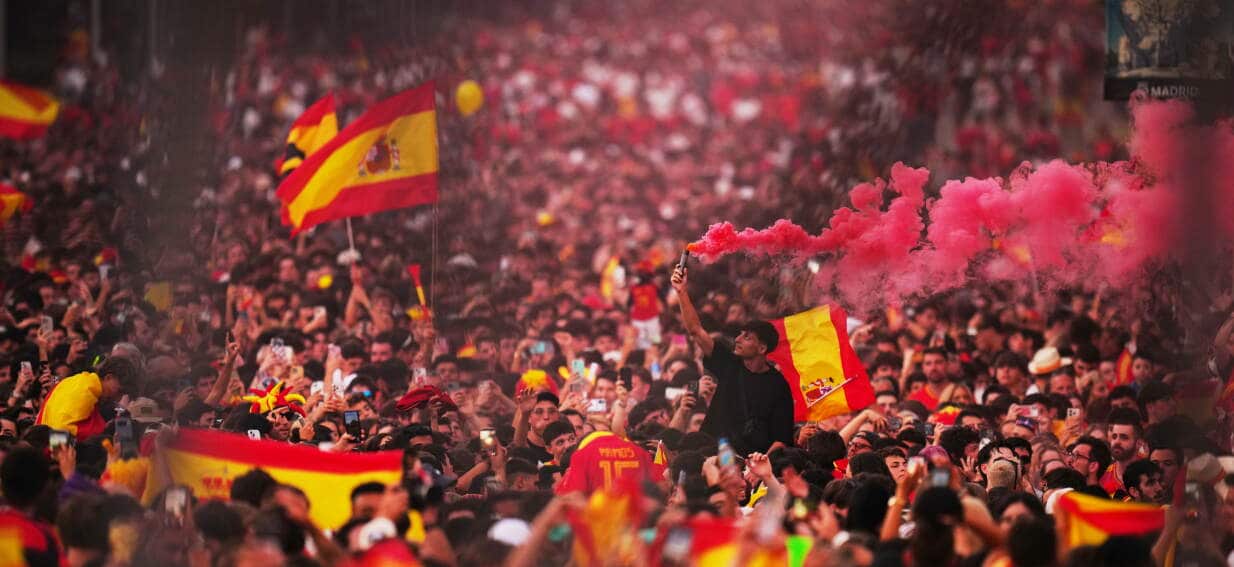
The air in Madrid tasted like stale beer and electric anticipation. It was July, the kind of sweltering summer night where nobody wants to sleep, and nobody dares to look away from a television screen. But Madrid wasn't the only city holding its breath.
In a dimly lit diner in Buenos Aires, a dishwasher stopped mid-wipe to stare at a glowing monitor mounted near the ceiling. In a high-rise apartment in Tokyo, a student who had never set foot in Europe squeezed a red-and-yellow scarf until her knuckles turned white. In Lagos, a crowd gathered outside an electronics shop, illuminated only by the flicker of a stadium broadcast thousands of miles away.
Electric.
For ninety frantic, agonizing minutes, regional identities melted away. Football has a habit of doing that, but this was different. This wasn't just about supporting a team; it was about an infectious, irresistible rhythm of play that made every person watching feel as though they had a personal stake in the soil of Spain.
A Philosophy Written on Grass
To understand how a national team captures the global imagination, you have to look past the trophy cases and look at the geometry of the game.
Think back to the late 2000s and early 2010s. Spain did not just win games; they rewired how humanity understood space on a green pitch. They called it tiki-taka, though the name hardly does justice to the hypnotic, relentless suffocating precision of it all. It was a philosophy built on patience. Pass, move, wait. Pass, move, probe.
Hypothetical Scenario: Imagine trying to catch a feather in a wind tunnel while wearing heavy boots. That is what opponents faced. It wasn't brute force; it was elegant geometry.
When Spain played, they didn't just represent a country on a map. They offered a style that felt like art. And human beings, no matter where they wake up in the morning, are drawn to art. That is why a kid in Manila or a mechanic in Chicago could wear a shirt stamped with a foreign crest and feel, for a brief moment, like it belonged to them.
The Invisible Stakes of Belonging
Why do we do this? Why do millions of people voluntarily adopt the anxieties, heartbreaks, and triumphs of a nation that isn't their own?
Psychologists talk about vicarious achievement—the idea that human beings thrive on shared victory to boost their own emotional well-being. But that feels too cold, too clinical. The real reason is simpler and far more profound: we are desperate for collective belonging.
Modern life is stubbornly individualistic. We sit in isolated rooms, staring at isolated screens, living isolated lives. A massive sporting event breaks down those digital walls. When Spain scores a decisive goal in the closing minutes of a major final, the collective gasp isn't confined by borders. It is a shared pulse.
Consider what happens next:
The referee blows the final whistle. The stadium erupts into a sea of red. In that exact second, the fan in Tokyo jumps off her couch. The dishwasher in Buenos Aires cheers alongside his coworkers. The crowd in Lagos breaks into dance. They didn't share a language, a history, or a culture, but for one night, they shared a heartbeat.
Passing the Torch across Generations
The beauty of this collective identity is that it mutates and survives. When the golden generation of Spanish football stepped off the stage, critics predicted the global love affair would dry up. They assumed the magic was tied to specific names on the back of jerseys.
They were wrong.
Style outlives stars. The culture of possession, grace, and relentless technical mastery became embedded in the national identity. New faces emerged—teenagers playing with the audacity of veteran street ballers, carrying the same tradition forward into a new era.
The global audience didn't disappear because the narrative never truly died. It merely evolved. The world stayed tuned because Spain represented an ideal of how the game should be played: with intelligence over violence, with patience over panic.
The Afterglow
By three in the morning, the streets of Madrid were a chorus of car horns and chanting voices. Sweat, tears, and spilled drinks covered the pavement.
Far away, as the sun began to peek over the horizon in Tokyo, a student folded her red-and-yellow scarf and placed it carefully on her desk. She had to go to class in two hours. She was exhausted, drained of energy, and facing a mundane Tuesday.
Yet, as she looked out her window at the quiet city streets, she smiled. She had spent the night living inside a dream produced five thousand miles away, linked to millions of strangers by a shared pulse, bound together by the simple, beautiful fate of a rolling ball.