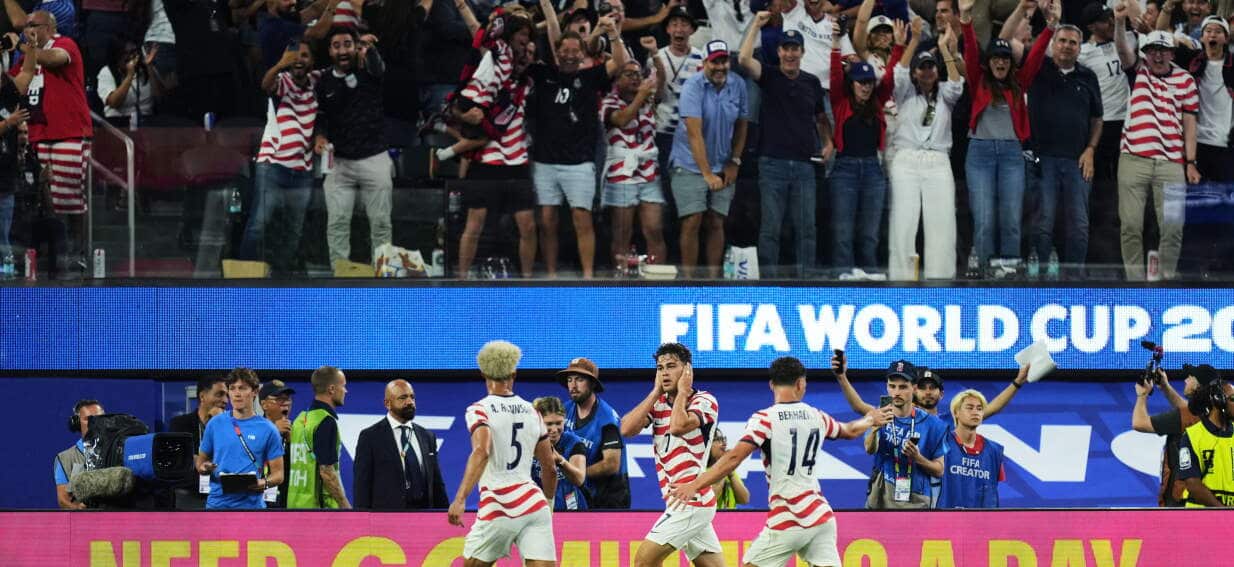
The plastic seats in section 108 were still radiating the brutal, trapped heat of a late afternoon sun when the whistle blew. Nobody sat. To understand what happened in the opening match of this World Cup, you have to understand the specific, heavy humidity of an opening match. It does not just sit in the air. It settles in the lungs of the players and the throats of the fans, turning every chanted syllable into an act of physical defiance.
For months, the buildup to this tournament felt like an abstraction. It lived in sports talk radio debates, tactical spreadsheets, and the anxious scrolling of soccer fans across the country. We talked about formation structures. We argued over roster selections. But when twenty-two men step onto a grass pitch under a suffocating sky, the math evaporates. It becomes a matter of nerve.
On paper, the headline reads like a routine dispatch from the sports desk: US fans celebrate victory over Paraguay in World Cup opener. It is a clean, antiseptic sentence. It suggests a linear progression from kickoff to celebration. It implies a script was followed.
It misses everything that actually mattered.
The Weight of the First Touch
Consider Marcus. He is thirty-four, wore a faded 2014 jersey with peeling letters on the back, and traveled eleven hours by bus to be in those stands. He spent the three hours before kickoff staring at his shoes in a crowded pub, paralyzed by a very specific American soccer trauma. We are a soccer nation built on the shaky foundation of near-misses and existential dread. Every four years, we convince ourselves that this is the generation that breaks through, and every four years, the opening match arrives like a cold evaluation of our collective delusion.
When Paraguay kicked off, that dread became a physical presence in the stadium.
Paraguay does not play soccer to entertain; they play to disrupt. They are architects of discomfort. From the first whistle, their midfielders closed gaps with a frantic, suffocating intensity. Every time an American midfielder turned with the ball, two red-and-white jerseys appeared like sudden, unwelcome walls.
The first twenty minutes were ugly. The ball bounced awkwardly off shins. Passes leaked into the touchlines. In the stands, the chanting started to lose its rhythm, splintering into scattered, anxious groans. This is where the standard match report fails. It notes a "cautious start from both sides," ignoring the fact that the players were visibly vibrating with fear. A single mistake in the opening half-hour of a World Cup can define a career. It can ruin four years of sacrifice.
Then came the twenty-eighth minute.
It started with a recovery in the defensive third—a messy, sliding tackle that felt more like an act of desperation than strategy. The ball squirted loose to the right flank. In that fraction of a second, the collective breath of twenty thousand traveling American fans caught in their chests.
The transition was instantaneous. A low, driven cross sliced through the humid air, bypassing the Paraguayan central defenders who had been immaculate until that precise heartbeat. The connection was true. The net bulged.
Noise.
Not the manufactured, stadium-horn noise of a domestic league game, but a primal, guttural release of pressure. Marcus found himself three rows down from his seat, hugging a stranger whose glasses had flown off in the chaos. For a moment, the heat disappeared. The anxiety dissolved. The United States was up 1-0.
The Long Anatomy of Defending
But a lead in soccer is a dangerous thing to possess. It forces a choice: do you chase the second goal to kill the game, or do you retreat into a shell and try to survive?
By the sixty-fifth minute, the American side had chosen survival.
This is the part of the match that testing metrics and possession percentages cannot adequately quantify. Paraguay poured forward. They played with the frantic energy of a team that viewed a 1-0 deficit not just as a loss, but as an insult. They rattled the crossbar with a header that left the stadium so silent you could hear the spin of the ball as it ricocheted back into play.
Our goalkeeper became the center of the universe. Every cross into the box felt like a potential catastrophe. The American defenders were no longer running; they were throwing their bodies into spaces, block after block, an exhausting exercise in human shielding.
You could see the toll it was taking on the fans. The euphoria of the goal had long since burned off, replaced by a grueling, minute-by-minute countdown. People stopped checking their phones. They stopped buying beers. They stood with hands clasped over their mouths, as if breathing too loudly might upset the delicate equilibrium on the field below.
The clock became an enemy. It moved with agonizing slowness. Five minutes of stoppage time were announced, and a collective groan rippled through the stadium. Five minutes is an eternity when your lungs are burning and the opposition is launching long balls into your penalty area.
The Final Whistle and the Morning After
When the referee finally blew the whistle three times, there were no backflips. There was no theatrical choreography. Several American players simply dropped to their knees on the grass, staring at the sky, drained of everything they had.
The celebration in the concourses afterward was loud, yes, but it was anchored by a profound sense of relief. We had survived the opening test. We had taken the three points.
Winning the first game of a World Cup does not guarantee a trophy. It does not even guarantee advancement from the group stage. But what it does provide is something far more valuable to a fan base that lives in perpetual anxiety: validation. It means the sacrifices mattered. It means the eleven-hour bus rides were worth the price of admission.
As Marcus walked out of the stadium into the cooling night air, his voice hoarse and his jersey soaked through with sweat, he looked at the schedule for the next match. The dread would return tomorrow. The tactical debates would restart on the radio. The spreadsheets would be updated with new data.
But for one night, the cold facts of a tournament bracket were replaced by something warm, human, and undeniably real. We won. That was enough.