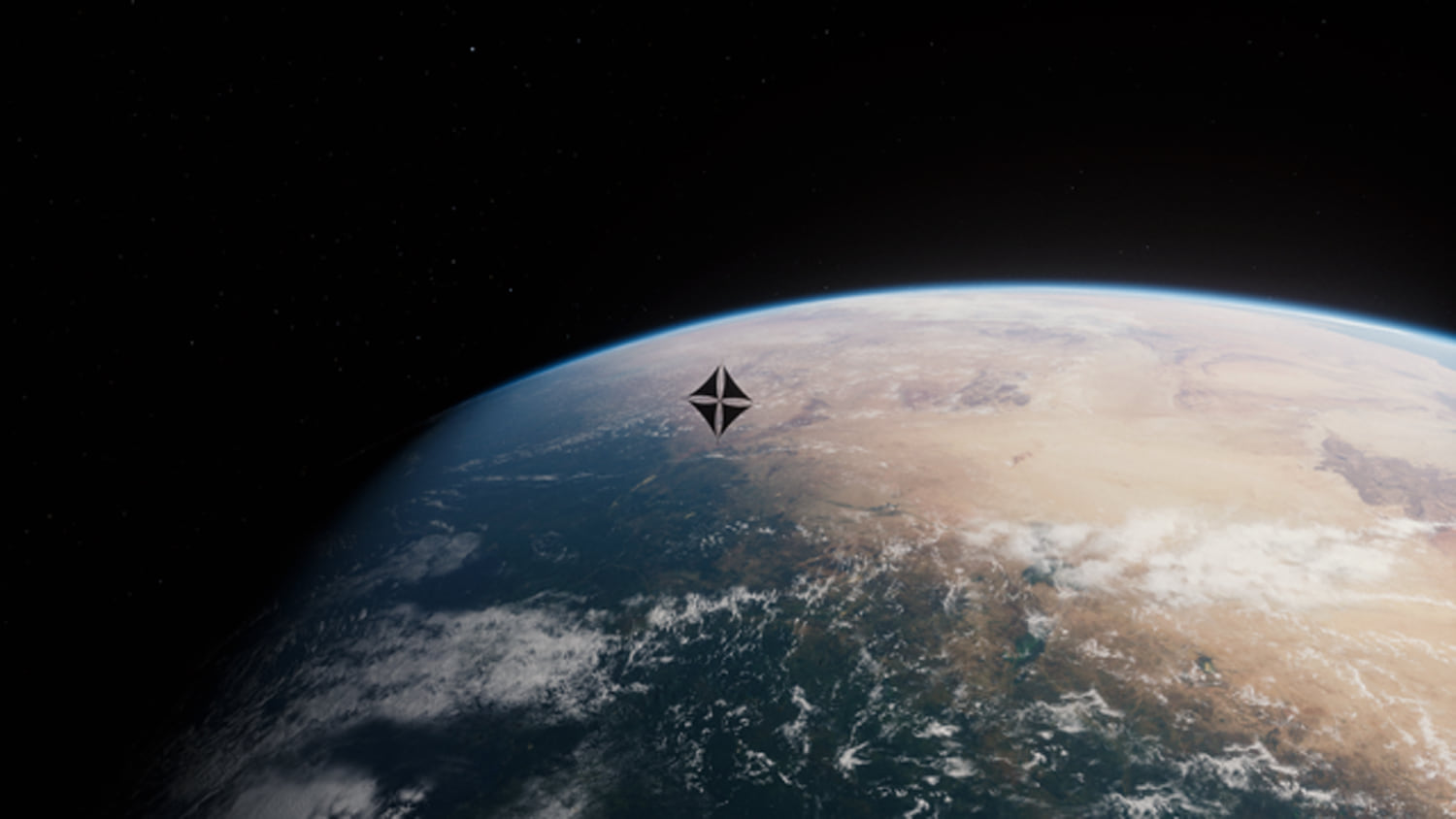
Darkness was once a given. It was not merely the absence of light; it was a sanctuary. For millions of years, the falling of the sun meant a universal quiet, a cooling of the earth, and an unfiltered view of the ancient cosmos. We navigated by constellations. We rested when the shadows grew long. We shared stories around fires beneath an ink-black sky that belonged to everyone and no one.
That collective shadow is now for sale.
Consider what happens when a startup receives federal blessing to launch mirrors into orbit. Not for science. Not to save a dying ecosystem. But to beam on-demand sunlight onto commercial targets long after the sun has dipped below the horizon. The pitch sounds like science fiction pulled from a corporate brochure. More hours of daylight for solar farms. Extended shifts for outdoor construction crews. Extra minutes of sunshine for shoppers walking between parked cars.
Efficiency. Productivity. Optimization.
Listen closely. Do you hear it? That is the sound of the last wild frontier being parceled out into utility plots.
Public interest groups and environmental coalitions are sounding alarms, challenging the Federal Communications Commission over approvals granted to orbit these light-reflecting constellations. They point to the glaring blind spots in our regulatory frameworks. Agencies designed to manage radio frequencies and orbital debris are suddenly handing out permits to alter the very quality of our night.
To understand the weight of this, imagine looking out your window at midnight and seeing an artificial star moving faster than the planets, casting a faint, unnatural glare across your backyard. This is not a stray satellite glinting by accident. This is an engineered glare. A corporate spotlight tuned to maximum yield.
The engineers behind these orbital mirrors speak in clean, sterile percentages. They talk about kilowatt-hours and capacity factors. They use words like resource allocation to describe the act of bouncing photons off reflective Mylar sheets hundreds of miles above our heads.
They forget about the night-blooming flowers that time their entire existence to the lunar cycle. They forget about the migratory birds that steer their cross-continental journeys by the stars. They forget about astronomers peering through billion-dollar lenses, trying to parse the faint, dying whispers of distant galaxies, only to have their data washed out by a stray corporate sunbeam bouncing off a piece of orbiting plastic.
And they forget about us.
We are creatures bound to circadian rhythms written into our DNA through eons of evolutionary history. We need the dark. Our bodies need the quiet descent into shadow to trigger melatonin, to repair tissue, to quiet a racing mind. When the sky becomes an extension of the billboard, where do we go to escape the hum of commerce?
The regulatory battle currently unfolding is not merely a legal dispute over administrative oversight. It is a cultural referendum. It asks a fundamental question we have repeatedly failed to answer throughout the industrial age: just because we can engineer a thing, does it mean we have the right to deploy it?
The Federal Communications Commission operates under a mandate of public interest, convenience, and necessity. But convenience for whom? Is it necessary to extend a solar farm's generation window by forty minutes at the direct expense of the pristine night sky? Is public interest served when a shared global heritage—the unobstructed, humbling canopy of the universe—is commercialized into an on-demand utility?
The startup argues that the light will be faint, barely noticeable to the casual observer. They promise careful tracking, minimal disruption, and strict adherence to current environmental guidelines.
Promises. We have heard those before.
Every industrial revolution begins with a modest footprint. A single smokestack. A handful of wires. A pilot program. Then the pilot program becomes a commercial rollout. The rollout becomes an industry standard. Before long, the sky is crowded with thousands of reflective nodes, each one vying for a slice of the twilight, transforming the twilight into a permanent, artificial gloaming.
Night is slipping through our fingers.
As these legal challenges wind their way through courts and agency desks, the window to protect the dark is closing. Once these mirrors are deployed, once the precedent is locked in stone, turning them off will be nearly impossible. Capital has a way of cementing itself into the infrastructure of our lives until removal becomes unthinkable.
Step outside tonight. Look up. Find a constellation through the ambient haze of city lights. Memorize its clarity. Because somewhere above the clouds, a spreadsheet is already being updated, a launch window is being scheduled, and a price is being calculated for the very last shadow left on Earth.