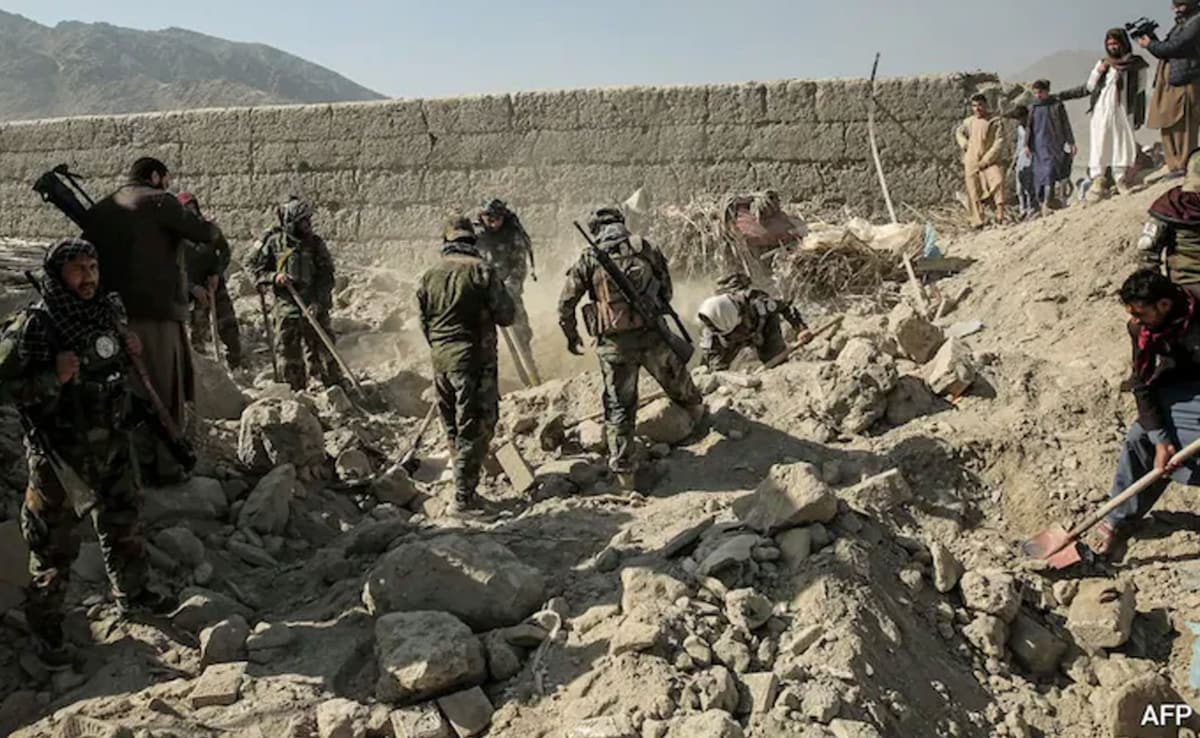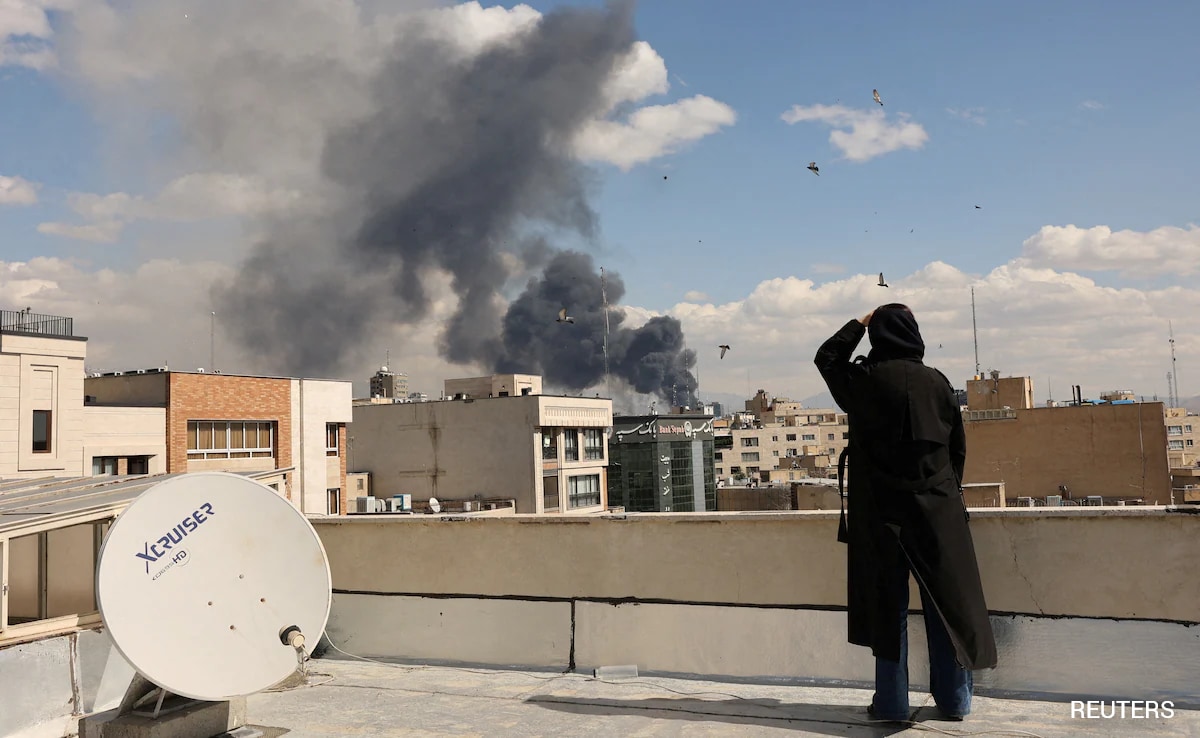
The silence in the desert is never truly silent. It is a vibrating, low-frequency hum of heat radiating off the sand, the occasional scuttle of a lizard, and the distant, rhythmic thrum of cooling fans inside concrete bunkers. On a particular Tuesday in late October, that hum was replaced by something that didn't sound like nature. It sounded like the tearing of heavy velvet.
High above the salt flats and the jagged ridges of the Alborz Mountains, the air ignited. This wasn't the slow, graceful arc of a shooting star. This was the precise, surgical erasure of a decade’s worth of scientific ambition and military posturing. In a matter of minutes, the kinetic energy of joint U.S. and Israeli airstrikes turned millions of dollars of sophisticated carbon fiber and volatile fuel into a rain of useless, glowing soot.
We often talk about geopolitics in the language of chess—moves, counter-moves, grand strategies. But for the engineers sitting in darkened rooms in Tehran, watching monitors flicker and then go black, it wasn't a game. It was the sound of a career’s work evaporating. It was the realization that the invisible shield they thought they were building had been pierced by a needle they never saw coming.
The Anatomy of a Blind Spot
To understand why these strikes matter, you have to look past the headlines about "crippled programs" and look at the physics of a rocket. A satellite launch vehicle is, essentially, a giant, controlled explosion directed through a very narrow straw. The margin for error is non-existent. If a single mixing valve is off by a fraction of a millimeter, the whole thing becomes an expensive firework.
The strikes specifically targeted the solid-fuel mixing facilities. Think of this as the "kitchen" of the missile program. In these high-security industrial parks, massive planetary mixers—industrial versions of what you might find in a high-end bakery, but the size of a two-story house—blend chemicals into a volatile slurry that, once hardened, becomes the muscle of a long-range rocket.
When those mixers are destroyed, you don't just lose a building. You lose the ability to bake the bread. You can have all the flour and water (the raw chemicals) and all the recipes (the blueprints) in the world, but without the oven, the kitchen is just a room full of dust. Intelligence reports suggest that these specific mixers are not items you can simply order on a global marketplace. They are bespoke, regulated, and incredibly difficult to smuggle past international sanctions.
By hitting these nodes, the strikes didn't just break a weapon. They broke a timeline.
The Invisible Stakes of the High Ground
There is a common misconception that Iran’s space program is a separate, peaceful cousin to its missile program. In reality, they are twins sharing the same nervous system. The technology required to put a satellite into a stable orbit is nearly identical to the technology required to deliver a warhead to a city thousands of miles away.
Consider the "Shahab" and "Ghaem" series of rockets. To the casual observer, they represent national pride and scientific achievement—the "conquest of space." But to a military strategist, a satellite is simply a high-altitude eye. If you can control the "high ground" of Low Earth Orbit (LEO), you can see every troop movement, every ship, and every hidden battery of your neighbor.
The emotional core of this conflict isn't just about explosives; it's about the fear of being watched. Israel and the U.S. operate under the assumption that an Iranian satellite program is a precursor to a nuclear-capable ICBM. Iran operates under the belief that without these eyes in the sky, they are effectively blind in a neighborhood where everyone else has 20/20 vision.
When the bombs fell on the Parchin and Khojir sites, the primary casualty wasn't just metal. It was the Iranian leadership's sense of "strategic depth." They realized that their most precious assets—the ones buried under layers of air defenses and mountains of rock—were as vulnerable as a glass house in a hailstorm.
The Human Cost of High-Tech Ruin
Imagine being a technician at one of these facilities. You have spent years studying fluid dynamics or aerospace engineering. You believe you are participating in the modernization of your country. Then, in a flash of light, the building next to yours ceases to exist.
The U.S. and Israeli planners chose their targets with a terrifying level of intimacy. They didn't carpet-bomb the desert. They picked the specific "choke point" components. This sends a message far more potent than destruction: We know exactly how you build these. We know which room the mixers are in. We know which desk you sit at.
This psychological weight is the "invisible stake." It creates a culture of suspicion. How did the satellites see through the camouflage? Who leaked the floor plans? The physical damage to the rocket program might take two years to repair, but the damage to the internal trust of the Iranian security apparatus might never heal.
A Physics Lesson in Power
Modern warfare is shifting away from the occupation of land and toward the denial of capability. We are seeing a transition from "destruction" to "degradation."
The math is simple but brutal.
$$F = ma$$
Force equals mass times acceleration. In the old days, you needed a massive amount of force to change the course of a nation. Today, if you have enough intelligence, you only need a tiny amount of mass (a precision-guided small-diameter bomb) and a massive amount of "acceleration" (the speed of information).
The airstrikes targeted the "planetary mixers" because they are the bottleneck. Without them, the solid fuel cannot be cast into the motor casings. Without the motor, the rocket is just a metal tube. Without the rocket, the satellite sits in a warehouse.
This chain of dependency is the vulnerability of all modern technical programs. We have built a world of "just-in-time" manufacturing and highly specialized components. It makes us efficient, but it also makes us fragile. When you pull a single thread from a sweater, the whole garment doesn't fall apart immediately, but it can no longer keep you warm.
The Echo in the Dust
As the sun rose the morning after the strikes, the smoke over the Alborz Mountains began to clear. There were no victory parades in Washington or Tel Aviv, and there were no immediate declarations of war from Tehran. Instead, there was a heavy, pregnant pause.
The satellite program is currently a ghost. The rocket engines that were supposed to carry the next generation of Iranian eyes into the heavens are now twisted scrap metal or, perhaps worse, parts for a machine that no longer has a way to turn on.
We often think of power as something you hold in your hand—a sword, a gun, a pile of gold. But in the 21st century, power is often defined by what you can prevent someone else from holding. It is the ability to reach across the globe and quietly, precisely, remove a single cog from a massive machine.
The sky over the Middle East remains crowded with satellites, but for now, none of them belong to the men who stood in those bunkers watching their monitors go dark. They are left with the dry wind, the cooling sand, and the haunting realization that the most dangerous weapon in the world isn't a bomb. It's the knowledge of exactly where to put it.
The desert is quiet again, but it is a different kind of quiet. It is the silence of a clock that has been stopped, its gears scattered across the floor, waiting for a repairman who might never arrive.