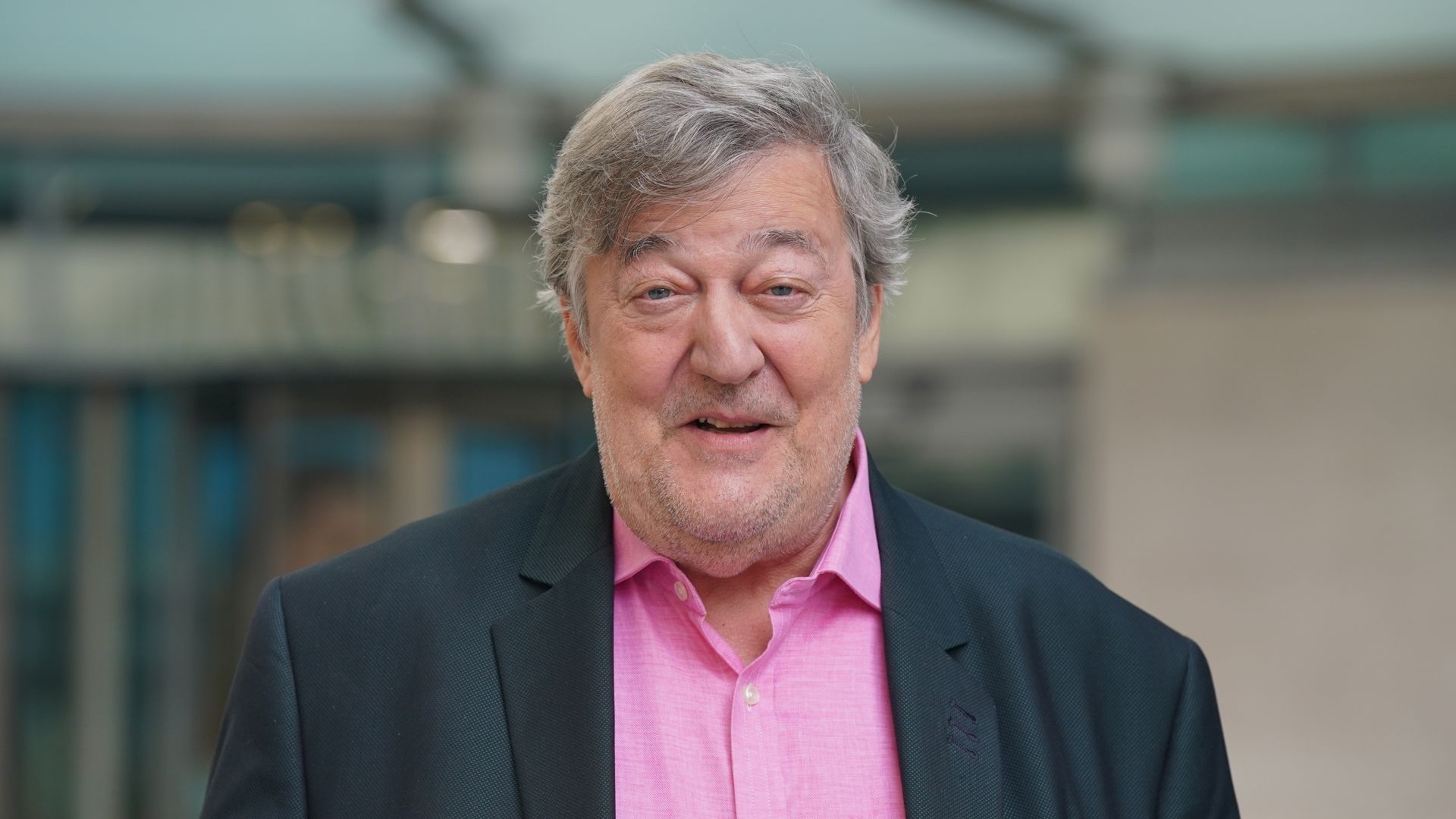
The O2 Arena is a cathedral of modern sound, a cavernous space where the air vibrates with the collective heartbeat of twenty thousand souls. On a crisp September evening in 2023, that energy belonged to the CogX Festival. The stage was set for a mind that has spent decades exploring the furthest reaches of the human condition. Stephen Fry, a man whose voice is as much a part of the British architectural heritage as Big Ben, walked toward the edge of the limelight.
He had just finished a soaring discourse on the future of Artificial Intelligence. He was, as he often is, the smartest man in the room. But gravity does not care about intellect. Gravity does not care about wit.
As the applause swelled, Fry turned to exit. In the transition from the blinding white glare of the stage to the impenetrable velvet of the wings, the world vanished. There was no floor. There was only a six-foot drop into the dark.
The Geometry of a Shattered Moment
A fall is rarely a graceful event. It is a sudden, violent renegotiation between the body and the earth. For Fry, this wasn't a slip on a rainy pavement; it was a plunge off a literal edge. When a man of sixty-six years, standing six-foot-five, meets concrete from a height of two meters, the physics are unforgiving.
The impact was a cacophony of internal breakage.
- The Pelvis: The literal foundation of the human frame, snapped in four places.
- The Ribs: A protective cage turned into a source of searing agony.
- The Leg: Damaged, bruised, and rendered useless in an instant.
Pain is a lonely country. In the immediate aftermath, as the echoes of the crowd still bounced off the rafters, Fry lay in the shadows of the stage. The man who can articulate the nuances of Greek mythology or the complexities of Oscar Wilde was reduced to the primal, rhythmic gasping of someone trying to remember how to breathe through the shock.
Consider the mechanics of the pelvic girdle. It is a ring of bone that supports the entire weight of the upper body. When it breaks in four places, the very center of a person’s mobility is erased. Imagine trying to build a house on a foundation of cracked glass. Every shift of the torso, every shallow breath, every heartbeat becomes a jagged reminder of fragility.
The Long Road to a Six Figure Reckoning
The headlines focus on the number: £100,000. To a casual observer, it looks like a litigation trope, a celebrity seeking a payday. But look closer at the invisible stakes. This isn't about the money; it’s about the cost of a lost year and the terrifying realization that a world-class venue failed a basic duty of care.
For a performer, the stage is a sanctuary. It is a space governed by strict, unspoken rules of safety. You expect the floor to be where it was a minute ago. You expect the exit to be marked. When those expectations fail, the psychological trauma often outlasts the physical mending. Fry spent months in a wheelchair. He had to learn to walk again. For a man whose career is built on the elegant movement of both mind and body, the indignity of being bedbound is a heavy tax.
The legal claim filed against AEG Presents, the operators of the O2, alleges a fundamental failure. There were no marks. There were no lights. There was no railing to catch a man stepping out of the spotlight and into a void.
The Ethics of the Invisible Edge
We live in an era of "immersive experiences." We want the lights to be brighter, the stages to be more seamless, the transitions to be invisible. But there is a point where aesthetic elegance becomes negligence.
Hypothetically, imagine a young stagehand working that same night. They see the darkness. They know the drop is there. They might even think, "Someone should put a strip of glow-tape there." But in the rush of a high-production event, those small, life-saving details often slip through the cracks of a massive corporate hierarchy. The "Invisible Edge" is a metaphor for every safety protocol ignored in the name of a clean look or a fast turnaround.
The lawsuit serves as a cold, hard ledger of that negligence. It covers the medical bills, yes. It covers the lost work, certainly. But more importantly, it acts as a corrective force. When a venue as iconic as the O2 is held to account for a six-figure sum, the ripples are felt in every theater and concert hall in the country. It ensures that the next person walking off that stage—be it a world-famous polymath or a local speaker—actually finds the floor beneath their feet.
The Recovery of the Self
Healing is not a linear process. It is a series of humiliations followed by small, hard-won victories.
Fry has spoken openly about the "extraordinary" nature of his recovery. Hydrotherapy. Constant physiotherapy. The slow, grinding work of knitting bone back together. There is a specific kind of mental fortitude required to go from being a global icon to a patient who needs help standing up. It requires a shedding of the ego.
The legal battle is the final stage of that recovery. It is the moment where the victim stops being a patient and starts being a protagonist again. By demanding damages, Fry is forcing a conversation about accountability in the spaces we occupy. He is reminding the giants of the entertainment industry that the human beings on their stages are not props; they are flesh and bone, and they break.
The Silence After the Crash
There is a haunting quality to the footage of Fry’s last moments on that stage. He is vibrant. He is engaged. He is full of life. Then, he simply disappears from the frame.
The lawsuit won't take away the memory of the fall. It won't erase the months of pain or the phantom aches that likely still plague him on cold mornings. What it does, however, is provide a closing chapter to a story that began with a terrifying silence in the dark.
We often assume that the famous are insulated from the mundane horrors of life. We think wealth or talent provides a buffer against the hard edges of the world. But as Stephen Fry lay on the concrete floor of the O2, the only thing that mattered was the integrity of his skeleton and the failure of a light that should have been there to guide him home.
The lights are back on now. The stage has been reset. But for Stephen Fry, the floor will never quite feel the same again.