The humming of a refrigerator is a sound you only notice once it stops. In the Velenjak district of northern Tehran, that silence arrived at an hour when the city usually breathes in a low, synchronized rhythm of sleep and late-night traffic. One second, the streetlamps were casting amber pools onto the pavement. The next, the world turned a bruised, absolute purple.
Then came the sound.
It wasn't the sharp crack of a firework or the low rumble of a distant storm. It was a physical pressure against the eardrums, a series of concussions that vibrated through the window glass and into the soles of feet resting on Persian rugs. For the millions living in the Iranian capital, this wasn't just a technical glitch in the power grid. It was the sound of a shadow finally lengthening across the border.
The Anatomy of a Shudder
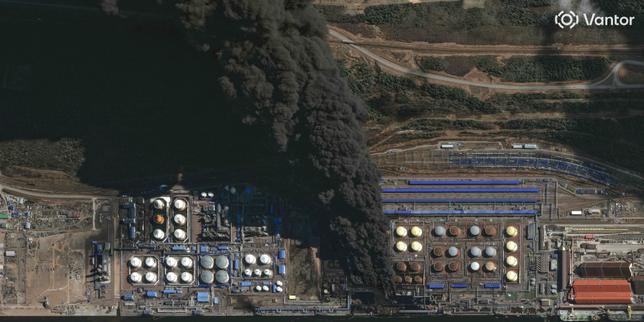
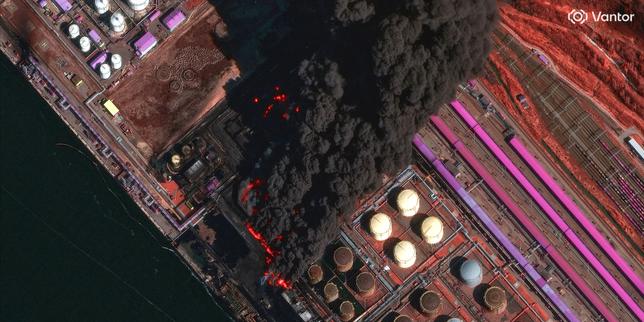
When the reports began filtering through social media and state-run Telegram channels, they were fragmentary. Explosions near the city. Power outages stretching across multiple districts. The official narrative from state media initially tried to keep a lid on the simmering panic, but you cannot hide a dark horizon.
To understand what happened in Tehran, you have to look 1,500 kilometers to the west and then down into the rugged, olive-dusted hills of Southern Lebanon. The two geographies are tethered by an invisible, high-tension wire. When that wire snaps in the Levant, the sparks fly in Iran.
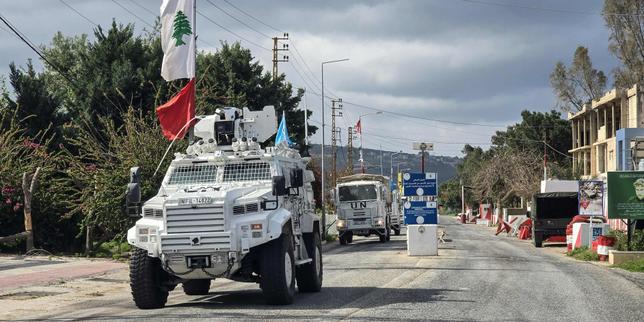
While the sky over Tehran was flashing with the unnatural light of defense batteries and impact, the ground in Southern Lebanon was claiming the lives of four Israeli soldiers. These were not nameless statistics. They were men with families in Haifa and Tel Aviv, soldiers operating in a landscape where the brush is thick and every rock can hide a doorway to an underground labyrinth.
The death of those four soldiers acts as a grim heartbeat for the escalation. In the brutal arithmetic of Middle Eastern warfare, a loss on the front line often demands a demonstration of reach elsewhere. Israel’s military strategy has shifted from containing the "octopi arms" of regional proxies to striking the "head" in Tehran.
The Blue Light of the Smartphone
Imagine a mother in Tehran. Let’s call her Leyla.
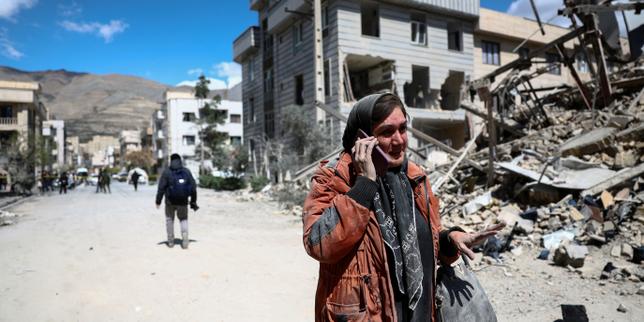
When the power cut out, her first instinct wasn't to check the news. It was to check on her son. In the darkness, the only illumination comes from the glowing rectangle of a smartphone. This is how modern war is experienced. It is a frantic scrolling through conflicting reports while the room remains pitch black.
One feed tells her it is a routine exercise. Another shows grainy footage of orange glows on the outskirts of the city, claiming an Israeli strike has hit a missile production facility. A third warns of a cyberattack on the electrical infrastructure.
Leyla’s reality is the intersection of these two tragedies: the immediate, terrifying dark of her living room and the systemic, grinding violence occurring hundreds of miles away where young men are dying in the dirt.
The "invisible stakes" here aren't just about geopolitical boundaries or the price of Brent crude. They are about the psychological toll of living in a state of permanent "almost." For decades, the citizens of both nations have lived in the shadow of an "almost" war. Tonight, for many in Tehran, that "almost" felt like it had finally arrived.
The Cost of the Hillside
In Israel, the news of the four soldiers killed in Lebanon hit with a different kind of weight. It is a heavy, familiar grief. Southern Lebanon is a graveyard of previous generations’ ambitions, a place where the geography itself seems designed for ambush.
These soldiers were part of a push to clear out Hezbollah firing positions that have made Northern Israel uninhabitable for a year. The "dry facts" tell us that Israel is conducting "limited, localized, and targeted raids." But there is nothing limited about a funeral. There is nothing localized about the ripple effect that a death on a Lebanese hillside has on a command center in Jerusalem.
When Israeli forces take casualties in the north, the political pressure to respond "disproportionately" becomes an avalanche. The logic is simple and terrifying: if the proxy draws blood, the patron must feel the heat.
This explains why, as the names of the fallen were being cleared for publication in Israel, the air sirens and power failures were beginning in Iran. It is a closed loop of cause and effect.
A Sky Full of Questions
Is this the beginning of the "Big One"?
That is the question vibrating through every encrypted chat app from Beirut to Dubai. We often treat these events like a chess match, but chess is played with wooden pieces that don't bleed. This is more like a house of cards built on a vibrating table.
The explosions in Tehran represent a breach of the ultimate taboo. For years, the conflict stayed in the shadows—a stilled scientist here, a sabotaged centrifuge there. Now, the noise is public. The darkness is domestic.
The technical reality of the strikes is still being debated. Some analysts suggest the explosions were the result of Israeli long-range drones or missiles targeting specific military sites, while the power outages were a secondary effect of a coordinated cyber strike intended to blind air defense radars. Others argue that Iran’s own aging infrastructure simply buckled under the stress of a heightened state of alert.
But for the person sitting in the dark, the technicality doesn't matter. What matters is the realization that the shield—the idea that the war would always happen somewhere else—has developed a crack.
The Weight of the Silence
The sun eventually rises. In Tehran, the power usually flickers back on, the refrigerators resume their hum, and the morning traffic jams return to their usual, suffocating density. On the surface, things look normal.
But it’s a brittle kind of normal.
The invisible cost is the evaporation of the future. How do you plan a business, a wedding, or a move when the sky might turn orange at 3:00 AM? The human element of this conflict isn't just the casualties in the field; it's the millions of people whose nervous systems are being wired for catastrophe.
In Israel, the families of the four soldiers are beginning the week of Shiva, the traditional mourning period. Their world has stopped entirely. In Lebanon, the civilians caught between the IDF and Hezbollah are looking at the ruins of their villages and wondering if there is anything left to go back to.
And in Tehran, the people look at their light switches with a new kind of distrust.
History isn't made of dates and treaties. It’s made of the moments when people realize the world they knew yesterday is gone. Whether these explosions were a final warning or the opening notes of a full-scale symphony of destruction remains to be seen.
For now, there is only the waiting. The watching of the horizon. The quiet hope that the hum of the refrigerator doesn't stop again tonight.
The tragedy of the Middle East is often described as a cycle. But cycles imply a return to a starting point. This feels more like a descent, a staircase where each step down is darker than the last, and the bottom is nowhere in sight.