The air inside a courtroom does not circulate like regular air. It stays heavy, thick with the residue of human crises, carrying the faint scent of old paper, polished oak, and desperation. For decades, state supreme court elections in the American South were sleepy, bureaucratic affairs. They were quiet dates on a primary ballot that most voters skipped on their way to work, treating the nonpartisan judicial section like a background murmur in the loud theater of democracy.
Not anymore.
To understand the tectonic shift that just shook Georgia, you have to look past the political analysts and the cable news chyrons. You have to look at a ballot box in a sun-baked precinct in Cobb County, where an ordinary voter stands with a pen hovering over two names. For years, that voter chose a judge based on a vague memory of a campaign yard sign or a reputable-sounding surname. This time, that voter felt the weight of the entire country pressing down on the tip of that pen.
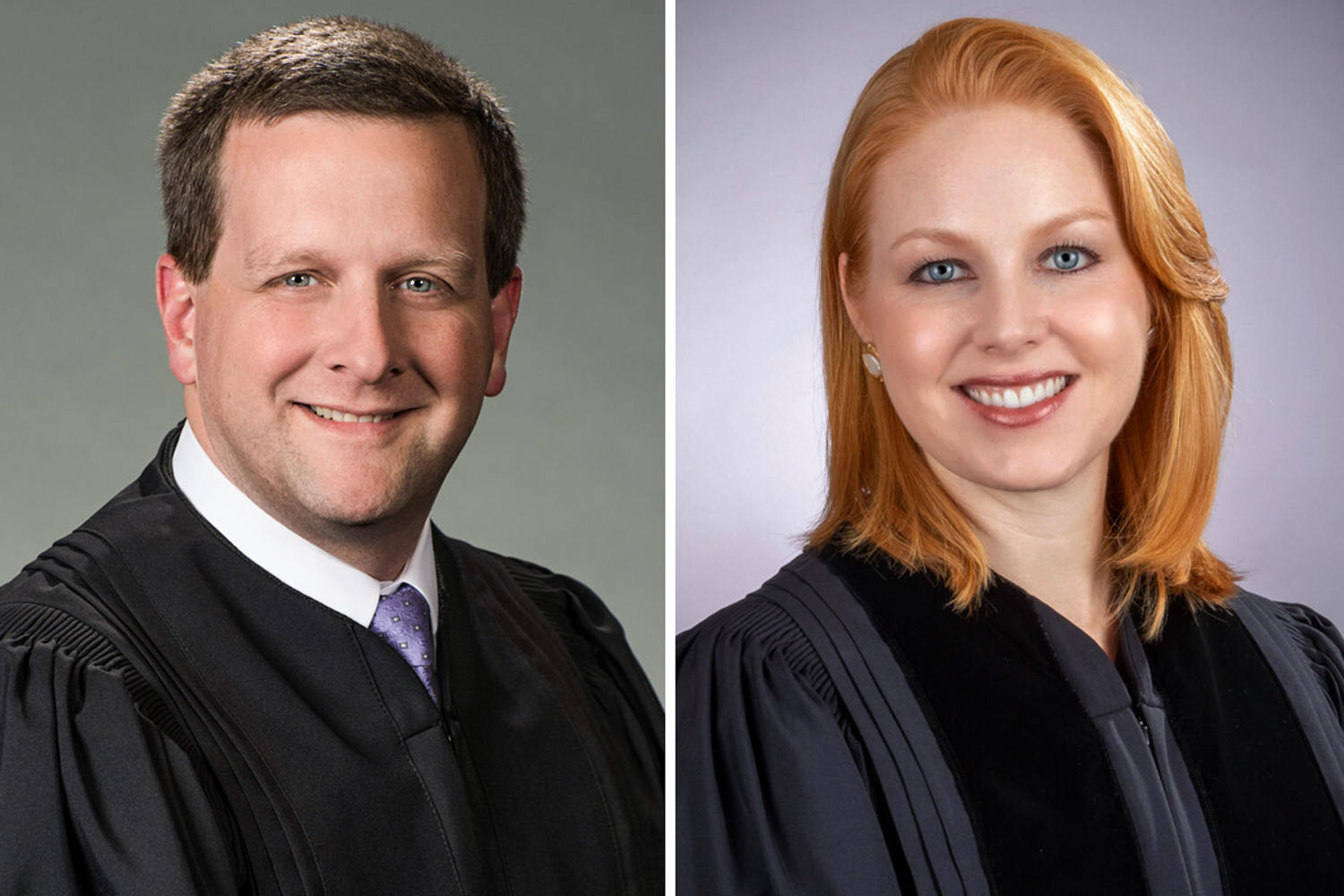
The votes have been counted. The incumbents, Justices Andrew Pinson and Michael Boggs, successfully defended their seats against fierce, heavily funded challenges from Democratic-backed rivals. On paper, it looks like a status quo victory. A routine retention. But beneath the cold percentages lies a story of a broken gentlemen's agreement, a massive influx of national anxieties, and the moment a quiet branch of government was dragged under the stadium lights.
The Invisible Shield Breaks
For generations, the judiciary operated under a collective illusion. The theory was simple: while governors and legislators roll around in the mud of partisan politics, judges sit above the fray. They wear black robes to symbolize the erasure of the individual. They are supposed to be anchors, not sails.
But anchors only hold if the seabed is stable.
The nationalization of local politics changed everything. When the United States Supreme Court overturned Roe v. Wade, it did not resolve a conflict; it merely redistributed it. Overnight, fifty state capitols became the new battlefronts. Issues that used to be settled in Washington—voting rights, reproductive healthcare, executive overreach—were suddenly dropped onto the desks of state judges.
Consider a hypothetical family restaurant in Macon. The owners do not spend their evenings reading constitutional briefs. They care about supply costs, local property taxes, and whether the streetlights out front actually work. But if the state legislature passes a law that alters how their workers are compensated, or how their mail-in ballots are processed, that restaurant's future is no longer dictated by the governor. It is dictated by the seven people sitting on the state’s highest bench.
Suddenly, those nonpartisan names on the ballot became proxies for a much larger war. The challenger candidates, backed by a sophisticated network of progressive donors and activists, ran campaigns that explicitly linked the courtroom to the burning social issues of the day. They argued that the court was out of step with a rapidly diversifying, modern Georgia. They tried to turn a legal resume into a political platform.
It almost worked. The sheer volume of money poured into these judicial races resembled a high-stakes congressional battle rather than a down-ballot confirmation. TV screens across Atlanta flickered with attack ads targeting legal philosophies, transforming complex statutory interpretation into thirty-second soundbites.
The Architecture of a Verdict
Why did the incumbents hold the line?
The answer lies in the deeply ingrained psychology of the Southern voter, a demographic that historically harbors a profound skepticism toward the sudden politicization of institutions. To many Georgians, the aggressive push to transform the judiciary into an activist body felt less like progress and more like an invasion of the one room that was supposed to remain quiet.
Justice Andrew Pinson’s defense of his seat was not won on charismatic stump speeches. It was won on the defense of predictability. In law, predictability is everything. It is the grease that keeps the gears of society turning without grinding to a halt. If a business owner, a district attorney, or a citizen cannot look at the law today and trust it will mean the same thing tomorrow, the system collapses into chaos.
The challenger's strategy relied on a sense of urgency. They wanted voters to feel that the house was on fire and that the current judges were holding the matches. But when voters entered the booths, a different instinct took over. Fear of change often outweighs the promise of a revolution, especially when that revolution targets the interpreters of constitutional law.
The campaign trail for a judge is a bizarre, unnatural exercise. Candidates are bound by strict ethical codes. They cannot promise how they will rule on future cases. They cannot say, "Vote for me, and I will legalize this" or "Keep me, and I will ban that." They are forced to speak in a coded language of precedent, original intent, and judicial restraint.
It is a frustrating conversation for a public accustomed to the raw, visceral promises of presidential campaigns. A voter asks a direct question about a human right, and a judge responds with a paragraph about jurisdictional authority. It feels cold. It feels evasive.
Yet, that evasiveness is the very point of the office.
The Human Cost of a Hyper-Political Bench
Step back from the precinct maps and look at the people who actually inhabit these courtrooms.
Imagine a young defense attorney preparing a brief for an appellate case. She has spent months researching obscure state statutes from the late nineteenth century, trying to find a loophole that will save her client from an unjust sentence. She needs to know that the judges reading her brief will judge it based on the text of the law, not on how their ruling will play in a primary campaign ad three years later.
If judges become politicians in robes, the young attorney’s research becomes useless. She no longer needs to study the law; she needs to study the polling data. She needs to know which way the political wind is blowing in Fulton County or Savannah.
That is the hidden cost of the politicized judiciary. It erodes the quiet confidence that the law is a stable entity. When the public begins to view court decisions simply as political outcomes wrapped in Latin phrases, the moral authority of the gavel evaporates. You cannot enforce a ruling that the public believes was purchased with campaign contributions.
The Democratic strategy in Georgia was an attempt to match the highly successful, decades-long conservative effort to reshape the federal judiciary. For forty years, conservative organizations methodically built a pipeline of jurists trained in specific legal philosophies, eventually flipping the balance of the U.S. Supreme Court. Progressions in Georgia looked at that model and decided to skip the forty-year pipeline, attempting instead a direct electoral assault.
But the state level is different. A state supreme court judge is closer to the ground. Their rulings affect daily life with a terrifying immediacy. A landlord-tenant dispute, a corporate contract breach, a local criminal appeal—these are the steady diet of the state bench. By trying to turn every race into a referendum on national culture wars, the challengers underestimated the voter's desire to keep the daily mechanics of the state running smoothly.
The Long Echo
The incumbents won, but the victory party was short-lived. The true significance of this election is not that the conservative justices retained their seats; it is that the barrier has been permanently breached. The genie cannot be put back into the bottle.
Every future judicial race in Georgia, and across the nation, will now be fought with the same ferocity as a gubernatorial campaign. The days of the anonymous judge are over. Candidates will be vetted by national interest groups, their past rulings dissected by partisan operatives, their personal lives dragged into the digital town square.
This leaves the winners with a delicate, almost impossible task. They must return to the bench, put on those identical black robes, and convince a deeply divided public that they are still impartial arbiters of justice. They must look at the lawyers standing before them and prove that the millions of dollars spent to keep them in those chairs did not buy their opinions.
It is a lonely job. The campaign signs are being pulled out of the red Georgia clay, the television commercials have been replaced by summer retail ads, and the voters have moved on to the next political crisis.
But inside the judicial building in Atlanta, the lights stay on late into the evening. The justices sit at their desks, surrounded by towering stacks of legal briefs and historical texts. The noise of the election is gone, replaced by the profound, ringing silence of a room where decisions must be made. They hold the pens now. They write the opinions that will shape the lives of millions of people who will never know their names.
The gavel falls, a sharp, singular sound that cuts through the quiet room, signaling both the end of the conflict and the heavy, unending burden of the peace that follows.