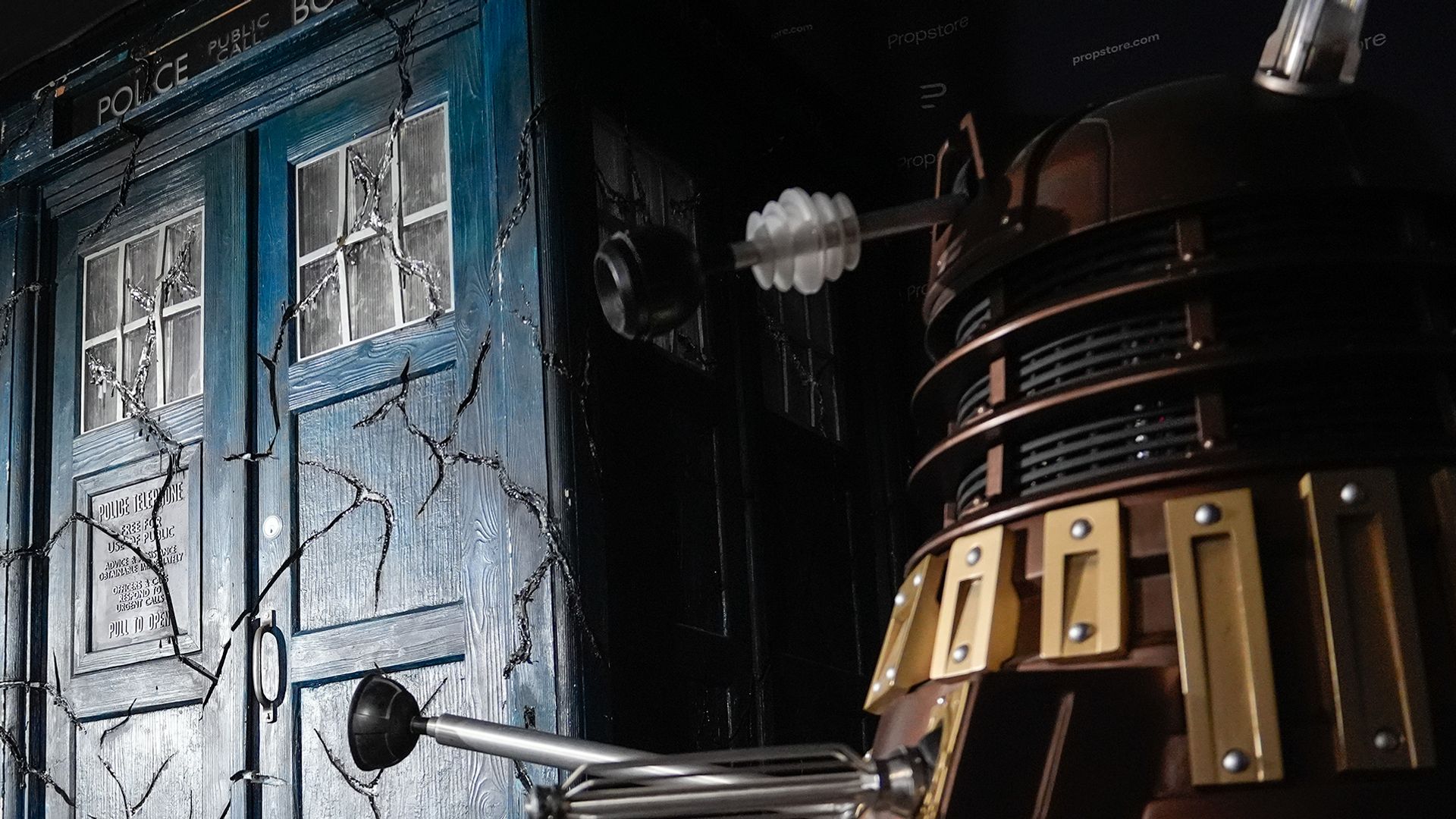
December twenty-fifth is supposed to taste like cinnamon, roasted potatoes, and the comforting, humdrum familiarity of family arguments over board games. But for millions of people across the globe, the true anchor of the holiday season arrived at precisely 5:30 PM. The living room lights would dim. The heavy, post-dinner lethargy would lift. Then, that unmistakable, eerie electronic wheeze would echo from the television speakers, accompanied by a spinning blue police telephone box traveling through the vortex.
It was a ritual. For nearly two decades, the Doctor Who Christmas special was as essential to the British holiday fabric as mince pies and the King's speech. It was the one hour where logic took a backseat to pure, unadulterated wonder. We watched clockwork droids in Victorian London, titanic starships crashing into futuristic metropolises, and killer Christmas trees weaponized by alien mercenaries.
This year, the living rooms will stay dark. The blue box is grounded.
The announcement hit the fandom not with a roar, but with the sickeningly quiet thud of an ending. The upcoming Christmas special has been axed. Simultaneously, the creative engine behind the show’s modern resurgence is walking away, leaving the keys to the TARDIS dangling in mid-air. To the casual observer, it is a television scheduling shift—a minor blip in a crowded streaming ecosystem. To those who understand the delicate, volatile alchemy of television production, it feels like the collapse of an institution.
The dry industry headlines frame this as a corporate restructuring, a simple transition of talent. They talk about contracts, broadcast windows, and intellectual property management. But television is not made by spreadsheets. It is carved out of the marrow of exhausted writers, visionary directors, and millions of collective heartbeats waiting on the other side of the glass.
To understand how we arrived at this frozen winter, consider the sheer, terrifying gravity of running a cultural monolith.
The showrunner of a global sci-fi phenomenon is less of a director and more of a high-wire acrobat balancing in a hurricane. Every single week, you are tasked with building an entirely new universe from scratch. One episode is a claustrophobic psychological horror set on a diamond planet; the next is a sweeping historical epic in seventeenth-century Punjab. The costume designers, the visual effects artists, the actors—they all look to one person for the blueprint of reality.
Imagine the mental toll. The constant, relentless ticking of the production clock. The budget meetings where art is bartered for pennies. The agonizing knowledge that a single weak script can alienate a fanbase that spans three generations.
Our outgoing showrunner did not just write stories; they lived inside them. For years, they poured their anxieties, their triumphs, and their existential dread into the mouth of an ancient alien with two hearts. You could see it in the writing. The desperate, lyrical monologues about the cruelty of time. The recurring obsession with memory, loss, and the inevitability of goodbyes.
But inspiration is a finite resource. Eventually, the well runs dry. The creative mind demands a hiatus, a silence that a demanding broadcast network simply cannot afford to grant. When that breaking point is reached, the only honest choice left is to walk away. The departure is an act of preservation—not just for the writer's sanity, but for the integrity of the mythos itself. It is better to leave the stage while the audience is still clapping than to drag out a hollow, exhausted encore.
The collateral damage of this sudden exit, however, is the death of a tradition.
The cancellation of the Christmas special is a direct consequence of this creative vacuum. You cannot simply substitute a filler episode into a slot that demands magic. A Doctor Who holiday episode requires a specific, fragile tone. It must balance the festive warmth of the season with high-stakes cosmic peril. It needs to appeal to the five-year-old child unwrapping a plastic sonic screwdriver and the eighty-year-old grandparent remembering the black-and-white days of the 1960s.
Without a master architect at the helm, attempting to force a holiday special into production would have been a disaster. It would have resulted in something cynical, mechanical, and devoid of soul. The network chose a clean break over a compromised product.
Yet, knowing the logical reasons behind the decision does nothing to soften the blow.
There is an invisible stake here that standard news reports completely miss: the subtle, profound ways media binds us together. We live in an increasingly fractured world. We consume content in isolated silos, wearing headphones, staring at individual screens, buried in personalized algorithms. The shared cultural moment is an endangered species.
Doctor Who on Christmas Day was one of the last remaining campfires. It was a rare, beautiful hour where generations collided in the same room. Teenagers stopped scrolling. Parents stopped cleaning. Grandparents leaned forward. For sixty minutes, everyone looked at the same sky, wondering what monsters were hiding in the snow.
Losing that hour means losing a tiny piece of our collective social glue. It changes the atmosphere of the day. It leaves a quiet, awkward gap between the afternoon feast and the evening wind-down, a space where a bit of shared magic used to live.
Walk through any neighborhood on a late December evening. The streets are usually silent, bathed in the soft, fluctuating blue glow of television screens emanating from living room windows. In previous years, you knew exactly what that blue light meant. It was the glow of a time machine traveling through the stars, carrying us along for the ride.
This year, the screens will still flicker, but the rhythm will be different. The magic will be fragmented, scattered across a dozen different streaming apps and generic movies. The unified heartbeat of a fandom on holiday is paused.
The TARDIS is a beautiful metaphor for human potential. It looks small, unremarkable, and outdated on the outside, but once you step across the threshold, it opens up into an infinite, breathtaking expanse of possibilities. It tells us that we, too, are larger on the inside than the world gives us credit for.
Right now, that infinite machine sits empty on a dark soundstage, its engines silent, its pilot gone. The doors are locked. The snow will fall on Christmas Day, the lights will dim, and the clocks will continue their relentless, forward march. But for the first time in a long time, the universe feels just a little bit smaller, a little bit colder, and a lot more ordinary.