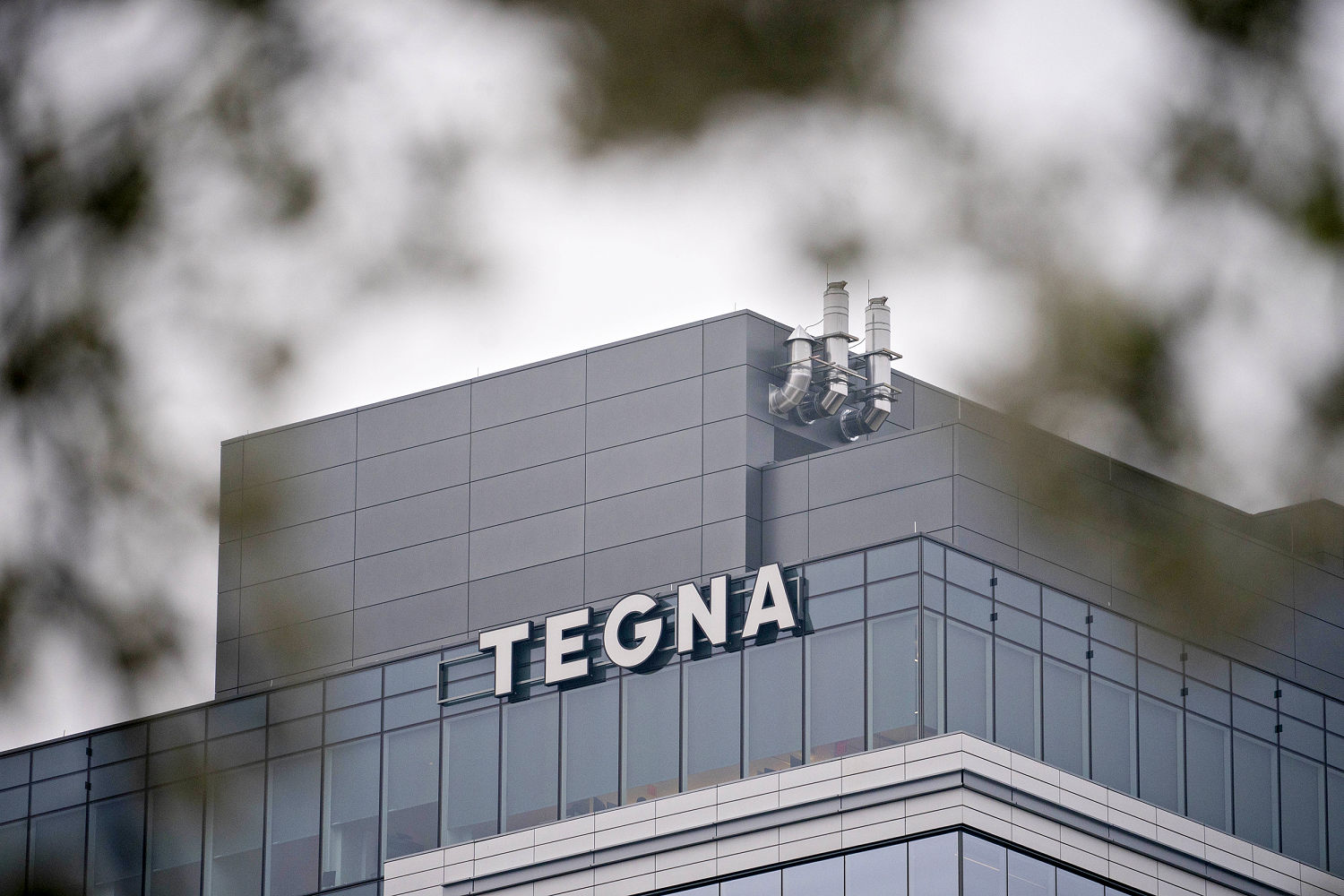
The FCC approval of Nexstar’s $6.2 billion acquisition of Tegna represents more than a horizontal merger; it is a defensive consolidation of the American linear broadcast infrastructure designed to force a new equilibrium in retransmission negotiations. While mainstream coverage focuses on the scale of the combined entity, the actual value driver lies in the synchronization of carriage fee cycles and the mitigation of churn in the "skinny bundle" era. This transaction solidifies a duopoly-adjacent market structure where the ability to black out major markets becomes the primary mechanism for price discovery with Multichannel Video Programming Distributors (MVPDs).
The Mechanics of Re-transmission Rent Extraction
To understand why Nexstar committed $6.2 billion to a declining medium, one must analyze the Gross Retransmission Margin. Broadcast stations generate revenue through two primary channels: local advertising and retransmission consent fees. While advertising is cyclical and sensitive to macroeconomic headwinds, retransmission fees function as a high-margin annuity.
The strategic logic follows a specific sequence:
- Network Breadth: By adding Tegna’s 64 stations in 51 markets, Nexstar now reaches approximately 39% of U.S. television households.
- The 39% National Cap Constraint: Federal regulations limit a single entity from owning stations that reach more than 39% of the national audience. Nexstar’s utilization of the "UHF Discount"—a technical loophole that counts UHF stations at 50% of their reach—is the structural prerequisite that allows this merger to exist without triggering immediate divestiture mandates.
- Negotiating Leverage: When a broadcaster controls the NBC, CBS, ABC, or FOX affiliate in a "Must-Have" market (like Seattle or Charlotte), the MVPD cannot offer a competitive product without that feed. By clustering these affiliates under one corporate umbrella, Nexstar synchronizes the expiration dates of these contracts, creating a "nuclear option" where an entire region’s sports and news access can be severed simultaneously during fee disputes.
The Revenue Composition Shift
The financial profile of the combined Nexstar-Tegna entity reveals a pivot away from the volatility of the "spot" ad market. In 2014, advertising accounted for the vast majority of station group revenue. In the post-merger environment, the projected revenue mix shifts toward a 55/45 or even 60/40 split in favor of distribution fees.
This shift creates a Shielded Cash Flow model. Even as total linear viewership declines (cord-cutting), the rate per subscriber increases. Nexstar is betting that the price elasticity of the remaining "appointment television" viewers—largely sports fans and older demographics—is low enough to absorb 10-15% annual increases in carriage costs. The acquisition is an attempt to capture the remaining "consumer surplus" before the linear ecosystem reaches its terminal floor.
Structural Efficiency and The Cost Function
Beyond top-line growth, the merger targets a reduction in the Operating Expense Ratio through three specific vectors:
- Centralized Hubbing: The broadcast industry is moving toward "Master Control Hubbing," where technical operations for dozens of stations are managed from a single geographic location. Tegna’s modern infrastructure will be integrated into Nexstar’s existing cloud-based architecture, eliminating redundant technical staff and local engineering overhead.
- Content Amortization: Local news production is the single largest expense for these stations. By owning more stations in the same or adjacent regions, Nexstar can share investigative units, weather graphics, and specialized reporting across a wider footprint, effectively lowering the cost per minute of original programming.
- National Agency Leverage: Buying power in the national advertising market is a function of scale. A unified sales force representing nearly 200 stations can demand higher premiums from national brands than two separate entities competing for the same "scatter" market dollars.
Regulatory Concessions and the Spectrum Play
The FCC’s "Greenlight" was not unconditional. The approval hinges on the divestiture of specific stations in markets where the overlap would result in a local monopoly. However, these divestitures often result in sales to "friendly" third parties or "Sidecar" companies. These entities, while legally independent, often enter into Shared Services Agreements (SSAs) or Joint Sales Agreements (JSAs) with the parent company.
This creates a Shadow Scale effect. Nexstar can provide the back-end technology, news content, and advertising sales for a station it does not technically own, capturing the economic value while staying within the letter of the 39% reach law.
Furthermore, the hidden asset in the Tegna portfolio is the ATSC 3.0 Spectrum. This new broadcast standard, also known as "NextGen TV," allows broadcasters to use their airwaves for more than just video. Potential applications include:
- Targeted Advertising: Sending specific commercials to specific households via the broadcast signal, mimicking the precision of digital platforms like Meta or Google.
- Datacasting: Using "excess" spectrum to transmit software updates to autonomous vehicles or IoT devices, bypassing congested cellular networks.
- Localized Emergency Alerts: Hyper-local, interactive data delivery during crises.
By acquiring Tegna, Nexstar secures a massive "land bank" of spectrum that could be repurposed for data transmission as the traditional TV business continues to shrink.
The Risks of Leverage in a High-Rate Environment
The $6.2 billion price tag was financed through a combination of cash on hand and significant debt issuance. This introduces a Sensitivity to Interest Coverage Ratios. In an era of elevated interest rates, the cost of servicing the debt taken to acquire Tegna must be weighed against the declining trajectory of the linear television audience.
If cord-cutting accelerates beyond current projections (currently 7-10% annually), the "Retransmission Annuity" begins to decay faster than Nexstar can raise rates. This creates a Cross-over Point Risk: the moment when the total pool of MVPD subscribers is too small to support the debt service of the acquisition, regardless of how much Nexstar charges per subscriber.
Strategic Forecast
Nexstar will immediately move to harmonize Tegna's digital assets with its own "Nexstar Digital" division. The objective is to create a unified first-party data set. By tracking viewers across 200 local news websites and the linear broadcast, Nexstar can offer advertisers an "Omni-channel" reach that rivals regional cable news networks.
The next 24 months will see a series of aggressive negotiations with YouTube TV, Hulu + Live TV, and traditional cable providers. Nexstar will likely use its newly acquired Tegna stations as the "point of the spear" to set new, higher benchmark rates for the entire industry.
Market participants should expect Nexstar to begin a secondary phase of "Asset High-Grading." This involves selling off lower-margin stations in stagnant markets to pay down the merger debt, while doubling down on stations in "growth" markets (the Sun Belt) where political advertising spend is highest. The company is no longer a "television broadcaster" in the traditional sense; it is a leveraged play on the enduring value of local news as a bottleneck for both political discourse and live sports distribution.
The ultimate success of the $6.2 billion Tegna acquisition depends on the speed at which Nexstar can convert its ATSC 3.0 spectrum into a non-video revenue stream before the legacy retransmission model reaches its inevitable point of diminishing returns.
Nexstar must prioritize the immediate integration of Tegna’s high-performing stations into its centralized advertising platform to capture the 2026 political cycle's record-breaking projected spend. Failure to achieve $150M+ in immediate operational synergies within the first 18 months will leave the entity vulnerable to a credit rating downgrade if the broader ad market softens.
Would you like me to analyze the specific market-by-market divestitures required by the FCC and how they impact Nexstar’s regional advertising dominance?