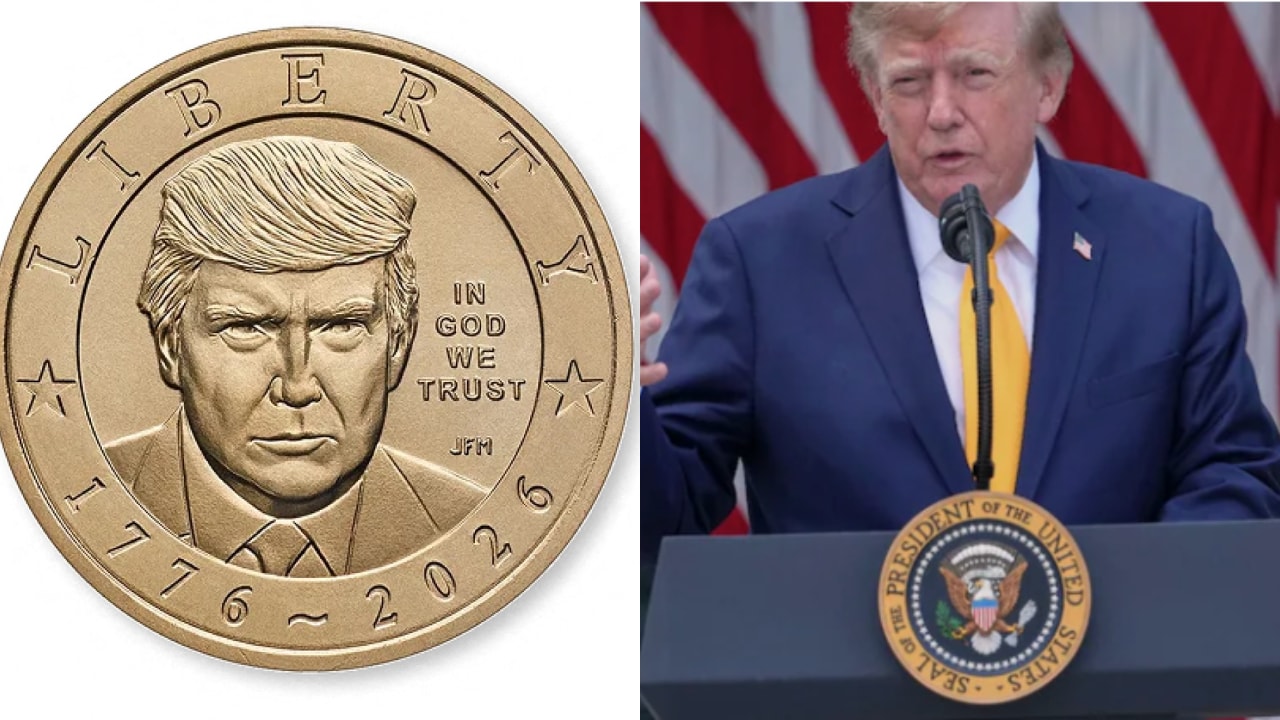
You can't talk about modern American politics without running into symbols, but putting a living president's face on money crosses a very old line. The U.S. Mint just released a special gold-colored dollar coin featuring Donald Trump, and people are losing their minds over it.
Is it legal? Does it break tradition? And why are collectors rushing to buy rolls of them for way more than face value? Let's break down what's actually happening here.
The Details Behind the Semiquincentennial Coin
Announced by Treasury Secretary Scott Bessent, this new $1 coin marks the United States semiquincentennial—the 250th anniversary of the signing of the Declaration of Independence. The coin features a portrait of Trump on the obverse side, complete with the inscriptions "LIBERTY," "IN GOD WE TRUST," and "1776 ~ 2026." Flip it over, and you'll find the Great Seal of the United States alongside a shield marked with the number 250.
They aren't actually made of gold, by the way. Like past dollar coins, they use a manganese brass composition consisting of 6% zinc, 3.5% manganese, 2% nickel, and a balance of copper, giving them that signature golden sheen.
The U.S. Mint is selling them directly to collectors in rolls and bags. You can grab a 25-coin roll for $61 or a 100-coin bag for $154.50. That means you're paying a stiff premium over the actual $1 face value. To spice things up, the Mint struck 250,000 of these coins on July 4th at the Philadelphia Mint with a special "July 4th" privy mark, scattering them randomly into the bags and rolls sent out to buyers.
Why Everyone Is Arguing About the Legality
Federal law has a strict rule about currency. Back in 1866, Congress passed a statute stating that only the portrait of a deceased individual may appear on United States currency and securities. That law came about after a treasury official put his own face on a five-cent note and infuriated lawmakers.
So how did the Trump coin happen?
It comes down to a loophole in the Circulating Collection Coin Redesign Act of 2020, which Trump signed during his first term. That law authorized the Treasury to mint $1 coins celebrating the semiquincentennial. While it bans portraits on the reverse side of those coins, it doesn't explicitly block a living president's face from appearing on the obverse.
Legal scholars point out that even if critics wanted to sue over the tradition, finding a plaintiff who suffered direct legal harm from a dollar coin is nearly impossible. That makes court challenges a dead end.
Precedent and Public Reaction
Administration officials have defended the move by pointing to history. Back in 1926, for the nation's 150th anniversary, the Mint struck a commemorative coin featuring side-by-side portraits of George Washington and Calvin Coolidge, who was the sitting president at the time.
Of course, critics argue that the 1926 coin was strictly commemorative and never intended for everyday circulation. They view the current release as an unprecedented move toward a cult of personality.
Despite the debate, these coins are legal tender. You can technically walk into a store and try to buy groceries with a Trump dollar coin, though businesses aren't legally required to accept dollar coins if they don't want to. Most people buying them right now are keeping them sealed in mint-condition packaging.
If you want to grab a roll, check the official U.S. Mint catalog directly and watch out for household purchase limits. Expect prices on the secondary market to swing wildly depending on whether you pull one of those rare July 4th privy-marked pieces.