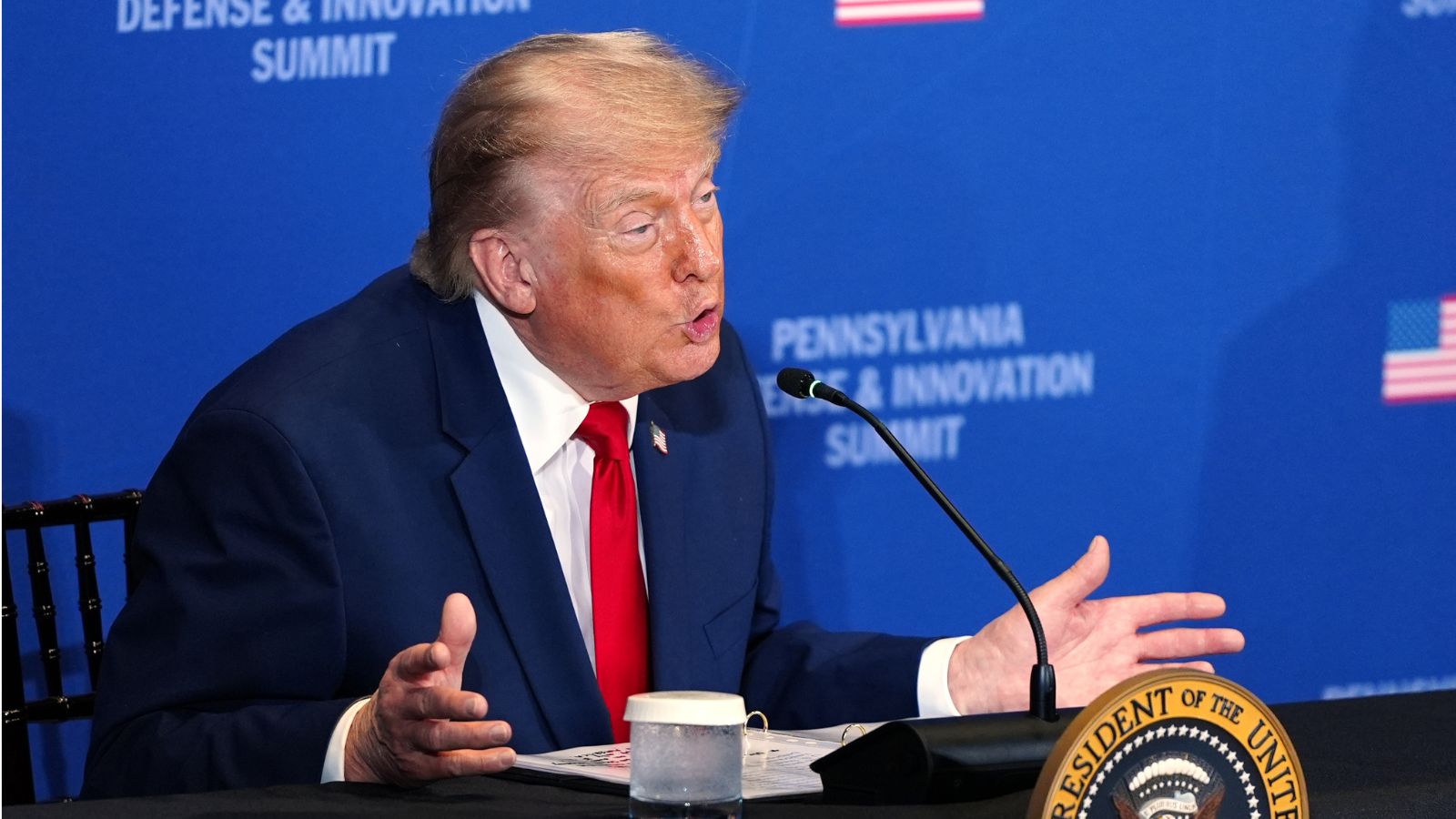
Donald Trump just announced that his Board of Peace secured an agreement for the complete disarmament of Hamas and other armed groups in Gaza. If true, this changes everything. But let's look past the press releases and figure out what is really happening on the ground.
Breaking Down the Board of Peace Agreement
The announcement came down via Truth Social, pointing to a phased plan negotiated in Egypt alongside regional mediators like Qatar, Turkey, and Egypt itself. Under this framework, weapons collection is supposed to happen gradually over an eight-month period. Don't forget to check out our earlier coverage on this related article.
The core idea centers on a simple principle: one authority, one law, one weapon.
The transitional governing body known as the National Committee for the Administration of Gaza (NCAG) is slated to take charge. As heavy and light weapons are handed over for storage, an International Stabilization Force will step in to train a brand-new Palestinian police force. Only then are Israeli forces supposed to pull back from their current positions. If you want more about the history here, NBC News offers an informative summary.
Why Israel Remains Skeptical
You cannot understand this deal without looking at Jerusalem's reaction. Prime Minister Benjamin Netanyahu’s office made it clear almost immediately that the proposal falls short of total demilitarization demands.
Israeli officials have insisted that no military withdrawal will happen past the Yellow Line until every single tunnel, weapon depot, and production facility is completely gone. Trust is practically nonexistent here. Years of broken ceasefires and deep-seated animosity mean that Israel wants ironclad verification before moving an inch.
Hamas hasn't offered full clarity either, though back-channel negotiations involving figures like Jared Kushner and former security chief Mohammed Dahlan clearly managed to crack open a door that was tightly bolted shut for months.
The Road Ahead Is Full of Landmines
Signing a paper in Cairo is the easy part. Enforcing it inside a ruined enclave filled with factional tensions is an entirely different beast.
- The Verification Problem: Who actually counts the weapons, and who ensures hidden caches do not remain underground?
- The Political Vacuum: Can the NCAG actually govern effectively without triggering internal civil conflict?
- The Security Guarantee: Will the International Stabilization Force have the stomach and mandate to handle armed pushback from remnants who reject the deal?
Disarmament sounds clean on paper. In practice, it requires managing thousands of armed combatants who are being offered amnesty on the condition that they give up their only source of leverage.
We are watching a high-stakes gamble play out in real time. If the phased handover actually proceeds, it marks the most significant shift in the region since the conflict flared up. If it falls apart under the weight of mistrust, we are right back to square one. Watch what happens in Cairo over the next few weeks because that will tell us whether this historic breakthrough turns into reality or fades into another diplomatic footnote.