The air inside Madison Square Garden during a New York Knicks playoff run does not feel like normal air. It is heavy, loud, and smells faintly of stale popcorn, expensive cologne, and pure, unfiltered anxiety. When the baseline bass shakes the floorboards, you do not just hear the noise; you feel it vibrating in the soles of your shoes.
In May 2024, that room was a powder keg. The Knicks were clawing through a postseason that had captured the stubborn, bruised heart of the city. Everyone wanted a piece of the energy. Everyone wanted to be seen breathing it in.
But sports arenas stopped being purely about sports a long time ago. They are America’s modern Roman Coliseums, places where culture, celebrity, and raw political theater collide under twenty thousand tons of steel and neon. And when Donald Trump and Stephen A. Smith crossed verbal swords over a courtside appearance, it was never just about a basketball game. It was a masterclass in the currency of attention.
Consider the baseline mechanics of fame in the digital age. Attention is finite. The human brain can only process so much noise before it tunes out entirely. To command a room as vast as the American public, you have to be louder, sharper, or more unpredictable than the man standing next to you.
Enter Stephen A. Smith.
Love him or hate him, the ESPN anchor operates as a human thunderstorm. He does not merely deliver sports analysis; he performs it with an operatic intensity. When he walked onto the set of First Take, the rumor mill was already churning with whispers that the former president—then entrenched in a grueling, historic hush-money trial just a few miles downtown in Manhattan—might show up at the Garden for Game 2 against the Indiana Pacers.
Smith didn't hold back. He looked directly into the camera and warned that if Trump showed up to a Knicks game in the middle of a hyper-polarized election year, the reaction from the New York crowd would be volatile. He suggested the optics would be a distraction, a lightning rod the team didn't need while trying to survive a brutal series.
It was classic sports punditry wrapped in cultural observation. But when you poke a billionaire who built his entire empire on the scaffolding of public perception, the universe answers back.
The retaliation did not come via a press release. It came via Truth Social, delivered with the trademark cadence that has defined American political discourse for a decade. Donald Trump fired back, calling Smith a "loudmouth" whose show was suffering from failing ratings. He claimed that if he did attend the game, the crowd would erupt in a standing ovation—a sea of cheering New Yorkers welcoming a native son back to the arena he used to frequent in the 1980s and 90s.
Just like that, a basketball game became a proxy war for validation.
To understand why this trivial back-and-forth matters, you have to look past the egos. Look at the venue. Madison Square Garden is not just a building; it is a mirror reflecting the fractured soul of the city surrounding it.
Imagine standing on the court, looking up at the celebrity row. On any given night, you have Spike Lee in bright orange frames, Chris Rock laughing near the stanchion, and Wall Street executives sitting shoulder-to-shoulder with hip-hop royalty. It is a fragile eco-system of status.
For decades, Trump was a fixture in that ecosystem. Before the golden escalator ride in 2015, before the rallies and the indictments, he was a New York tabloid staple who understood that being seen at a big fight or a marquee Knicks game was the ultimate signifier of local royalty.
But the city changed. Or perhaps, the stakes did.
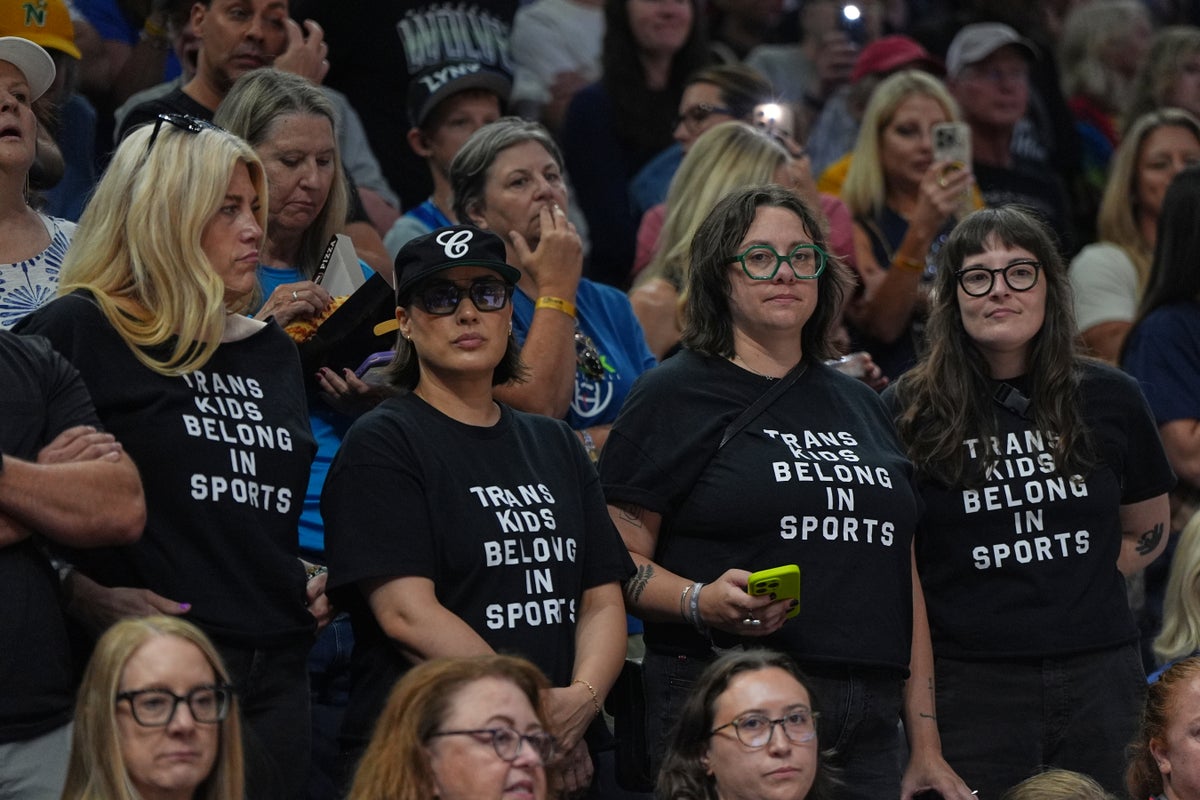
When Stephen A. Smith suggested that a Trump appearance would cause a rift in the arena, he was tapping into a very real cultural anxiety. The modern stadium is one of the few places left where people of completely opposing worldviews sit in the same row, breathing the same air, sharing the same armrest. We have segregated our news feeds. We have curated our neighborhoods. But at a sporting event, you cannot mute the person sitting three feet away from you.
Trump’s counter-claim—that he would receive a roaring ovation—was an appeal to nostalgia, a yearning for the era when his presence at a fight or a game was met with universal, uncomplicated curiosity rather than partisan warfare.
But nostalgia is a fickle commodity in 2024. The reality of a modern sports crowd is that it is impossible to predict, largely because the crowd itself is no longer uniform. The upper tiers of the Garden are still filled with the working-class lifebloods of the outer boroughs, while the floor seats belong to the global elite. A reaction to a political figure in that space wouldn't be a monolith; it would be a chaotic, deafening collision of cheers and boos, a sonic representation of our broader national divide.
The feud simmered because neither man is capable of letting the other have the last word. They are, in many ways, mirror images of each other operating in different arenas. Both understand that the worst sin in modern media is not being hated; it is being boring.
Smith took to his podcast to issue a response that was surprisingly nuanced but entirely uncompromising. He didn't back down from his assessment of the crowd's potential reaction, but he made sure to frame it not as a personal attack, but as an objective reading of the room. He reminded his audience that he has known Trump for decades, dating back to the days when the real estate mogul was a frequent guest on the sports radio circuits.
This is where the mask slips slightly, revealing the strange, transactional intimacy of American celebrity. These men know each other. They understand the rules of the game they are playing. The public spat is the entertainment; the eyeballs it generates are the prize.
Think about what happens to the fan who just bought a ticket to see Jalen Brunson drive the lane. They saved for months, braved the subway, and walked through the metal detectors hoping for two hours of pure, uncomplicated escape. They wanted to forget about the inflation numbers, forget about the courtroom sketches on the evening news, and forget about the looming November anxieties.
Instead, the culture war follows them right to the edge of the hardwood.
The invisible stakes here aren't about who won the argument or whose ratings are higher. The real casualty is the sacred nature of the playground. Sports used to be the neutral zone, the demilitarized patch of land where we could agree on the rules, agree on the objective truth of the scoreboard, and put aside everything else for forty-eight minutes.
When the microphone and the podium invade that space, the neutral zone vanishes.
Ultimately, Trump did not show up at Game 2. The Knicks won a thriller, the crowd lost its collective mind, and the series marched on. The threatened explosion of political theater inside the world’s most famous arena never materialized.
But the echo of the argument remained. It hung over the rest of the playoffs like smoke from a flare, a reminder that the arena is no longer an escape from reality, but an amplification of it.
The next time you watch a game and the camera pans across the faces in the front row, look closely at the spaces between the seats. The game on the floor is beautiful, fast, and real. But the battle for the room itself—the silent, high-stakes tug-of-war over who gets to claim the energy of the crowd—is always happening just out of frame, waiting for the next voice to claim the microphone.