The Las Vegas Strip does not have a pulse; it has a strobe light. It is a place where time is an inconvenience, measured not by the rising sun but by the shift changes of dealers and the rotation of headliners. On a typical Tuesday night, the air smells of expensive cologne and cheap exhaust. It is a playground built on the promise of consequence-free adrenaline.
But at the intersection of Flamingo Road and Las Vegas Boulevard, the neon fantasy usually stops where the asphalt begins.
Consider the physics of a luxury SUV. It is a three-ton vault of leather and steel, designed to isolate the driver from the outside world. When that vault travels at speeds meant for a highway while navigating a crowded tourist corridor, it ceases to be a vehicle. It becomes a kinetic tragedy waiting for a point of impact.
Last week, that impact found a family.
The Man Behind the Velvet Rope
In the hierarchy of Vegas nightlife, the club promoter is a ghost in a well-tailored suit. They are the architects of the "good time," the people who ensure the bottles are cold and the guest list is exclusive. For years, the man at the center of this week’s court proceedings lived in that world of high stakes and low lights. He sold the dream of the Vegas night.
Then, in a single, blurred moment, the dream curdled.
Dashcam footage recently released by authorities captures the sequence with agonizing clarity. The video doesn't just show a car crash. It shows the precise second a life of curated luxury collided with the raw, unyielding reality of a sidewalk. There is a flash of movement, a screech that sounds less like tires and more like a scream, and then the sickening crunch of metal meeting bone and concrete.
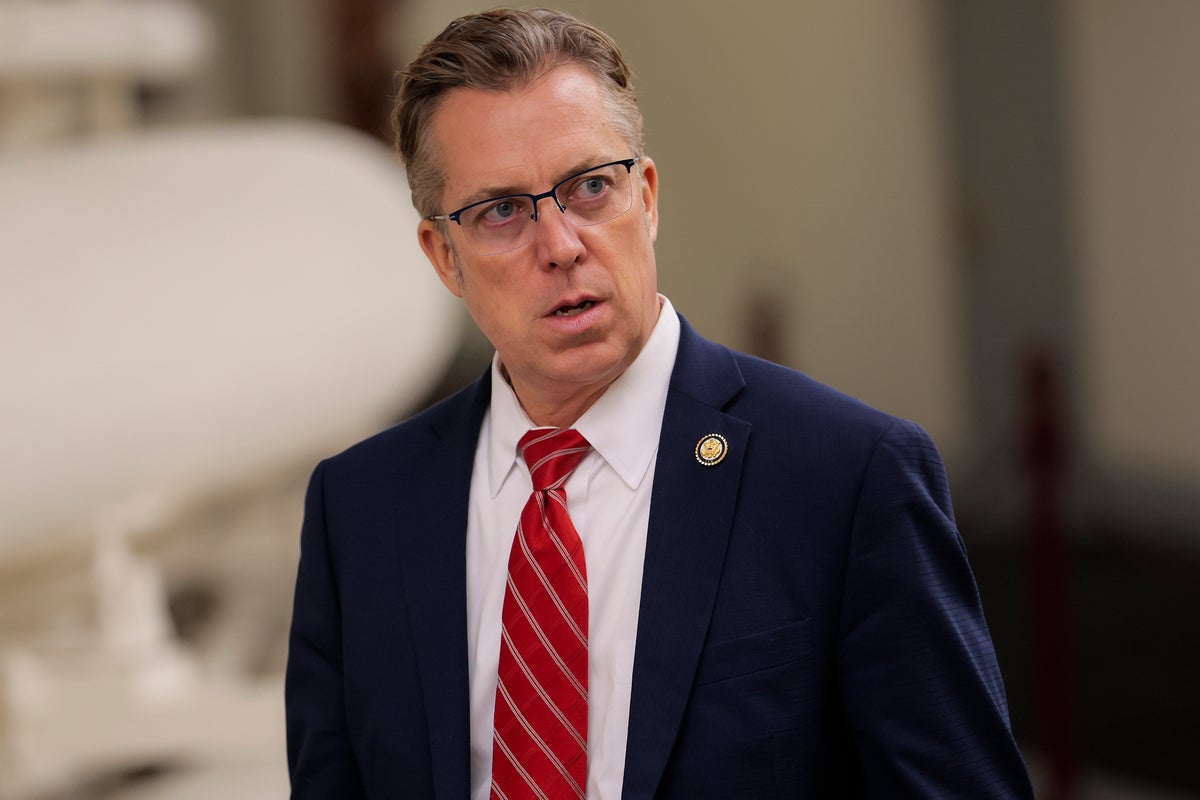
The promoter stood in a Clark County courtroom this morning. He wore the standard uniform of the accused—not the designer threads of a nightlife mogul, but the somber, ill-fitting attire of a man trying to look like a stranger to his own choices. He pleaded not guilty to charges of driving under the influence.
The words "not guilty" are a legal maneuver, a shield held up by a defense attorney. To the family who was standing on that corner, those words likely sound like a different language entirely.
The Invisible Stakes of the Strip
We often talk about DUI cases in the abstract. We cite blood alcohol content numbers—0.15, 0.20—as if they are just data points on a chart. We discuss "alleged" infractions and "evidentiary" hurdles. But these technicalities ignore the human sensory experience of the aftermath.
Imagine the sound of the Strip going silent. For the witnesses who rushed to the scene, the music from the nearby fountains and the chime of the slot machines didn't stop, but they became a grotesque soundtrack to the chaos. There is a specific type of silence that follows a crash—a vacuum created by shock.
The family involved wasn't there for the high-stakes gambling or the bottle service. They were tourists. They were the people who make up the backbone of the city’s economy, the ones who walk the bridges to see the lights. They were doing everything right. They were on the sidewalk. They were within the lines.
The "invisible stakes" of a night out in Vegas are usually financial. You might lose the mortgage payment; you might win a jackpot. But the true stakes are the ones we never discuss because they are too terrifying to acknowledge. Every time a person gets behind the wheel after a "few drinks" because they feel "fine," they are gambling with lives they don't own.
The house always wins, the saying goes. But in this game, everyone lost.
The Physics of Poor Choices
Alcohol does not just impair your coordination. It lobotomizes your sense of consequence. It convinces you that you are the protagonist of a movie where nothing can go wrong. For someone whose professional life is built on the art of the "vibes," the transition from a party to a cockpit can feel seamless.
But a car is not a vibe.
When the human brain is saturated with toxins, the peripheral vision narrows. The world becomes a tunnel. You stop seeing the strollers, the elderly couples, and the teenagers taking selfies. You only see the road—and even that is a lie. Your brain tells you that you are doing 35 mph when the speedometer is climbing past 60.
The video evidence in this case suggests a total lack of braking before the initial impact. This is the hallmark of the "neon blur." It is the moment when the driver isn't even aware there is an obstacle until the airbags deploy.
The defense will point to the lights, the distractions, and the chaotic nature of Vegas traffic. They will argue that the video doesn't tell the whole story. They will parse the minutes leading up to the crash, looking for a loophole in the timeline.
But the video tells the story that matters. It shows a family scattered like debris. It shows the immediate, frantic rush of bystanders—those same tourists who, seconds earlier, were just part of the crowd—transforming into first responders.
The Echo in the Courtroom
Courtrooms are designed to be cold. The fluorescent lights are the antithesis of the amber glow of a lounge. In this environment, the promoter’s plea of "not guilty" feels like a jarring note in a sad song.
He is facing multiple felony counts. If convicted, the life he knew—the one of guest lists and VIP tables—is over. But the focus shouldn't be on the destruction of his career. It should be on the reconstruction of the lives he hit.
Recovery from a high-speed impact isn't just about physical therapy and surgeries. It’s about the loss of safety. It’s the fact that every time that family stands near a road for the rest of their lives, their hearts will race. They will hear the ghost of a revving engine. They will see the flash of a white SUV in their dreams.
The promoter’s defense team will focus on "reasonable doubt." They will challenge the calibration of the breathalyzer or the storage of the blood samples. This is their job. But there is no reasonable doubt about the tragedy itself.
Vegas likes to tell us that what happens there stays there. It’s a catchy slogan, a way to market debauchery. But the broken glass on the corner of Flamingo and the Strip didn't stay there. It went home with a family in the form of scars and trauma. It followed them into the hospital. It will follow them for years.
Beyond the Headline
We consume these stories as "news." We see the headline, feel a momentary pang of sympathy or anger, and then we scroll to the next thing. We treat it as a freak accident, a statistical outlier in a city of millions.
It isn't.
This is the logical conclusion of a culture that prioritizes the "experience" over the individual. When we celebrate the "work hard, play harder" mentality of the nightlife industry without acknowledging the sobriety required to navigate a three-ton machine, we are complicit in the atmosphere that allows this to happen.
The promoter was a man who made his living by understanding what people wanted. He knew how to fill a room. He knew how to create energy.
Now, he is a man who must look at a video of himself destroying a family's peace. He must sit in a room where the only energy is the heavy, suffocating weight of accountability.
The Strip continues to glow. The fountains at the Bellagio still dance, their water cannons booming in a rhythmic, artificial thunder. The crowds still swell on the sidewalks, thousands of people moving in a slow, humid tide.
But on one corner, if you look closely at the pavement, you can still see the faint, scrubbed-away marks of the tires. They serve as a grim punctuation mark on a story that didn't have to be written.
The legal battle will drag on for months, perhaps years. There will be motions, hearings, and expert testimonies. There will be talk of blood-alcohol levels and road conditions.
None of it will change the reality of that Tuesday night. The neon lights eventually turn off, and the sun eventually comes up, revealing exactly what was left behind when the music stopped.
A family is trying to learn how to walk again, while a man who once owned the night waits to see if he will ever see the stars again from outside a cage.