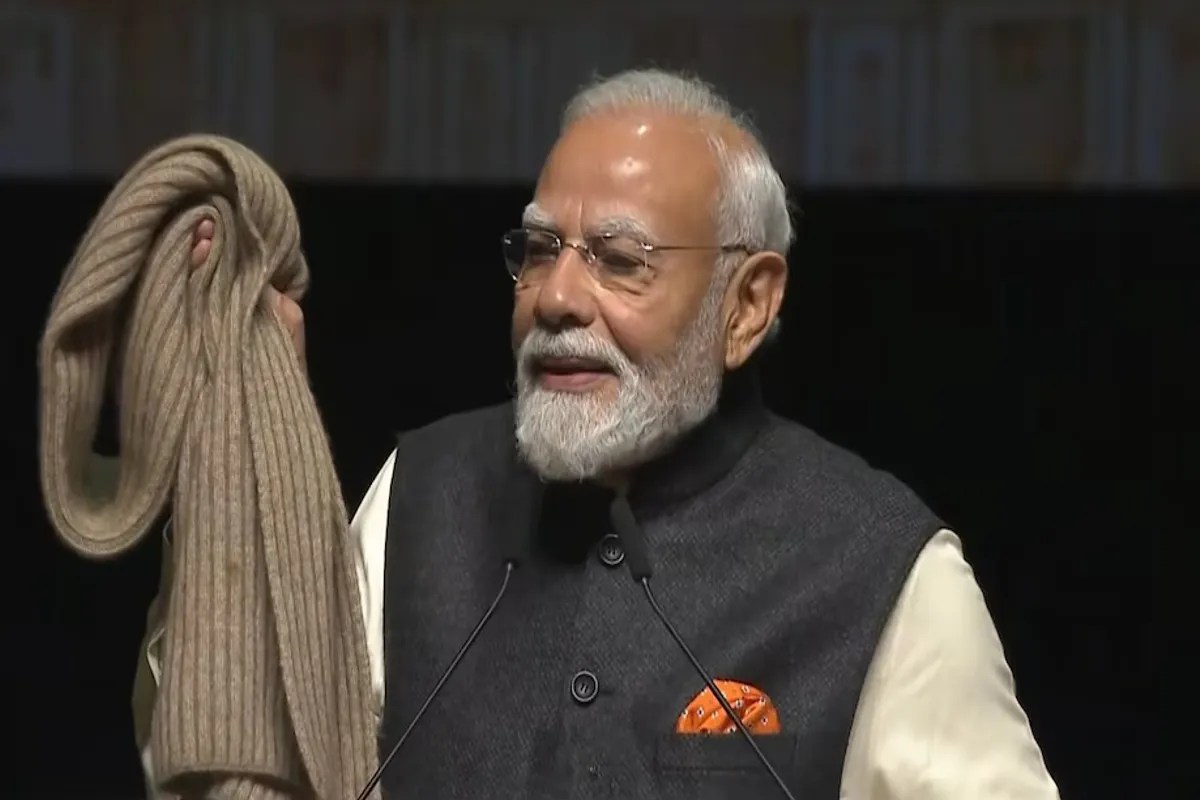
Political leaders love big stages. They love grand announcements, massive crowds, and rehearsed scripts. But real influence isn't built on a teleprompter. It lives in the small, unexpected moments that catch everyone off guard.
That's exactly what happened when a story emerged about a 25-year-old muffler from New Zealand.
During an emotional interaction with the Indian diaspora, a piece of clothing from decades ago became the centerpiece of a deeply personal narrative. It wasn't about policy or geopolitics. It was about memory, identity, and the long journey of a leader who started from the grassroots. For anyone watching how India handles its global community, this wasn't just a nostalgic moment. It was a masterclass in building genuine cultural capital.
The story behind the 25-year-old muffler
Before he was the Prime Minister, Narendra Modi was an organizational worker traveling across continents to connect with the early Indian diaspora. Back in the late 1990s, he visited New Zealand. He stayed with local Indian families, ate home-cooked meals, and worked to build a network from scratch.
An Indian family in New Zealand kept a muffler he used during that cold visit. They preserved it for a quarter of a century.
When you look at modern political public relations, everything feels engineered. This didn't. Seeing a simple winter accessory kept safe for twenty-five years brought out a rare, visibly emotional side of the Prime Minister. It reminded the diaspora of the person they hosted long before the high-security convoys and international protocols.
The Indian community abroad often feels isolated from their roots. When a leader acknowledges their shared past so intimately, that isolation vanishes instantly.
Why the Indian diaspora stays fiercely loyal
Many political analysts try to decode why the non-resident Indian community remains intensely connected to the current political leadership back home. They look at economic policies. They look at visa reforms like the OCI card updates.
Those things matter, but they aren't the core reason.
The real connection is emotional validation. For decades, the Indian diaspora was treated merely as a source of remittances. They sent money home, but they didn't feel seen by the political establishment in New Delhi. That dynamic changed completely after 2014.
The diaspora became active participants in India's global story.
- Direct recognition Meetings aren't restricted to formal diplomats anymore.
- Cultural pride Traditional festivals and heritage are celebrated openly on global platforms.
- Accessible leadership The government shows up when citizens face crises abroad, from conflict zones to natural disasters.
When an old friend or host pulls out a memento like a 25-year-old muffler, it validates the community's long-term loyalty. It proves their early support wasn't forgotten.
Moving past standard diplomatic scripts
Traditional diplomacy is incredibly rigid. It involves stiff handshakes, generic joint statements, and heavily managed press conferences. It rarely moves regular people.
The emotional engagement seen in New Zealand shows a completely different approach. By leaning into personal relationships, Indian foreign outreach bypasses standard bureaucratic barriers. It creates a powerful lobby of motivated individuals who advocate for India's interests in their respective adopted countries.
This isn't soft power in the abstract. It's tangible. When the diaspora feels a deep, personal kinship with the leadership back home, they become natural ambassadors. They invest more willingly, drive tourism, and shape local political opinions in favor of bilateral ties.
What this means for future diaspora engagement
The era of distant, formal governance is over. People want authenticity, or at least a bridge to a shared history that feels real. The preservation of a simple piece of clothing from twenty-five years ago highlights a crucial lesson for global leaders.
You cannot buy decades of loyalty with a single policy announcement. You build it by remembering the people who stood by you when you were an ordinary worker.
The next step for India's global community isn't just about celebrating the past. It's about turning this immense cultural goodwill into institutional strength. The diaspora must continue creating platforms that help young Indian-origin individuals connect with their heritage while driving innovation back home. Keep the personal stories alive, but use that energy to build permanent economic and educational networks that survive political cycles.

.webp)