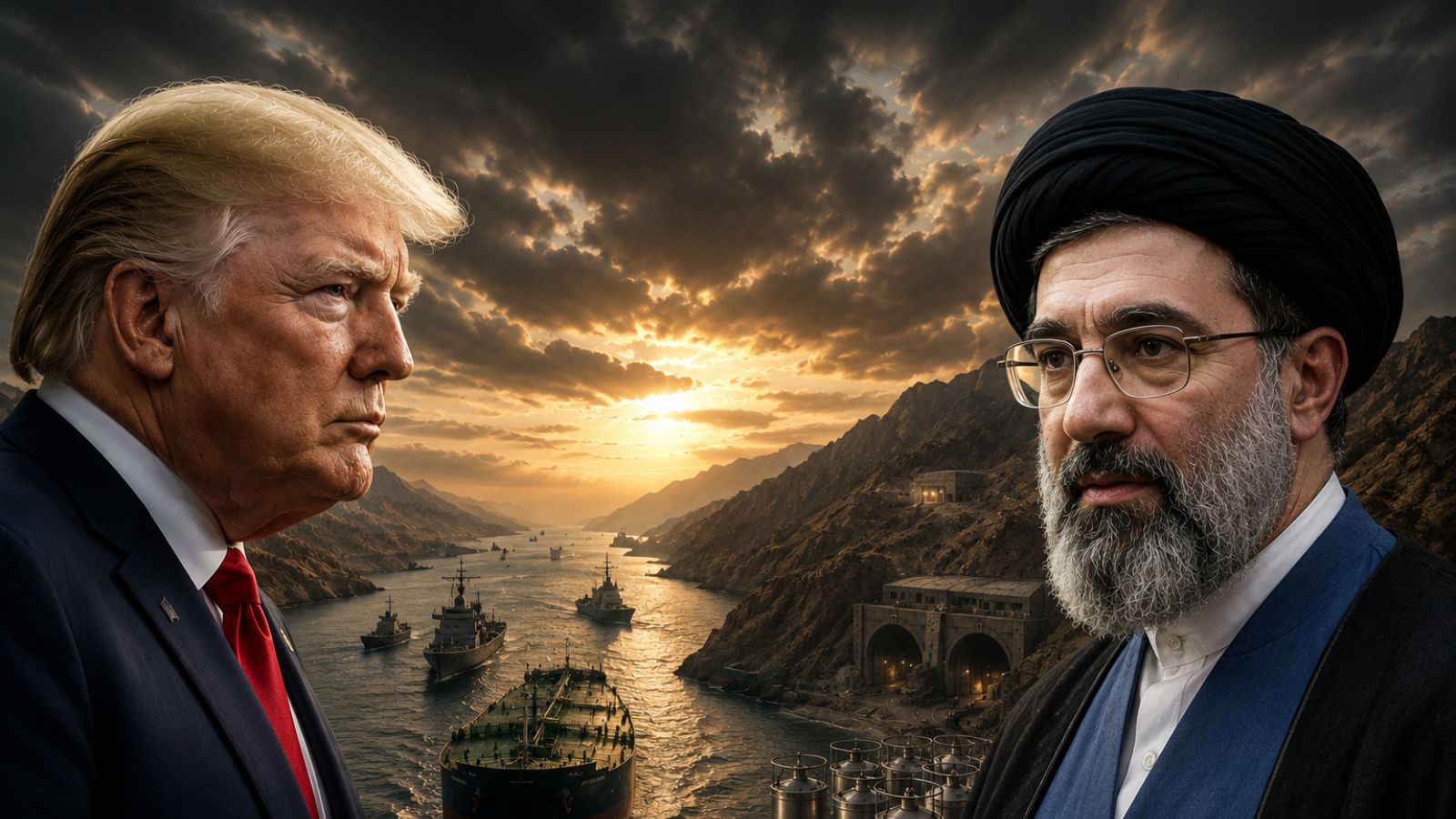
The lazy media consensus loves a clean, dramatic narrative. For years, mainstream foreign policy analysts have regurgitated a binary debate over Washington's strategy toward Tehran between 2017 and 2021. One side claims the administration achieved a masterclass in deterrence, while the other insists it marched blindly toward an inevitable, catastrophic "Iran war."
Both sides are completely wrong. They are misdiagnosing the mechanics of Middle Eastern geopolitics. If you found value in this post, you should read: this related article.
There was no Iran war. To view the intense escalation of that era through the lens of traditional warfare misses the entire point of modern gray-zone conflict. The strategy dubbed "Maximum Pressure" did not fail because it lacked military follow-through, nor did it succeed by bringing Iran to its knees. It failed because it fundamentally misunderstood how asymmetric regimes absorb economic pain and trade in the currency of regional defiance.
We need to stop asking whether the administration "won" or "lost" a war that never happened. Instead, we must look at how a fixation on theatrical optics broke Washington's actual leverage. For another perspective on this story, see the latest coverage from NPR.
The Sanctions Delusion: Economic Pain Does Not Equal Regime Compliance
The foundational premise of the 2018 exit from the Joint Comprehensive Plan of Action (JCPOA)—commonly known as the Iran nuclear deal—was that suffocating economic restrictions would force Tehran to renegotiate a "better" deal. Proponents pointed to the massive drop in Iranian oil exports, which plummeted from over 2.5 million barrels per day to a trickle under 300,000 barrels per day by 2020.
They looked at the tanking rial and saw victory. I have watched Washington think-tank experts point to these exact charts for decades, convinced that a starving economy automatically triggers a compliant government. It is a textbook miscalculation.
In authoritarian, ideological regimes, economic deprivation does not lead to capitulation; it leads to consolidation.
[Sanctions Imposed]
       │
       ▼
[Formal Economy Shrinks]
       │
       ▼
[Regime Seizes Black Market & Smuggling Networks]
       │
       ▼
[Elite Hardliners Enrich Themselves / Civil Society Weakens]
When you cut off a nation's formal banking channels, you do not destroy the regime's cash flow. You destroy the private sector, the middle class, and the moderate political factions who argued for integration with the West. The Islamic Revolutionary Guard Corps (IRGC) thrives in a black-market economy. They control the border crossings, the smuggling routes, and the illicit oil transfers via dark-fleet tankers.
By cratering the formal economy, Maximum Pressure effectively handed the IRGC a monopoly on survival. The elite survived just fine, while the Iranian public—the only organic force capable of pushing for systemic internal change—was left scrambling for bread.
The Soleimani Strike: Tactical Brilliance Meet Strategic Vacuum
In January 2020, the targeted killing of Qasem Soleimani, the head of the IRGC’s Quds Force, was framed by supporters as a decisive strike that restored American deterrence. Detractors warned it would instantly spark World War III.
Neither outcome materialized. The strike was undeniably a tactical masterpiece, removing the chief architect of Iran’s regional proxy network. But a tactic is not a strategy.
Deterrence is not a static state achieved by killing a high-value target. It is a continuous psychological calculus. Tehran responded days later with a ballistic missile barrage targeting the Asad airbase in Iraq, injuring dozens of American service members. More importantly, the structural architecture of Iran's proxy network remained completely intact. The network is built on decentralized, indigenous local actors—the Houthis in Yemen, Kata'ib Hezbollah in Iraq, and Hezbollah in Lebanon. These groups operate on localized grievances and do not require a single general in Tehran to pull the trigger.
The data proves that Iranian regional destabilization actually accelerated after 2020. Houthi drone strikes on civilian infrastructure in Saudi Arabia and the UAE increased in frequency. Rocket attacks on US facilities in Iraq spiked. The administration mistook a dramatic tactical event for a structural shift in regional power dynamics.
Dismantling the Premise: The Flawed Questions Experts Keep Asking
Look at standard policy debates or online search trends regarding this era, and you will see variations of the same fundamentally flawed questions.
Flawed Assumption: "Did Trump's policies successfully prevent Iran from getting a nuclear weapon?"
This completely misinterprets how nuclear hedging works. Before the 2018 JCPOA withdrawal, Iran’s breakout time—the time required to produce enough weapons-grade fissile material for one nuclear device—was estimated at roughly 12 months. By the time the administration left office, after Iran systematically rolled back its compliance in response to US sanctions, that breakout time had shrunk to a matter of weeks.
Tehran learned that keeping its nuclear program advanced but unweaponized gives it maximum geopolitical leverage. The maximum pressure campaign did not halt the nuclear clock; it wound the mainspring tighter.
Flawed Assumption: "