Mainstream media outlets love a predictable narrative. Read any standard report on the chaos tearing through Pakistan-occupied Kashmir right now, and you will find the same lazy consensus. They tell you that the violent clashes, the complete regional shutdowns, and the rise of the Joint Awami Action Committee are simple food riots. They paint a picture of an impoverished populace driven to madness by the soaring costs of wheat flour and electricity bills. They want you to believe that if Islamabad just injects enough emergency cash or if the local government rolls back utility tariffs, the unrest will miraculously vanish.
They are completely missing the point.
The explosive unrest destabilizing the region is not an inflation crisis. It is a structural rejection of a colonial economic model. The standard media narrative mistakes the trigger for the underlying pathology. For decades, Islamabad has treated this territory as an extraction zone—plundering its immense hydropower resources to light up the factories of Punjab while leaving the locals with environmental degradation and unaffordable energy bills. The recent crackdown, the banning of the JAAC under anti-terror laws, and the tragic loss of over twenty lives in places like Rawalakot and Muzaffarabad are not symptoms of a population begging for handouts. They are the death throes of an unsustainable governance model that relies on elite privileges and systemic disenfranchisement to maintain control.
The Extractive Math of Hydropower
To understand why the mainstream analysis is deeply flawed, you have to look at the math of energy generation. Media reports lament that protesters are refusing to pay their electricity bills because of skyrocketing inflation. They frame it as a welfare issue. It is not. It is a property rights dispute.
The region generates thousands of megawatts of cheap, clean hydroelectric power through massive infrastructure projects like the Mangla Dam and the Neelum-Jhelum project. The cost of producing this electricity is remarkably low—pennies per kilowatt-hour. Yet, under the current federal framework, this power is fed directly into Pakistan’s national grid. The national grid then sells it back to the local residents at inflated national tariffs, burdened with fuel adjustment charges and taxes meant to cover the inefficiencies and circular debt of utility companies hundreds of miles away in Lahore and Karachi.
I have spent years analyzing regional fiscal frameworks, and this is classic economic extraction. Imagine a scenario where a state owns oil wells, but the central government forces the locals to buy refined gasoline at three times the global market rate to subsidize energy usage in a distant capital. You wouldn’t call the resulting protests a "subsidy crisis." You would call it a revolt against economic plunder.
The JAAC is not demanding charity; they are demanding equity. They are pointing out the blatant absurdity of a resource-rich region being forced to beg for handouts just to afford the very resources generated under their own feet. When the government threw an 83 million dollar subsidy package at the region during previous rounds of protests, they thought they could buy compliance. They failed because you cannot patch a structural fracture with a temporary bribe.
The Refugee Seat Grift
If you need definitive proof that this movement has outgrown the price of flour, look at the most ignored demand in the JAAC’s charter: the total abolition of the 12 legislative seats reserved for refugees.
The mainstream press barely touches this because it requires actual investigative effort to explain. The legislative assembly in Muzaffarabad features 12 seats explicitly set aside for refugees from Jammu and Kashmir who settled in mainland Pakistan after 1947. These voters do not live in the territory. They live in cities like Rawalpindi, Lahore, and Karachi. Yet, their representatives hold immense sway over who forms the local government.
This is a textbook gerrymandering mechanism. Historically, whatever political party holds power in Islamabad simply buys up or manipulates these 12 refugee seats in the mainland to engineer a puppet administration in Muzaffarabad. It completely subverts the democratic will of the actual residents living in the valleys. The locals are locked out of their own political process by an absentee electorate.
By demanding the elimination of these seats ahead of upcoming elections, the protesters are targeting the actual architecture of federal control. They are acknowledging a brutal truth that political analysts hesitate to voice: the local governance structure is a facade designed to project a false sense of autonomy while ensuring total compliance with the federal center.
Why Banning Popular Movements Always Backfires
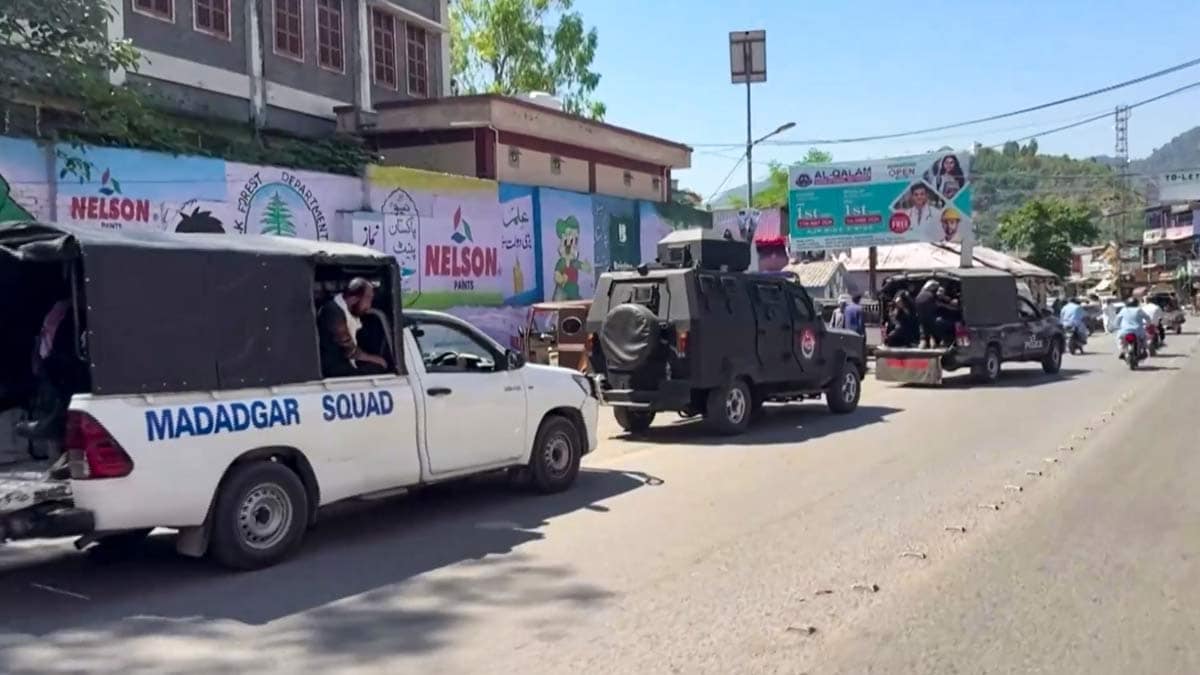
The state's response to this crisis has followed a tired, authoritarian playbook. The Home Department recently placed the JAAC on the proscribed organizations list under the Anti-Terrorism Act, turning civil rights activists, traders, and lawyers into wanted fugitives overnight. They placed a 10 million rupee bounty on prominent leaders like Shaukat Nawaz Mir and Umar Nazir Kashmiri. They cut off mobile internet, flooded the streets with paramilitary units, and authorized severe police actions that turned peaceful markets into war zones.
This heavy-handed crackdown reveals a profound misunderstanding of decentralized movements. The JAAC is not a hierarchical militant outfit with a centralized command structure that can be dismantled by neutralizing a few key figures. It is a broad, horizontal coalition born out of shared economic misery and political exhaustion.
When you outlaw a popular, non-violent movement that represents the grievances of the absolute majority, you do not restore law and order. You eliminate the only structured entity capable of sitting down at a negotiating table. You dry up the democratic space and signal to an entire generation that peaceful agitation yields nothing but a terrorism charge and a rubber bullet.
The government claims that these measures are necessary to protect foreign investments, particularly Chinese infrastructure assets and personnel deployed across regional projects. But the real threat to stability isn't the local trader striking for lower taxes. The real threat is a state apparatus that believes it can secure long-term infrastructure by treating its own populace as an occupied adversary.
The Illusion of Peace
Admitting the flaws in the current system requires accepting a highly uncomfortable reality for regional stability. For decades, policymakers in Islamabad took the region's relative compliance for granted, contrasting it with the intense, armed turmoil across the Line of Control. That complacency has blinded them.
The relative quiet of the past was not a sign of content integration; it was the silence of political paralysis. Now that the economic strain of hyperinflation has smashed through the middle class, the old social contract is dead. The public is no longer willing to accept systemic underdevelopment in exchange for vague promises of geopolitical relevance.
The true danger of the current trajectory is that the state has run out of financial leverage. The national economy is teetering on a knife-edge, surviving on rigid IMF bailouts that explicitly forbid the kind of long-term, distortionary subsidies required to keep the local population quiet. Islamabad literally cannot afford to buy its way out of this crisis anymore, and its only remaining tool is raw, unadulterated state coercion.
This strategy has a definitive shelf life. You can shut down the markets for a week, you can jam the internet, and you can fill the prisons with union leaders. But every time a protester is killed in Rawalakot, the psychological gap between the territory and the federal center widens irreversibly. The crisis will not be solved by a cosmetic cabinet reshuffle, a token reduction in flour prices, or a lecture on national security. The unrest will persist, mutate, and intensify until the central government realizes that you cannot run an economy like a colony in the twenty-first century and expect the locals to quietly pay for the privilege.