The media operates on a simple, broken formula: if it bleeds, it leads, and if it involves a wild animal, turn it into a horror movie.
When two teenagers were injured during a black bear encounter in Washington state, the internet did exactly what it always does. The local news channels rushed to interview shaken neighbors. National outlets plastered headlines across feeds, dripping with implicit warnings about the rising dangers of the untamed wilderness. Social media commentators immediately began debating whether the woods are still safe.
It is reactionary. It is lazy. And it fundamentally misinterprets the data.
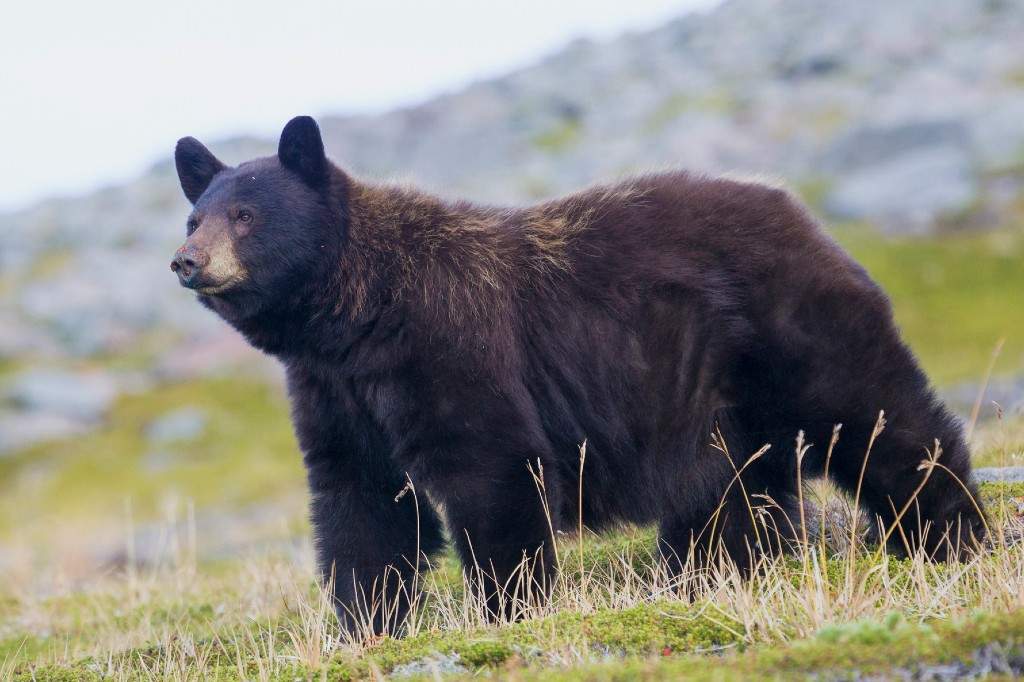
The lazy consensus dominating the narrative around this incident paints the North American black bear (Ursus americanus) as an unpredictable apex predator encroaching on human territory. The reality is the exact opposite. Humans are the ones encroaching, armed with a total lack of situational awareness and a distorted understanding of what true wilderness risk looks like.
If you are terrified of a black bear attack when you step onto a trail in the Pacific Northwest, you are worrying about the wrong thing entirely. You are falling for the spectacle while ignoring the statistics.
The Flawed Premise of the "Aggressive" Black Bear
Let's clear up the biology before we address the hysteria.
Unlike the grizzly bear (Ursus arctos horribilis), which evolved in open landscapes and relies on aggression to defend itself and its cubs, the black bear evolved in densely forested environments. For thousands of years, a black bear's primary survival mechanism has not been to fight; it has been to run, climb a tree, and avoid conflict. They are, by evolutionary design, conflict-averse cowards.
According to data compiled by wildlife biologists, there are roughly 850,000 to 900,000 black bears in North America. Over the last century, fewer than one person per year dies from a black bear attack across the entire continent. You are statistically more likely to be killed by a stray dog, a swarm of hornets, or a lightning strike while sitting on your porch.
When a black bear encounter results in human injury, the headline almost always blames the bear's "unpredictability." But look closer at the mechanics of these incidents. Wildlife agencies like the Washington Department of Fish and Wildlife frequently note that the vast majority of black bear conflicts are directly tied to human behavior.
It breaks down into two categories:
- The Food Reward: Unsecured garbage, pet food left on decks, or poorly hung food bags at a campsite. A bear that associates humans with an easy meal loses its natural fear. This is habituation, and it is a human creation.
- The Squeeze: Surprising a bear at close range, particularly in dense brush near a water source, or getting between a sow and her cubs. When you eliminate an animal’s primary survival option—flight—it will resort to its secondary option: defense.
The Washington state encounter was not a coordinated hunting expedition by a rogue predator. It was a tragic, high-consequence misunderstanding born from a failure of spatial management between two species.
Redefining the People Also Ask Queries
When incidents like this occur, search engines light up with predictable questions. The answers provided by generic lifestyle blogs are usually a mix of generic platitudes and useless survival tropes. Let's dismantle the premises of these questions with brutal honesty.
Is it safe to hike in black bear territory?
This is the wrong question. The question implies safety is a static condition of the environment. The woods are never "safe" because nature is an indifferent machine, not a managed theme park.
The real question is: Are you competent enough to manage yourself in the woods? If you are hiking without bear spray, if you are wearing noise-canceling headphones on a trail, or if you are leaving a trail of protein bar wrappers in your wake, you are the hazard. The territory isn't unsafe; your protocol is.
What should you do if a black bear approaches you?
The standard advice is "make yourself big and loud." That is decent advice for a curious bear, but it misses the crucial nuance of intent.
If a black bear is approaching slowly, with its ears up, it is likely testing you or looking for food. Stand your ground, deploy your voice like a weapon, and prepare your deterrent. But if a black bear is popping its jaws, huffing, and slapping the ground, it is telling you that you are too close to something it values—usually food or offspring. That is defensive behavior. Back away slowly. Do not run. Running triggers a predatory chase instinct in almost any large mammal, and a black bear can sprint at thirty-five miles per hour. You will lose that race every single time.
The Reality of Risk Management
I have spent two decades navigating backcountry corridors across North America, tracking wildlife and managing field teams in environments where apex predators live. I have stared down coastal grizzlies in Alaska and stumbled into black bears in the dense brush of the dark woods.
Here is the truth that coastal urbanites and casual day-hikers refuse to admit: We have traded real risk assessment for comfort.
People will obsess over a bear story in Washington state, then pack their families into an SUV and drive eighty miles per hour down an interstate while distracted by text messages to reach the trailhead. The drive to the mountain is mathematically the most dangerous part of any outdoor excursion. Yet, we normalize the multi-ton metal machines moving at lethal speeds because they are familiar, while demonizing a furry omnivore that wants nothing more than to eat berries and stay away from you.
If you want to survive the wilderness, you need to stop preparing for the movie plot and start preparing for the mundane.
Consider this comparison of actual backcountry hazards:
| Hazard | Probability | Severity | Mitigation Strategy |
|---|---|---|---|
| Hypothermia | High | Fatal if ignored | Layering synthetics, packing emergency dynamic shelters |
| Dehydration / Giardia | High | Debilitating | Multi-stage water filtration, strict hydration schedules |
| Slips and Falls | Medium | High (Fractures/Head Trauma) | Proper footwear, situational awareness on exposed ridges |
| Black Bear Attack | Infinitesimal | High | Scent management, vocal presence, carrying bear spray |
Look at that data. The things that will actually break your trip or end your life are temperature regulation, water purity, and gravity. The bear is a rounding error at the bottom of the ledger. Yet, when someone gets hurt, the collective culture panics about wildlife management policies instead of asking why people are entering the woods without a basic understanding of wilderness medicine or navigation.
The Illusion of the Flawless Deterrent
Let's talk about the downside of the contrarian approach to wildlife safety. The most vocal critics of media hysteria often swing too far in the opposite direction, adopting a macho nonchalance. They claim that because bears are timid, you don't need to take precautions.
That is equally stupid. Timid animals are still wild animals.
A black bear can weigh up to six hundred pounds, possesses claws designed for ripping apart rotting logs, and has a bite force capable of crushing bone. Treating them like oversized raccoons is a fast track to a critical care unit.
The most common point of failure I see in backcountry travel is the misuse of bear spray. People buy a canister, clip it to the back of their pack where they cannot reach it, or worse, leave it inside their backpack under a sleeping pad.
Imagine a scenario where a black bear bursts out of a salmonberry thicket fifteen feet away from you. You have exactly 1.5 seconds to react. If your bear spray requires you to take off your pack, unzip a compartment, and fumble with a safety clip, you do not own a deterrent; you own an expensive piece of ballast.
Bear spray works. Multiple studies published by wildlife management journals demonstrate that red pepper spray is more effective at stopping an aggressive bear encounter than a high-caliber firearm, with a significantly lower margin for human error. But it only works if it is carried on your hip or chest harness, and it only works if you have practiced pulling the safety clip without looking.
Stop Trying to Fix Wildlife (Fix Your Behavior)
Every time a teenager or an adult gets nipped or scratched in the woods, the public outcry demands that wildlife officials track down the animal and euthanize it. We want the wild to conform to our modern standards of litigation and liability. We want a sterile environment where we can take selfies under a canopy of old-growth trees without any inherent vulnerability.
It is a delusion. When you enter the woods, you are signing an unwritten waiver. You are entering a system operating on primeval rules that do not care about your weekend plans or your ignorance of animal behavior.
The Washington state incident should not be viewed as an indictment of the local bear population. It should be viewed as a stark, unvarnished reminder that the wilderness requires a tax. That tax is paid in vigilance, respect, and proper preparation.
If you aren't willing to pay that tax, stay on the asphalt. Leave the trails to the people who understand that the real danger in the woods isn't the animal looking at you from the shadows—it is the person looking back at them in the mirror.