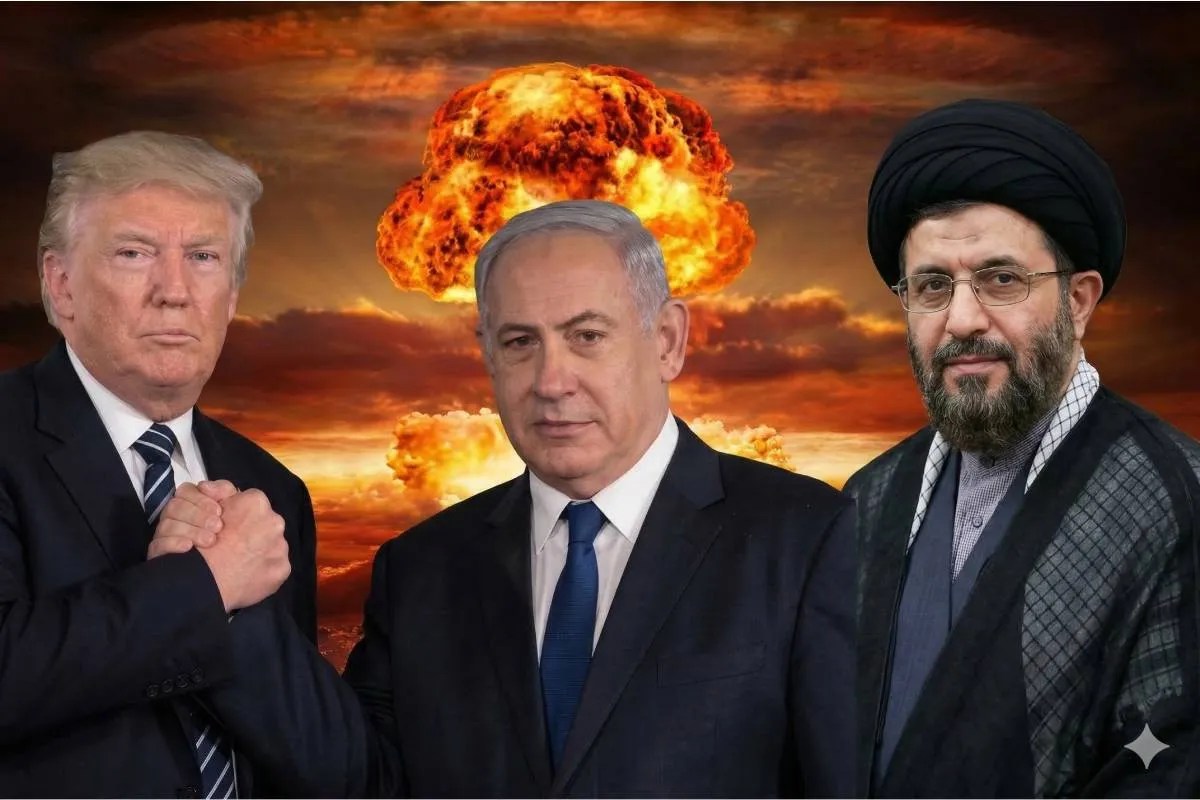
The media obsession with a joint US-Israeli military strike on Iran is built on a fundamental misunderstanding of geopolitics. Pundits love to paint a picture of total alignment, suggesting that a ceasefire violation or a sudden escalation will inevitably force Washington and Tel Aviv to launch a synchronized blitz on Tehran.
It makes for great television. It is also complete fiction.
The lazy consensus assumes that because the United States and Israel share intelligence and view Iran as a regional adversary, their tactical objectives are identical. They are not. In fact, when it comes to the mechanics of a kinetic strike on Iranian nuclear or military infrastructure, the strategic goals of Washington and Tel Aviv are in direct conflict.
The Flawed Premise of Unified Intent
Mainstream analysis repeatedly asks the wrong question. They ask when the US and Israel will strike together, rather than why their internal logic prevents them from doing so.
Israel views an Iranian nuclear capability as an existential threat that must be prevented at all costs, including preventive war. The United States views Iran as a highly complex regional management problem. Washington’s primary goal in the Middle East is not total victory; it is stability, the containment of escalation, and the protection of global energy corridors.
When a ceasefire is violated, the immediate reaction from the corporate press is to speculate on a joint retaliatory package. But look at the historical precedent. During every major escalation cycle, the White House—whether Democratic or Republican—exerts massive backchannel pressure on Jerusalem to limit its target selection.
The reasons are purely practical:
- The Strait of Hormuz Dictates US Policy: A full-scale war with Iran risks the closure of a chokepoint through which 20% of the world's petroleum passes. No US president will sign off on a joint operation that risks triggering a global economic depression just to execute a tactical strike.
- Asymmetric Retaliation: Iran’s doctrine relies on proxy networks and asymmetric warfare. A joint strike means US bases in Iraq, Syria, and the Gulf become immediate targets. Washington is not eager to trade American soldier casualties for tactical damage to Iranian centrifuges.
- The Illusion of Air Superiority: A deep-penetration strike inside Iran requires traversing multiple sovereign airspaces and neutralising highly sophisticated, layered air defence networks. Doing this as a coalition requires a level of public diplomatic backing that regional allies simply cannot afford to grant the US.
The Operational Reality: Israel Goes Alone or Not at All
If a strike happens, it will be a solo Israeli operation executed precisely because Washington said no.
Let us look at the technical reality of the situation. Israel possesses the qualitative military edge in the region, including F-35 stealth fighters and deep-penetration munitions. However, executing a sustained campaign against hardened, deeply buried facilities like Fordow or Natanz requires massive ordnance, specifically the GBU-57 Massive Ordnance Penetrator (MOP). Israel does not own this weapon; only the US Air Force possesses the B-2 bombers capable of carrying it.
The conventional wisdom says this forces Israel to rely on the US. The reality is the exact opposite. Because the US refuses to supply these specific weapons or participate in the strike, Israel is forced to innovate alternative, high-risk strategies. These include cyber warfare, targeted sabotage, and complex, multi-wave aerial operations designed to bypass the need for American heavy bombers.
I have watched defense analysts argue for a decade that Israel lacks the logistical capacity to strike Iran alone due to refueling constraints. They miss the nuance. Israel has consistently proven willing to accept extreme operational risks that the US military, bound by rigid doctrine and political accountability, would veto in the planning stage.
Dismantling the De-escalation Fallacy
"But a diplomatic breakthrough or a enforced ceasefire will change the dynamic."
This is the classic error. Treaties and ceasefires in this theater are not resolutions; they are operational pauses. They allow both sides to restock inventories, recalibrate intelligence assets, and adjust targeting vectors.
When the media asks whether Israel will "stand with America" during a crisis, they are projecting a master-servant dynamic that does not exist. Israel acts entirely on its own security calculus. If Jerusalem perceives that Iran has crossed a red line, it will strike without warning Washington in advance, precisely to prevent the US from intercepting the mission or leaking the plans to protect its own regional assets.
We saw this exact playbook in 1981 with Operation Opera against Iraq’s Osirak reactor, and again in 2007 with Operation Orchard in Syria. In both instances, the consensus asserted that Israel would never act without explicit American approval and participation. In both instances, Israel acted alone, caught Washington completely off guard, and achieved its tactical objectives.
The Cost of the Contrarian Truth
Acknowledging that the US and Israel are fundamentally misaligned on Iran carries an uncomfortable truth. It means accepting that the Middle East is inherently unstable and that no amount of Western diplomatic engineering can permanently fix the structural rivalry between Jerusalem and Tehran.
The downside to this solo-actor reality is severe. A unilateral Israeli strike guarantees a chaotic, unpredictable regional war. Without US command and control guiding the operation, the guardrails are entirely gone. The risk of miscalculation skyrockets, and the fallout will land squarely on global markets.
Stop looking for a coordinated, Western-led coalition to solve the Iranian dilemma. Washington wants to manage the problem. Israel wants to eliminate it. Those two motivations cannot occupy the same battlespace.
The next time an escalation dominates the news cycle, ignore the pundits talking about a joint military response. The US will provide the defensive umbrella, the intelligence feeds, and the diplomatic cover after the fact. But when the jets take off to strike Tehran, the markings on the wings will be Star of David, and the radio silence will be absolute.