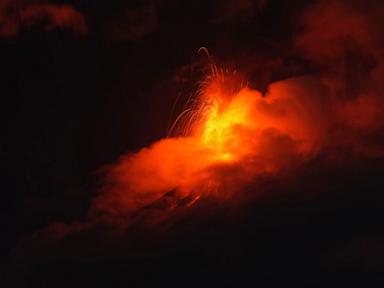
The air tastes like slate. Not the sharp, metallic tang of an approaching thunderstorm, but something older, heavier, carrying the unmistakable scent of pulverized rock and ancient sulfur. When the earth decides to clear its throat, it does not whisper. It roars.
I stood at the edge of the valley years ago, watching the upper slopes of the Volcán de Fuego cut a jagged line into a cloudless sky. It looked peaceful then. A picturesque giant, draped in green, wearing a crown of lazy white vapor. Tourists paid good money to stand on neighboring ridges, camera shutters clicking like frantic insects, desperate to capture a postcard moment of raw planetary power.
Nature makes a terrible neighbor.
Today, that postcard is burning. Down in the lowlands and the scattered agricultural hamlets clinging to the flanks of the volcano, the green has vanished. Everything is coated in a thick, uniform gray. It is the color of ash, the color of displacement, the color of a life packed hastily into a plastic shopping bag because the ground beneath your kitchen floor started to vibrate with the heartbeat of an awakening beast.
Seventeen hundred.
That is the number reported in the dispatches. Seventeen hundred human beings who woke up under roofs they built, tending crops they planted, only to find themselves registered on a clipboard inside a temporary shelter by nightfall. Statistics are a polite way of hiding a tragedy. They sand down the jagged edges of human terror so the reader can digest it with morning coffee. But numbers do not capture the sound of a tin roof groaning under the weight of wet ash. They do not capture the panic of a mother searching the crowded gymnasium floor for the face of her youngest child.
Consider what happens next: the silence of the evacuation.
When the authorities sound the alarm, the instinct is to stay. To protect the inheritance. To guard the livestock. The soil around Fuego is rich, fertilized by centuries of geological violence, making it an irresistible trap for farmers who know no other livelihood. They gamble with the mountain every single day. Usually, the mountain lets them win. Until it doesn't.
The latest eruptions brought more than just smoke. They brought mud. Heavy, viscous lahars—rivers of volcanic debris liquefied by torrential rain—choking the ravines and cutting off escape routes with terrifying speed. Imagine standing on your front porch watching a wall of concrete-thick sludge swallow the road that leads to safety. That is not a metaphor. That is the physical reality unfolding right now in the shadow of the peaks.
Emergency crews work against the clock. Makeshift shelters fill with the hum of anxious chatter, the smell of damp wool, and the quiet weeping of the elderly who have seen this cycle repeat across generations. Guatemala has danced with this fire before. The memory of the devastating 2018 eruption is not a history lesson here; it is a ghost sitting in the corner of every gymnasium turned refuge. Everyone knows someone who lost someone. The terror is inherited. It is passed down through families like old photographs or silver heirlooms.
Governments scramble to coordinate relief. Logistics replace poetry. Trucks carrying clean water, cots, and medical supplies navigate choked highways where visibility drops to a few feet. Relief workers distribute masks to keep the abrasive ash out of burning lungs. Yet, beneath the operational efficiency of disaster management, a profound psychological erosion takes place.
How do you rebuild a home when the foundation itself is impatient?
Volcanology tells us that Fuego is one of the most active volcanoes in Central America, a relentless pressure valve releasing the subterranean friction of the Cocos and Caribbean tectonic plates. Science gives us the mechanics. It tells us about pyroclastic flows, gas emissions, and ballistic projectiles. It maps the hazard zones with clinical precision.
Science, however, cannot comfort a child clutching a muddy stuffed animal on a gymnasium cot.
The sun sets over the evacuation centers, painting the ash-choked sky in bruised shades of purple and orange. Outside, the volcano continues to rumble, a low, tectonic bass note that rattles the glass and keeps everyone awake, waiting for the next tremor. In the darkness, seventeen hundred people listen to the mountain breathe.